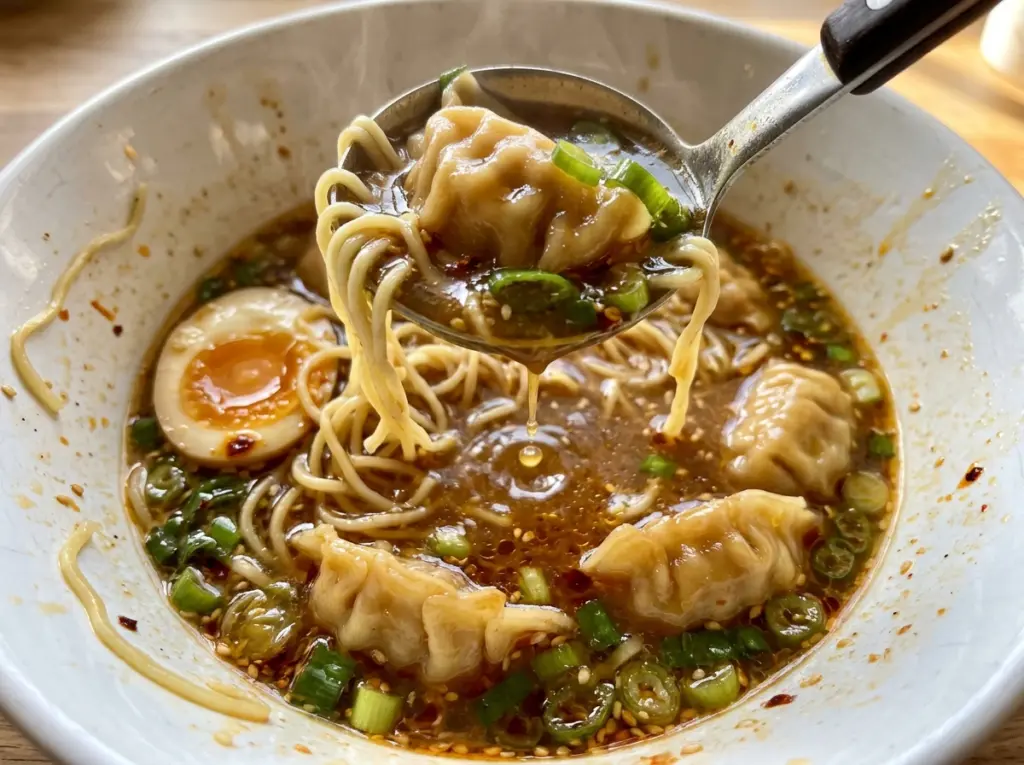
The ginger and garlic hit the warm oil, and the kitchen smells like the start of something far more involved than a one-pot dinner. That quick sizzle lays down a fragrant base before chicken broth, soy sauce, and rice vinegar turn it into a savory, gently tangy soup. Dumpling Ramen Bowl brings frozen pork dumplings, ramen, and baby bok choy together without asking you to cook several components in separate pots.
I like how the dumplings simmer right in the broth, so their savory filling and the aromatics become part of the same bowl. The ramen and bok choy go in only near the end; they need just a few minutes, which keeps the greens bright and the noodles tender instead of bloated.
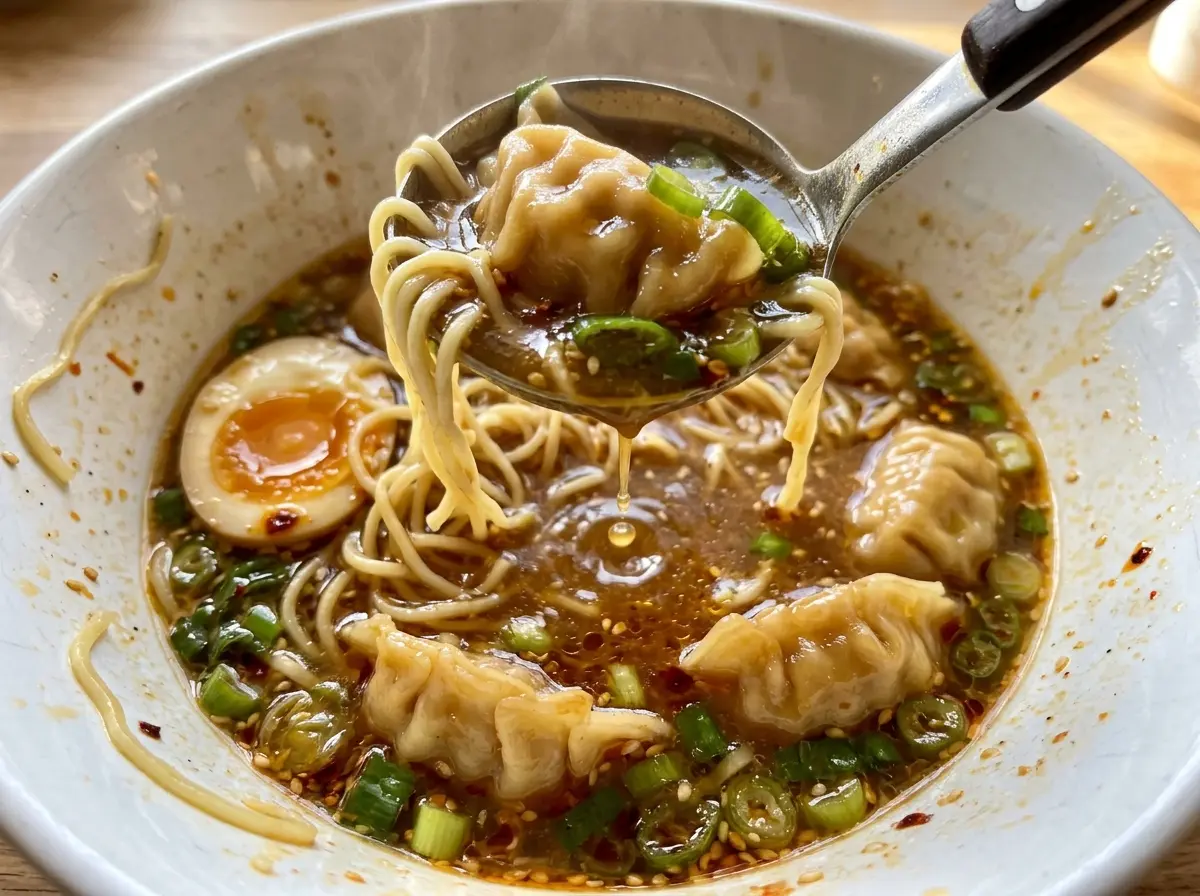
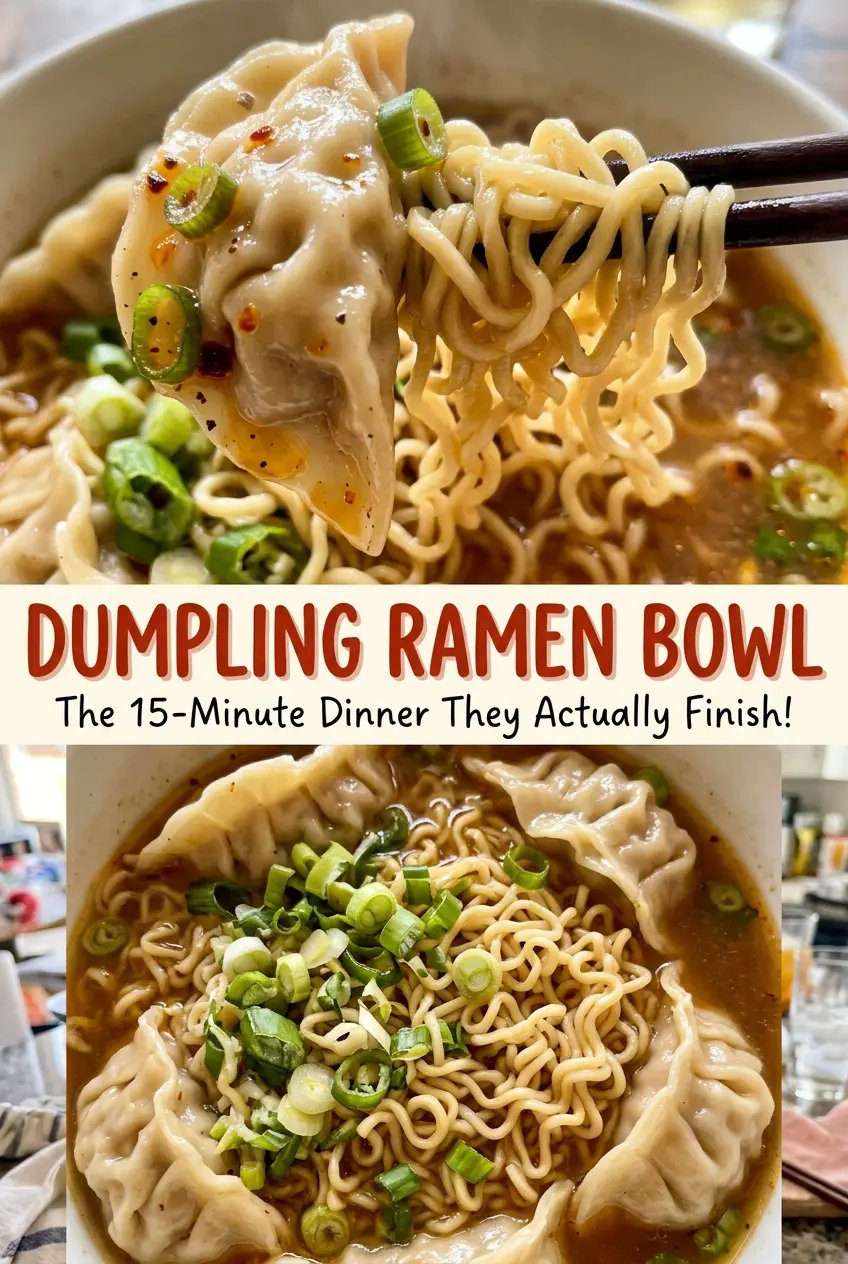
At the table, every bowl gets dumplings, noodles, bok choy, and plenty of broth, finished with green onion and a little toasted sesame oil. It’s a cozy, full meal with soft noodles, tender dumplings, and a broth that stays light enough to sip.
Kitchen Note
Add the toasted sesame oil after you’ve divided the soup into bowls. It stays fragrant as a finishing touch instead of disappearing into the simmering broth.
Save this Dumpling Ramen Bowl for a cozy night in: pork dumplings, springy ramen, crisp-tender bok choy, and gingery broth all come together in one pot.
Why the Ramen Seasoning Packets Don’t Belong in This Bowl
Those little packets are made to season plain noodles, but here the broth already has a clear job: chicken broth brings savory depth, soy sauce adds saltiness, and rice vinegar keeps the finish bright. Add the packets on top of that and their seasoning can take over, making it harder to taste the ginger, garlic, and dumplings.
Discarding the packets also lets the broth stay in balance as it simmers with the pork dumplings. That matters in a soup where the liquid is part of every bite, not just something to drain away. Low-sodium chicken broth gives the soy sauce room to season without turning the pot harsh or overly salty. The ramen still brings its familiar flavor and satisfying texture; it just doesn’t need a second layer of powdered seasoning. Keep the broth ingredients together as written, and the result is savory with a clean, lightly tangy edge rather than a bowl that tastes like a seasoning packet.
What the Dumplings, Broth, and Bok Choy Each Bring
- Frozen pork dumplings — Their filling makes this a substantial bowl, while the wrappers turn tender as they cook in the broth. Use them frozen for the timing in this method; thawed dumplings won’t cook at the same rate.
- Low-sodium chicken broth — It supplies the soup’s body and lets the soy sauce season it without drowning out the other ingredients. A store-brand low-sodium broth works well here; the important part is choosing low-sodium rather than a heavily salted broth.
- Ramen noodles — The noodles make the bowl filling and soak up the aromatic broth. The noodles cook quickly, so have them ready to add with the bok choy instead of letting them sit in the pot while the dumplings simmer.
- Baby bok choy — Halving each head lengthwise exposes the stems to the broth while leaving the leaves attached. The stems stay pleasantly crisp-tender when the bok choy cooks for the short final stage.
- Ginger, garlic, soy sauce, and rice vinegar — Freshly grated ginger and minced garlic make the broth aromatic, while soy sauce and rice vinegar bring savory and tangy notes. Finely grate the ginger so it disperses through the soup rather than leaving large fibrous pieces.
The 30-Second Aromatic Base and the Three-Minute Noodle Finish
Let the ginger and garlic turn fragrant
Heat the neutral oil in a 6-quart pot over medium heat, then stir in the finely grated ginger and minced garlic. Cook them for 30 seconds, stirring so the garlic doesn’t sit against the hot pot and scorch. You’re looking for a fragrant aroma, not browned garlic. Keep the broth ingredients within reach so the aromatics don’t spend extra time cooking.
Bring the seasoned broth to a boil
Pour in the chicken broth, soy sauce, and rice vinegar, then raise the heat to high. Bring the liquid to a boil before adding the dumplings so the pot is hot enough to start cooking them evenly. Stir the broth as it heats to distribute the soy sauce and vinegar. Once it boils, move straight to the dumplings rather than letting the liquid reduce.
Simmer the frozen dumplings gently
Add the dumplings straight from the freezer, reduce the heat to maintain a gentle simmer, and cover the pot. Cook for 8 to 10 minutes, checking that the pork filling reaches 160°F. A rolling boil can jostle the dumplings and rough up their wrappers, so keep the bubbles gentle. Resist stirring during this covered stage.
Cook the ramen and bok choy just until tender
Add the ramen noodles and halved bok choy together, then cook for about 3 minutes, stirring gently. The noodles should be tender, while the bok choy stems still have a little bite and the leaves look wilted but green. Stir carefully around the dumplings so their wrappers stay intact. Since the noodles cook fast, don’t add them earlier with the dumplings.
Finish each bowl at the counter
Divide the dumplings, noodles, bok choy, and broth among four bowls. Aim to give each bowl a share of all four, rather than leaving most of the broth or greens in the pot. Top with the thinly sliced green onions and toasted sesame oil. Serve while the noodles are tender and the broth is hot.
A Vegetarian Bowl or a Lower-Carb One, Without Losing the Broth
Make it vegetarian with vegetable broth and vegetable dumplings
Swap in the same quantity of vegetable broth for the chicken broth and use frozen vegetarian dumplings instead of pork. Follow the dumpling package’s cooking directions, since the pork-dumpling timing and doneness check don’t apply to a different filling. The broth will taste lighter, while the ginger, garlic, soy sauce, and rice vinegar keep it savory and bright.
Leave out the ramen for a lower-carb soup
Skip the ramen noodles and keep the dumplings, broth, and bok choy. Add the bok choy during the final few minutes of cooking so it stays crisp-tender, then portion the soup as usual. The bowls will be less filling without the noodles, but the dumplings still make them hearty.
Storage and Reheating
- Refrigerator: Store leftovers in a covered container for 3 to 4 days. The noodles will continue to absorb broth and soften as they sit.
- Freezer: The finished soup can be frozen, but the ramen and bok choy lose their best texture after thawing. For a better bowl, freeze the broth with the cooked dumplings and add freshly cooked ramen and bok choy when serving.
- Reheating: Warm leftovers gently on the stovetop, stirring carefully, until they reach 165°F. Avoid a hard boil, which can break the dumpling wrappers and make the noodles softer.
Questions That Come Up While the Pot Simmer
Dumpling Ramen Bowl
Ingredients
Method
- Heat the neutral oil in a 6-quart pot over medium heat.
- Add the ginger and garlic and cook for 30 seconds, stirring.
- Add the chicken broth, soy sauce, and rice vinegar.
- Bring the broth mixture to a boil over high heat.
- Add the frozen dumplings, reduce the heat to maintain a gentle simmer, and cover.
- Cook for 8 to 10 minutes, until the pork filling reaches 160°F.
- Add the ramen noodles and bok choy.
- Cook for about 3 minutes, stirring gently, until the noodles are tender and the bok choy is crisp-tender.
- Divide the dumplings, noodles, bok choy, and broth among four bowls.
- Top with the green onions and sesame oil.


