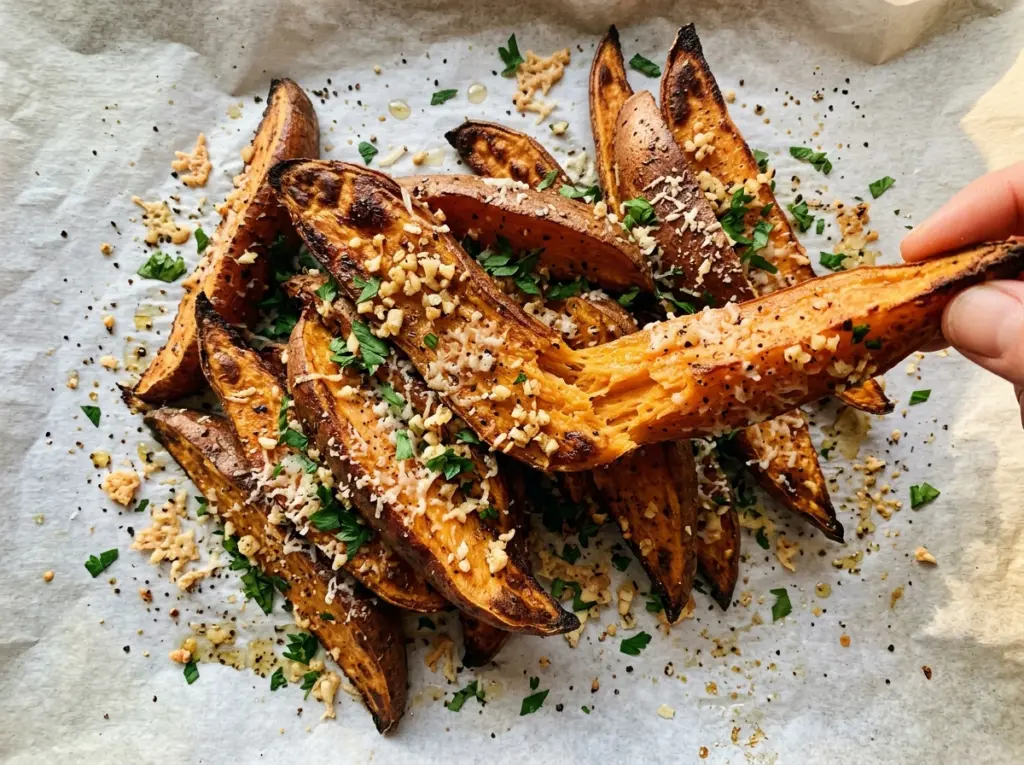
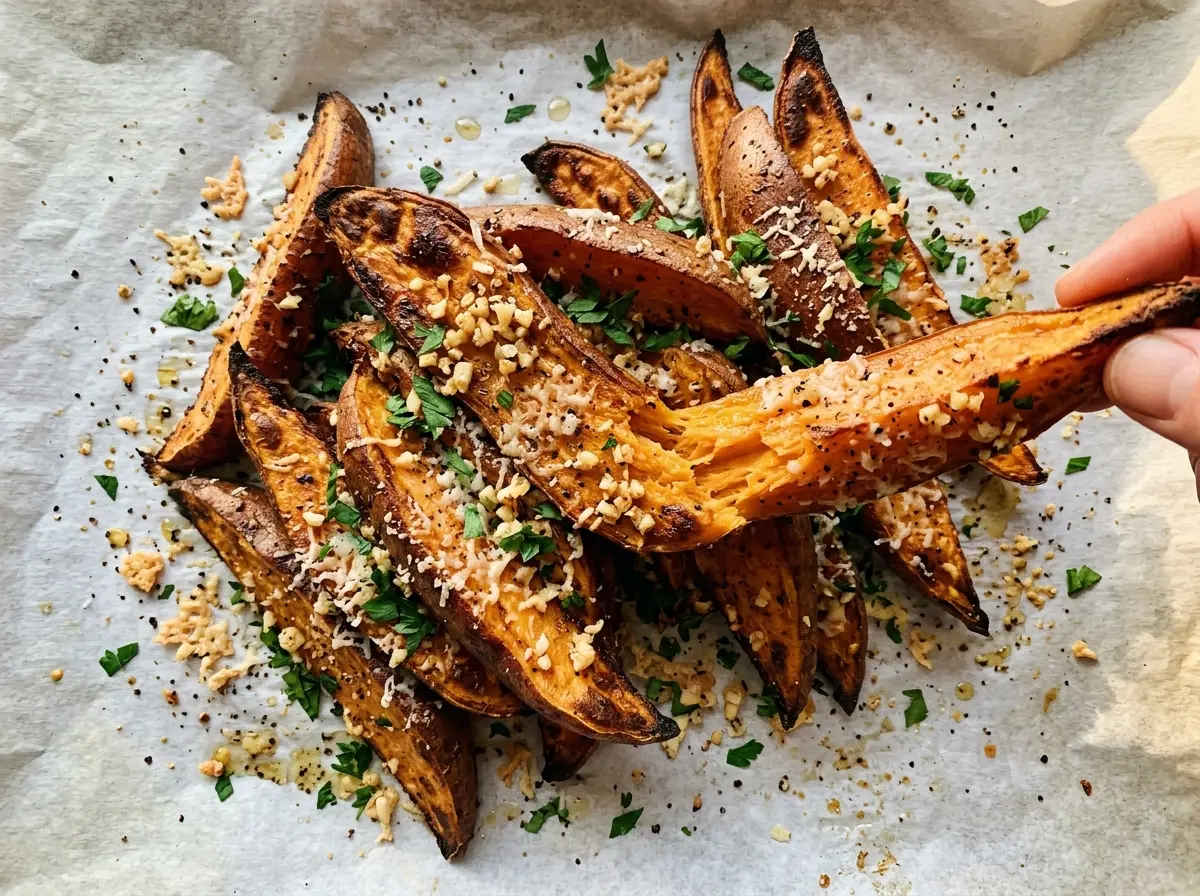
When the wedges come out of the oven, their edges should be browned while the centers stay soft enough to pierce easily with a fork. That contrast is what I want from garlic Parmesan sweet potato wedges: sweet, tender middles and savory bits of cheese clinging to the outside.
I like this preparation because the seasoning is uncomplicated and the wedges go straight from the bowl to the oven. The garlic powder coats the potatoes evenly, and the Parmesan gets just enough heat to melt over the top. A little fresh parsley gives the finished tray a clean, green note without covering up the roasted sweet potato. Serve them while the cheese is warm and soft.
Kitchen Note
I leave the skin on after scrubbing. It gives each wedge a little structure when you flip it, and the browned edges are just as good with the skin intact.
Save these Garlic Parmesan Sweet Potato Wedges for their browned edges, tender centers, and warm, melted cheese.
Why the Parmesan Goes on After the Wedges Have Roasted
Parmesan needs only a brief turn in the oven to melt over these wedges. If it went on before the longer roast, it would spend the whole cooking time exposed to high heat and could brown too far before the potatoes were tender. Adding it near the end lets the sweet potatoes do their roasting first, then gives the cheese just enough time to soften and cling.
That short finish also keeps the cheese from disappearing into the pan. Once the wedges are browned at the edges and easily pierced with a fork, sprinkle the finely grated Parmesan over them and return the tray to the oven. Watch for the cheese to look melted, not deeply browned; it takes only a few minutes. Scatter the parsley over the hot wedges after they come out, so it stays fresh and visible against the melted cheese.
What Each Ingredient Adds to the Garlic-Parmesan Finish

- Sweet potatoes — Choose firm potatoes without soft spots. Their natural sweetness deepens as the edges roast, while the centers turn tender. Cutting them to a consistent thickness helps them finish at the same time.
- Olive oil — It carries the seasonings over the wedges and helps their surfaces brown. An everyday olive oil works well here; there’s no need to use a special finishing oil.
- Garlic powder — The fine texture spreads across the potato more evenly than large pieces of garlic would. Keep it in powder form for this long, hot roast; the FAQ covers why fresh garlic isn’t a straight swap.
- Finely grated Parmesan — Fine grating lets the cheese melt over the wedges during the brief finishing bake. A coarser shred won’t melt as evenly in that short window, so the texture of the grate matters more than choosing an expensive block.
- Fresh parsley and black pepper — Parsley brings a fresh contrast to the sweet, savory coating, and black pepper adds a little warmth. Chop the parsley finely enough to scatter over the tray rather than landing in large clumps.
Roast the Wedges First, Then Melt the Parmesan
Get the pan and wedges ready
Heat the oven to 425°F and line an 18×13-inch rimmed baking sheet with parchment paper. Cut the scrubbed sweet potatoes lengthwise into wedges that are 1/2 inch thick. Keeping the pieces close in size helps them roast evenly, so one thin tip doesn’t darken while a thick section is still firm.
Coat and arrange in one layer
Toss the wedges in a large bowl with the olive oil, garlic powder, kosher salt, and black pepper. Turn them through the bowl until the seasoning is spread across the surfaces instead of sitting in one patch. Arrange them in a single layer on the prepared baking sheet. Overlapping wedges won’t roast as evenly, so give each piece its own space on the pan.
Roast, flip, and check the centers
Roast the wedges for 20 minutes, then flip them and return the pan to the oven for 8–12 minutes more. Look for browned edges, then test a thicker wedge with a fork; it should pierce easily. If the edges are already browned, that’s a good sign, but the fork test tells you whether the center has softened too.
Melt the cheese and add the parsley
Sprinkle the Parmesan over the roasted wedges and bake for 2–3 minutes, just until the cheese melts. Keep the tray in for that short finishing bake rather than waiting for the Parmesan to turn crisp or dark. Scatter the chopped parsley over the top as soon as the wedges leave the oven, and serve while the cheese is still warm.
Two Simple Ways to Adapt the Parmesan and Parsley Finish
Make the wedges dairy-free
Leave off the Parmesan and finish the roasted wedges with the parsley. They’ll still have the garlic-seasoned, sweet potato base, but you’ll lose the melted, salty cheese layer. There’s no need to change the roasting method.
Skip the parsley for a sharper finish
Leave the parsley off if you want the garlic and Parmesan to come through without a fresh herbal note. The wedges will taste a little more savory and direct, with no change to the oven method.
Storage and Reheating
- Refrigerator: Store leftovers in an airtight container for 3–4 days. The wedges soften as they chill, and the cheese won’t have the same just-melted texture.
- Freezer: They can be frozen, though thawed wedges will be softer. Freeze them in a single layer until firm, then transfer to an airtight container or freezer bag.
- Reheating: Spread the wedges in one layer on a baking sheet and warm them in a 425°F oven until hot throughout. Avoid piling them up or reheating in the microwave if you want to keep the edges from turning soft.
Questions That Come Up When Roasting Sweet Potato Wedges
Garlic Parmesan Sweet Potato Wedges
Ingredients
Equipment
Method
- Heat the oven to 425°F.
- Line an 18x13-inch rimmed baking sheet with parchment paper.
- Toss the sweet potato wedges with the olive oil, garlic powder, salt, and pepper in a large bowl.
- Arrange the wedges in a single layer on the prepared baking sheet.
- Roast for 20 minutes.
- Flip the wedges and roast for 8–12 minutes more, until browned at the edges and easily pierced with a fork.
- Sprinkle the Parmesan over the wedges and bake for 2–3 minutes, until the cheese is melted.
- Scatter the parsley over the top and serve.


