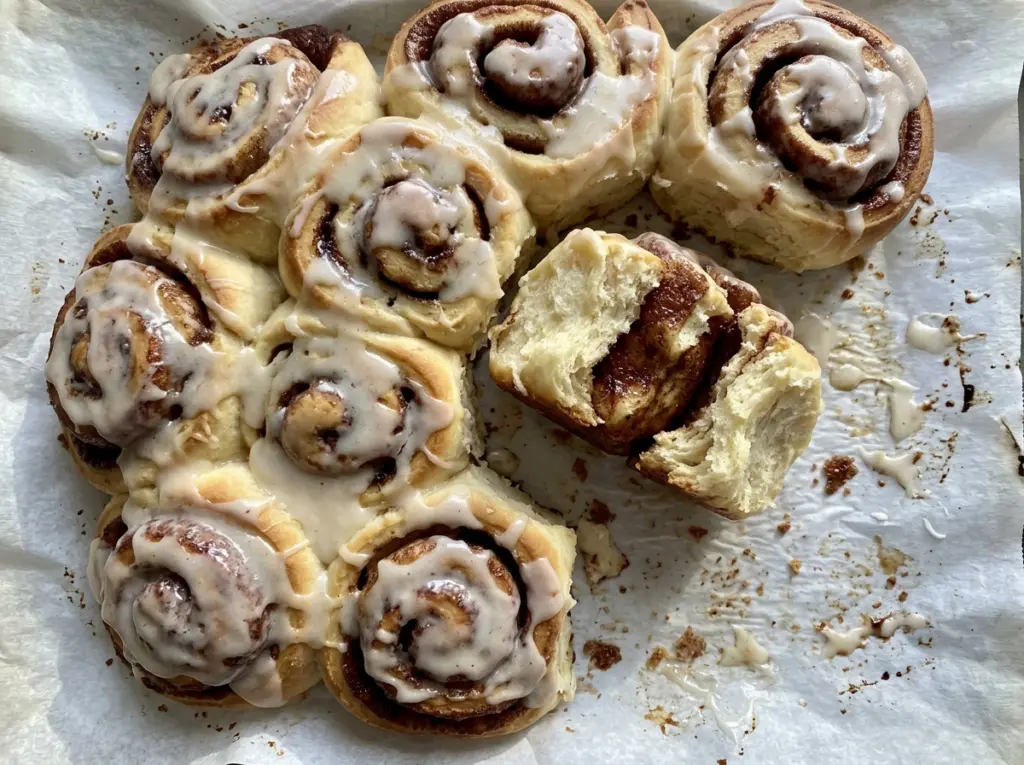
When the cinnamon and brown sugar settle over the buttered dough, I leave a narrow strip bare along one edge. That little border gives the log somewhere to seal, so the filling stays tucked into the spirals instead of squeezing out at the seam. These homemade cinnamon rolls for Christmas brunch bake in a 9×13-inch dish into 12 soft rolls, then get a swipe of cream cheese icing while they’re still warm.
I like this dough because it’s tender without being difficult to handle. The yeast gets a few minutes to foam in warm milk before the eggs, butter, and flour go in, and the dough gets two rises to turn into light, puffy rolls. For brunch, the timing is easy to follow: the first rise happens while you get the filling ready, and the second happens while the oven heats. The finished rolls have cinnamon-sugar spirals under a creamy, gently tangy icing.
Kitchen Note
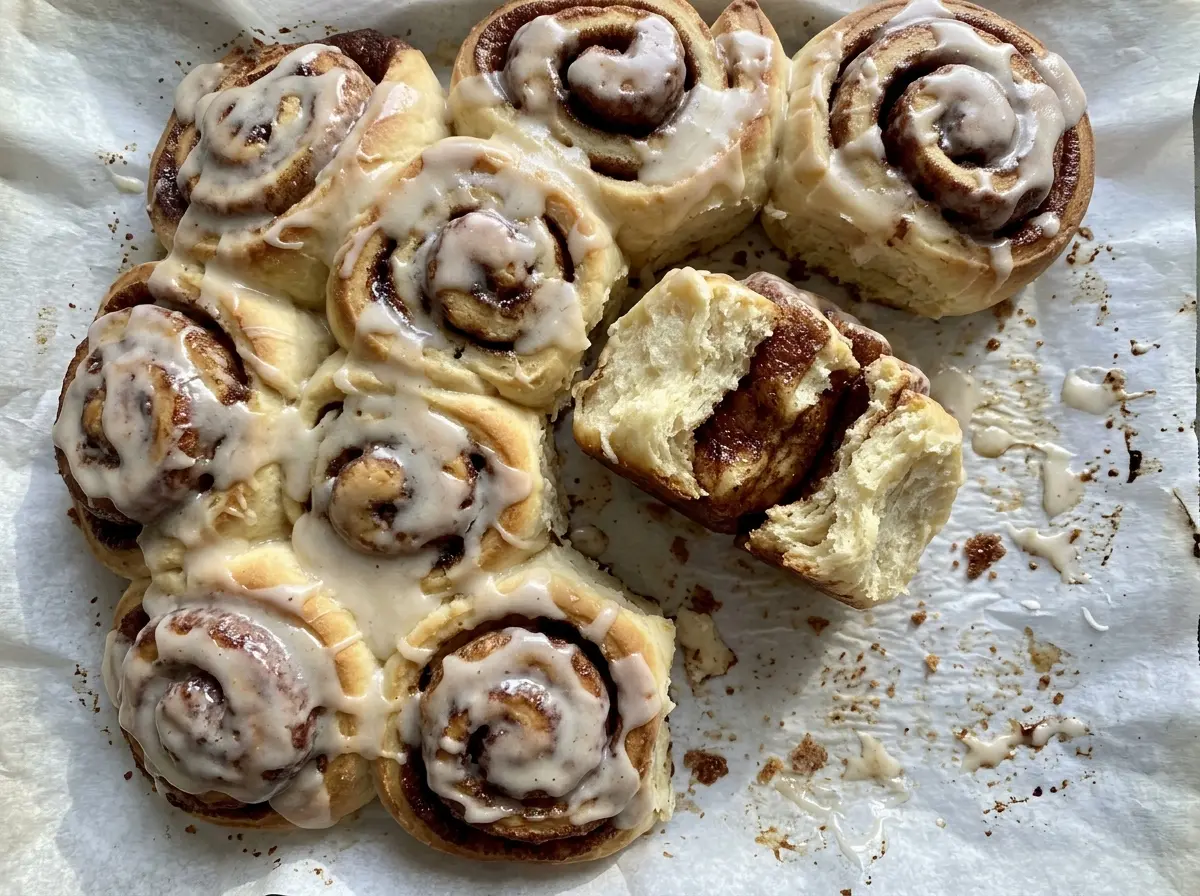
The finished dough should feel smooth and elastic, but still a little tacky. I stop adding flour once the full amount is in; extra flour can make the rolls heavier instead of soft.
Save these homemade cinnamon rolls for Christmas brunch—soft spirals, a brown sugar-cinnamon center, and creamy icing spread over the warm tops.
Why These Rolls Need Two Rises, Not One Long One
It’s easy to think of rising as a single wait, but the two rises here do different jobs. The first gives the dough time to expand before you roll it out; the second lets the filled, sliced rolls puff up in the baking dish. Skip that second rest and the rolls go into the oven compact, with less room to become soft and airy around the cinnamon filling.
Watch the dough, not just the clock. For the first rise, look for dough that has doubled in size. After shaping, the rolls should look puffy in the dish, not like freshly cut spirals sitting tightly in place. A warm spot helps both rises move along, but the dough still needs time to change. For Christmas brunch, that distinction matters: a log that looks neat on the counter isn’t ready to bake until the cut rolls have had their own chance to rise.
The second rise also gives the dough time to relax after rolling and cutting. That helps the rolls bake into a connected, tender batch instead of staying dense at their centers. Letting each stage reach its visual cue is more dependable than rushing to the oven because the clock says it’s time.
What the Dough and Filling Need From Their Ingredients

- Whole milk and active dry yeast — The milk gives the dough richness, while the yeast creates its rise. The temperature matters more than the milk’s brand: too cool and the yeast may take longer to foam, too hot and you risk damaging it. This dough is built around milk and active dry yeast, so I don’t recommend swapping in water or a different yeast without changing the method.
- Eggs and softened butter — Room-temperature eggs blend more evenly into the dough, and softened butter incorporates without leaving hard pieces. Standard grocery-store eggs and butter work well; there’s no need for specialty brands. Since both ingredients contribute to the dough’s tenderness, leaving either out changes the result.
- All-purpose flour — It gives these rolls a soft, workable structure. Measure carefully and resist adding flour beyond what the dough needs to come together; the target is smooth and elastic with a slight tack, not dry or stiff. A different flour can absorb liquid differently, so all-purpose is the reliable choice for this method.
- Light brown sugar and ground cinnamon — Packed brown sugar brings moisture and a caramel-like sweetness to the center, while cinnamon gives the filling its familiar warm fragrance. Use brown sugar that’s soft enough to pack without hard lumps, and choose cinnamon that smells aromatic when you open the jar. There isn’t a separate filling ingredient that replaces either one without changing the swirl.
- Cream cheese and powdered sugar — Softened cream cheese makes the icing tangy and smooth; powdered sugar sweetens it without the graininess granulated sugar would bring. Regular powdered sugar is all you need. If you’d rather leave off the icing, the rolls still bake well, but the finished batch will be less sweet and won’t have that creamy topping.
From Foamy Yeast to Warm, Iced Spirals
Wake Up the Yeast in Warm Milk
Warm the milk until it reaches 105–110°F, then stir in the active dry yeast and one tablespoon of the sugar. Let the mixture stand for 5–10 minutes, until a foamy layer forms on top. If it stays flat, check the milk temperature and give the yeast a little more time before mixing the dough. The foam is a useful sign that the yeast is active.
Knead Until the Dough Turns Elastic
Mix in the eggs, remaining sugar, softened butter, salt, and 3½ cups of flour until combined. Add the remaining ½ cup flour and knead by hand or with a stand mixer and dough hook on medium-low for 6–8 minutes. The dough should look smooth and stretch easily, with a slight tack when touched. If it feels dry or tears instead of stretching, don’t keep dusting in more flour.
Let the Dough Double in a Warm Spot
Lightly coat a large bowl with cooking spray, place the dough inside, cover it, and leave it in a warm spot for 1–1½ hours. It’s ready when it has doubled in size. A cool room can slow the rise, so use the visual cue rather than assuming it’s ready at the earliest time. Keep the bowl covered so the dough’s surface doesn’t dry out.
Fill, Roll, Slice, and Proof
Coat a 9×13-inch baking dish with cooking spray and roll the dough on a lightly floured surface into a 12×18-inch rectangle. Spread the softened butter over the dough, leaving a ½-inch border, then sprinkle the brown sugar and cinnamon evenly over the butter. Start rolling from one 18-inch side to make a log, cut it into 12 equal rolls, and arrange them in the dish. Cover and let them rise for 30–45 minutes, until puffy, while the oven heats to 350°F.
Bake Until the Centers Set, Then Ice
Bake the rolls for 22–27 minutes, until they’re golden and the centers are set. If the tops brown before the centers look ready, give them the full visual check rather than pulling them just for color. Let the rolls cool in the dish for 10 minutes. Beat the softened cream cheese and butter until smooth, then beat in the powdered sugar, vanilla, and milk until creamy; spread the icing over the warm rolls and serve.
Two Ways to Change the Batch Without Losing Its Cinnamon-Roll Feel
Make smaller brunch rolls
Cut the rolled log into 16 pieces instead of 12 and arrange them in the same prepared 9×13-inch dish. You’ll get smaller portions with more individual spirals across the pan. Start checking them at the beginning of the usual baking window, since smaller rolls may finish sooner; look for golden tops and set centers.
Skip the icing for a less-sweet roll
Leave off the cream cheese icing and serve the baked rolls plain. The cinnamon and brown sugar filling still gives each spiral sweetness, but you’ll lose the tangy, creamy finish. This is the simplest change when you want the rolls to feel less rich without altering the dough or filling.
Storage and Reheating
- Refrigerator: Refrigerate leftover iced rolls within 2 hours and keep them covered for 3–4 days. The rolls will firm up when cold, and the icing will become less soft.
- Freezer: Freeze cooled, uniced rolls in airtight wrapping for up to 2 months. Thaw them in the refrigerator, warm them, then add the icing.
- Reheating: Microwave one refrigerated roll for about 10–15 seconds, just until warm; the icing will soften. Longer heating can make the roll tough and the icing runny.
Questions That Come Up While Making These Cinnamon Rolls
Homemade Cinnamon Rolls for Christmas Brunch
Ingredients
Equipment
Method
- Warm the milk in a small saucepan or microwave until it reaches 105–110°F.
- Stir the yeast and 1 tablespoon of the sugar into the warm milk.
- Let the yeast mixture stand for 5–10 minutes, until foamy.
- Add the eggs, remaining sugar, softened butter, salt, and 3 1/2 cups of the flour to the yeast mixture and mix until combined.
- Add the remaining 1/2 cup flour and knead for 6–8 minutes by hand or with a stand mixer and dough hook on medium-low, until smooth, elastic, and slightly tacky.
- Lightly coat a large bowl with cooking spray and place the dough in the bowl.
- Cover the dough and let it rise in a warm spot for 1–1 1/2 hours, until doubled in size.
- Stir the brown sugar and cinnamon together in a small bowl.
- Lightly coat a 9x13-inch baking dish with cooking spray.
- Roll the dough on a lightly floured surface into a 12x18-inch rectangle.
- Spread the softened butter over the dough, leaving a 1/2-inch border.
- Sprinkle the cinnamon-sugar mixture evenly over the dough.
- Starting at one 18-inch side, roll the dough into a log and cut it into 12 equal rolls.
- Arrange the rolls in the prepared dish and cover them.
- Let the rolls rise for 30–45 minutes, until puffy, while the oven heats to 350°F.
- Bake for 22–27 minutes, until the rolls are golden and the centers are set.
- Let the rolls cool in the dish for 10 minutes.
- Beat the cream cheese and butter in a medium bowl until smooth.
- Beat in the powdered sugar, vanilla, and milk until creamy.
- Spread the icing over the warm rolls and serve.


