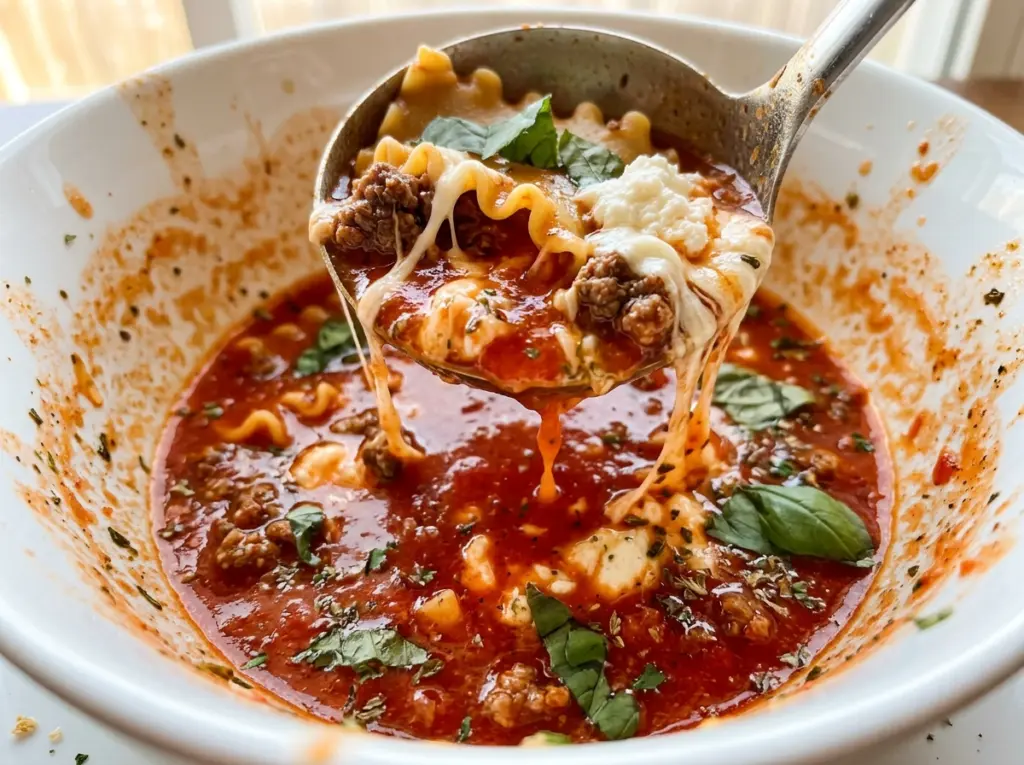
Ground beef browns in the Dutch oven, the onion softens in the same pot, and a spoonful of tomato paste turns the browned bits into the start of a rich tomato base. That’s the rhythm I like about this Lasagna Soup: the flavor builds in one pot, and there’s no separate pan of pasta to wash. Breaking the lasagna noodles into bite-size pieces gives you those familiar ruffled edges in every bowl without needing to layer anything.
I cook the tomato paste briefly before adding the crushed tomatoes, tomato sauce, and broth, which gives the soup a deeper, rounder tomato flavor. The cheese topping gets mixed in a bowl while the noodles simmer, then spooned over each serving instead of stirred into the pot. You get savory beef and tender pasta under a creamy, herby cap of ricotta and mozzarella.
Kitchen Note
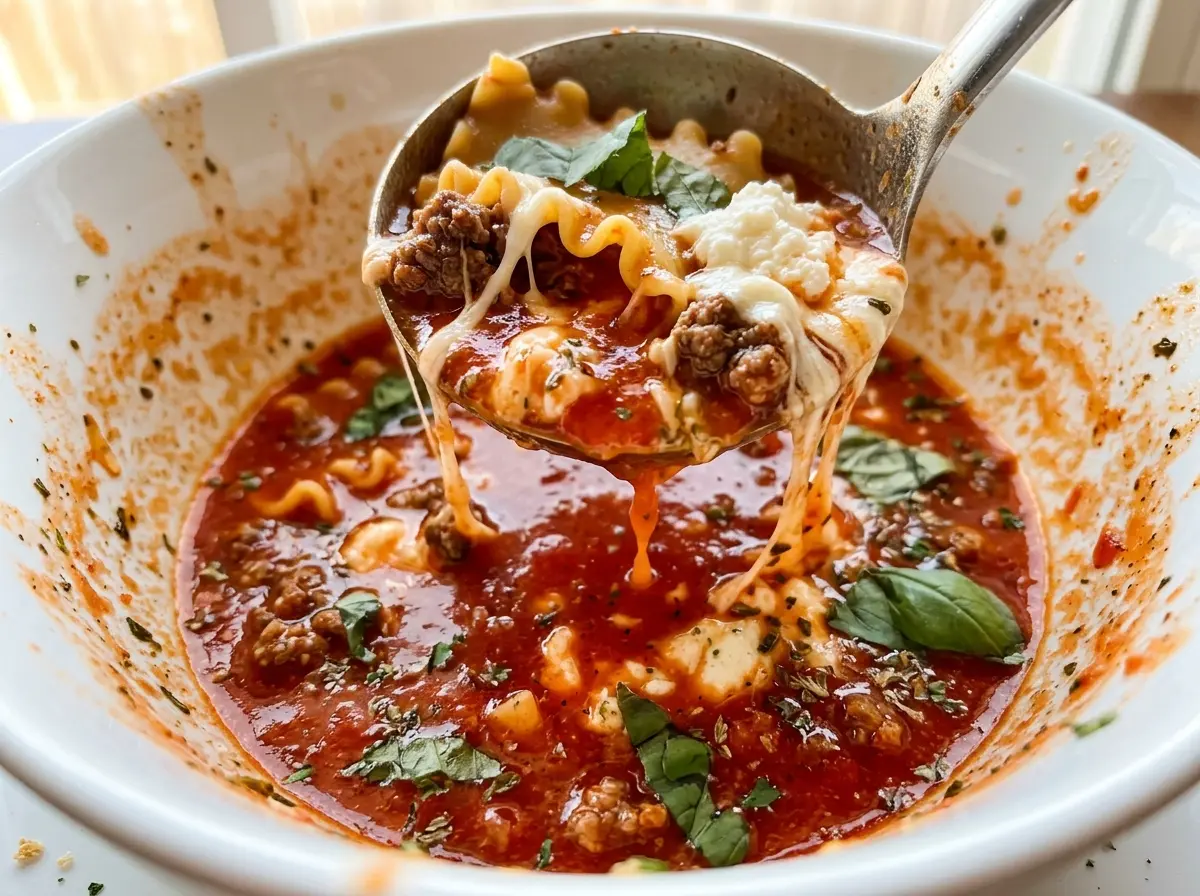
I mix the cheeses and parsley while the soup simmers, then keep the topping in its bowl until serving. A spoonful on each bowl stays creamy, with soft edges where it meets the hot broth.
Save this Lasagna Soup for a cozy dinner with tender pasta, tomato-rich broth, and a creamy ricotta topping.
Why the Tomato Paste Gets Its Own Minute in the Pot
Tomato paste does more here than add another layer of tomato. Stirring it into the hot pot before the canned tomatoes gives it direct contact with the heat and the savory residue left by the beef and onion. That brief cook takes away the sharp, raw edge and leaves a fuller, more rounded tomato flavor in the broth.
If the paste goes straight into the liquid, it still blends in, but it misses that moment to cook in the pot. The crushed tomatoes and tomato sauce then bring different textures: one has a little more body, while the other helps make the broth smooth and spoonable. Together they give this soup a tomato base that tastes substantial without turning into a thick pasta sauce. It’s a small pause in the cooking, but it makes the first spoonful taste like more than canned tomatoes warmed in broth.
What the Beef, Tomato Base, and Cheese Each Bring

- Ground beef — The 85% lean blend gives the broth meaty flavor while still browning well. A standard grocery-store pack works nicely; there’s no need to seek out a specialty grind. If the beef leaves a pool of excess fat in the pot, drain it before adding the vegetables so the soup doesn’t feel greasy.
- Crushed tomatoes and tomato sauce — These two cans aren’t interchangeable in texture: crushed tomatoes contribute body, while tomato sauce makes the base smoother. Plain store-brand cans are fine; choose ones without added herbs so the Italian seasoning stays in balance. Stir the tomato paste into the hot pot before either can goes in.
- Low-sodium chicken broth — Low-sodium broth gives you room to season the soup without the canned tomatoes and cheese making the finished bowl too salty. Brand matters less than choosing a broth labeled low-sodium. Regular broth can make the seasoning less predictable.
- Dried lasagna noodles — Dried noodles hold their shape as they cook in the soup and bring the broad, ruffled edges that make this feel like lasagna. Break them into bite-size pieces before they go in. Use regular dried lasagna noodles for the timing here; gluten-free noodles are covered in the variations below.
- Ricotta, mozzarella, Parmesan, and parsley — Whole-milk ricotta gives the topping a soft, creamy texture, and freshly grated Parmesan blends readily with it. Part-skim ricotta works if that’s what you have, though the topping will be less rich. Fresh parsley brings a clean note to the cheeses; dried parsley won’t give the same fresh finish.
Building the Soup in One Pot Without Overcooking the Pasta
Brown the Beef Before Building the Base
Heat the olive oil in a 6-quart Dutch oven over medium-high heat, then add the ground beef. Break it into small pieces as it cooks so you don’t end up with a few large clumps in the soup. It should be browned and reach 160°F, which takes 6–8 minutes. Drain excess fat if needed before moving on.
Soften the Onion and Cook the Tomato Paste
Add the diced onion to the beef and cook for 4–5 minutes, until softened. Stir in the minced garlic and give it 30 seconds; garlic can turn bitter if it sits over the heat too long. Add the tomato paste and cook for 1 minute, stirring so it coats the beef and onion. Scrape across the bottom as you stir to work those browned bits into the base.
Simmer the Noodles Until Just Tender
Add the crushed tomatoes, tomato sauce, chicken broth, Italian seasoning, kosher salt, and black pepper, then bring the pot to a boil. Stir in the broken lasagna noodles and lower the heat to maintain a simmer. Cook uncovered for 10–12 minutes, stirring often, until the noodles are al dente. Check a piece near the end of the range; the pasta should be tender but still have a slight bite, not limp or falling apart.
Finish Each Bowl with the Cheese Topping
While the soup simmers, stir the ricotta, mozzarella, Parmesan, and chopped parsley together in a medium bowl. The mixture should be thick enough to sit on a spoon rather than disappear into the broth. Ladle the hot soup into bowls and add a spoonful of topping to each one. Serve with the cheese still distinct on top, so each bite gets some creamy topping and tomato broth.
Two Swaps for a Different Lasagna Soup
Use Ground Turkey for a Lighter Bowl
Replace the ground beef with the same amount of ground turkey. It makes a milder, leaner soup and usually leaves less fat to drain, so the broth won’t have quite the same beefy richness. Cook the turkey until it reaches 165°F before adding the onion.
Make It Gluten-Free with Gluten-Free Lasagna Noodles
Swap in gluten-free dried lasagna noodles, breaking them into bite-size pieces as you would the regular noodles. Their texture and cooking time vary by brand, so check the package and start checking the soup early; gluten-free pasta can soften quickly, and frequent stirring may break delicate pieces.
Storage and Reheating
- Refrigerator: Refrigerate within 2 hours and keep for 3–4 days. The noodles continue to absorb broth, so leftovers will be thicker and softer; store the cheese topping separately in an airtight container.
- Freezer: The soup can be frozen in airtight portions for up to 2 months, though the cooked noodles soften after thawing. Freeze the soup without the cheese topping for the best texture.
- Reheating: Warm gently in a saucepan, stirring, and add a little chicken broth if the soup has thickened. Heat leftovers to 165°F; a hard boil can make the noodles break down further.
Questions That Come Up When Making Lasagna Soup
Lasagna Soup
Ingredients
Equipment
Method
- Heat the olive oil in a 6-quart Dutch oven over medium-high heat.
- Add the ground beef and cook, breaking it into small pieces, until browned and 160°F, 6–8 minutes; drain excess fat if needed.
- Add the onion and cook until softened, 4–5 minutes.
- Stir in the garlic and cook for 30 seconds.
- Stir in the tomato paste and cook for 1 minute.
- Add the crushed tomatoes, tomato sauce, chicken broth, Italian seasoning, salt, and pepper, then bring the soup to a boil.
- Stir in the lasagna noodles, reduce the heat to maintain a simmer, and cook uncovered, stirring often, until the noodles are al dente, 10–12 minutes.
- While the soup simmers, stir together the ricotta, mozzarella, Parmesan, and parsley in a medium bowl.
- Ladle the soup into bowls and add a spoonful of the cheese topping to each serving.


