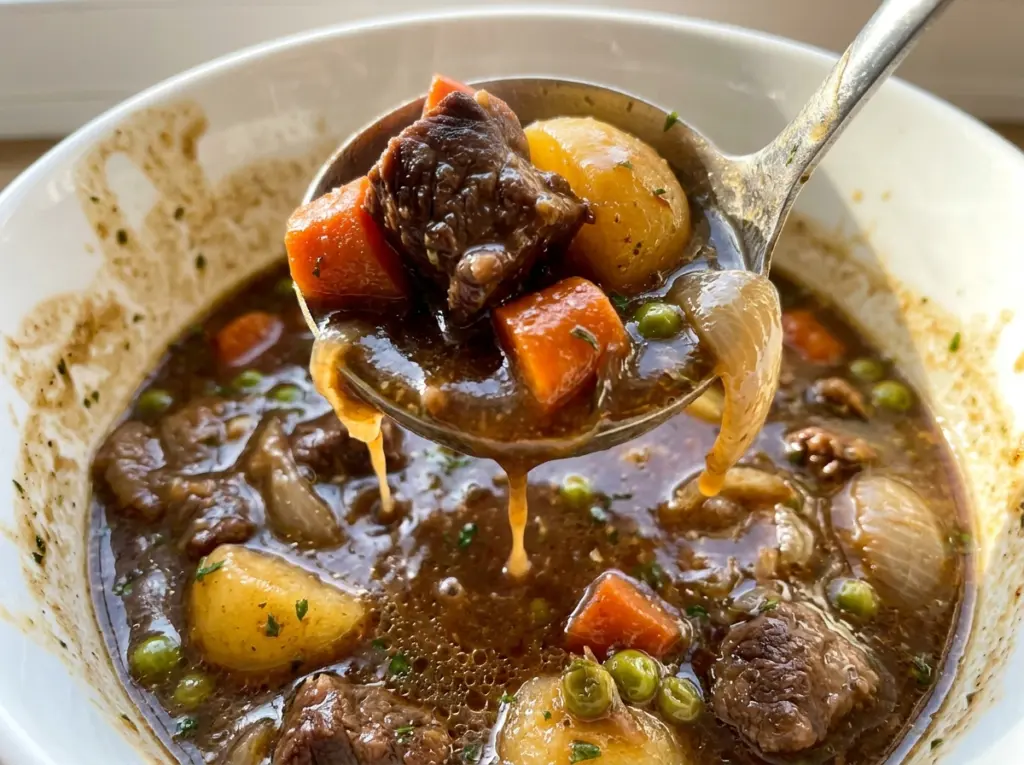
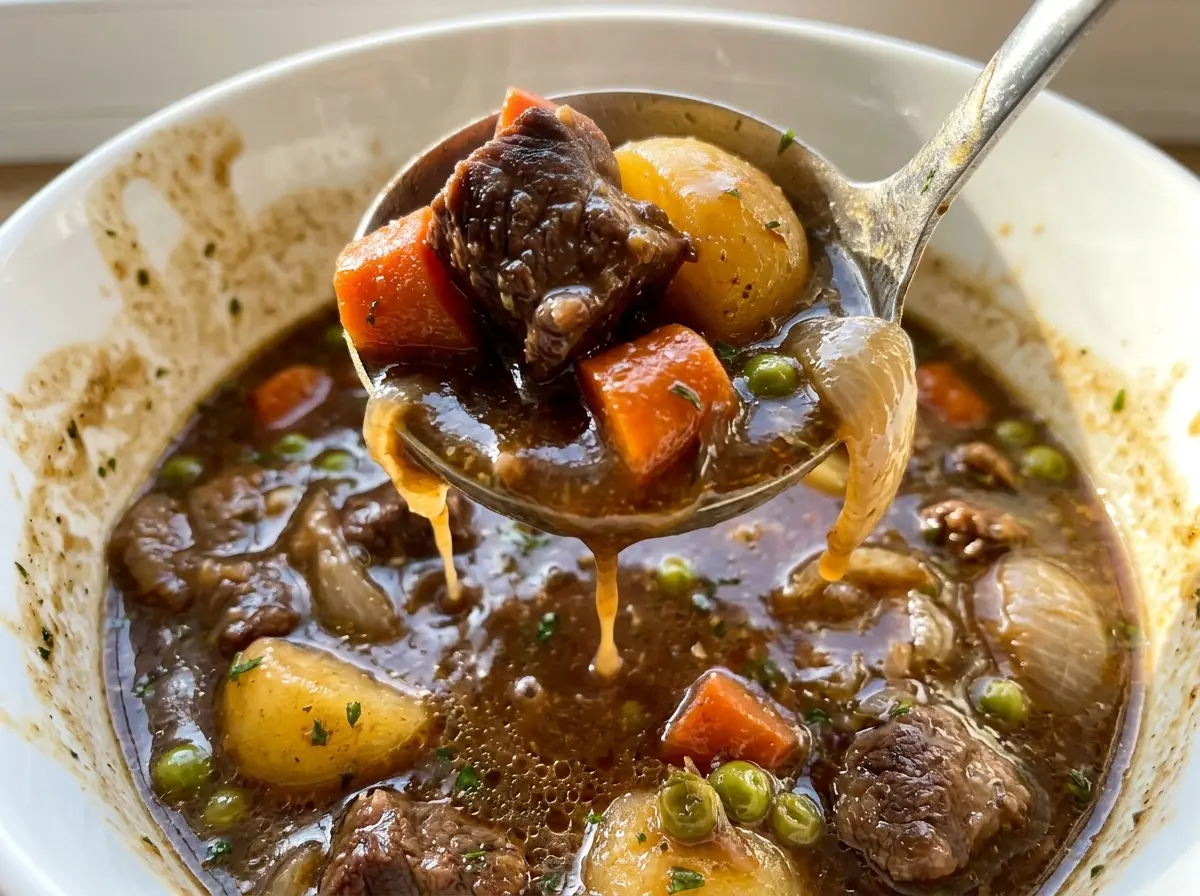
The first thing I notice when this stew is underway is how much the browned bits on the bottom of the pot change the broth. They look like something to scrub away, but once loosened, they give the liquid a deeper, beefier taste. That’s a big part of what makes this old fashioned beef stew taste like it’s been tending on the stove all afternoon.
I use beef chuck because it has the richness and texture for a long, gentle simmer. The potatoes, carrots, and celery go in later, so they have time to turn tender without disappearing into the broth. By the time the pot rests, the beef is fork-tender and the broth is thick enough to cling to a spoon, with familiar, savory flavor in every bite.
Kitchen Note
Pour the broth in gradually and scrape as you go. Adding it all at once can leave floury lumps behind; a steady pour helps the flour blend into a smooth base.
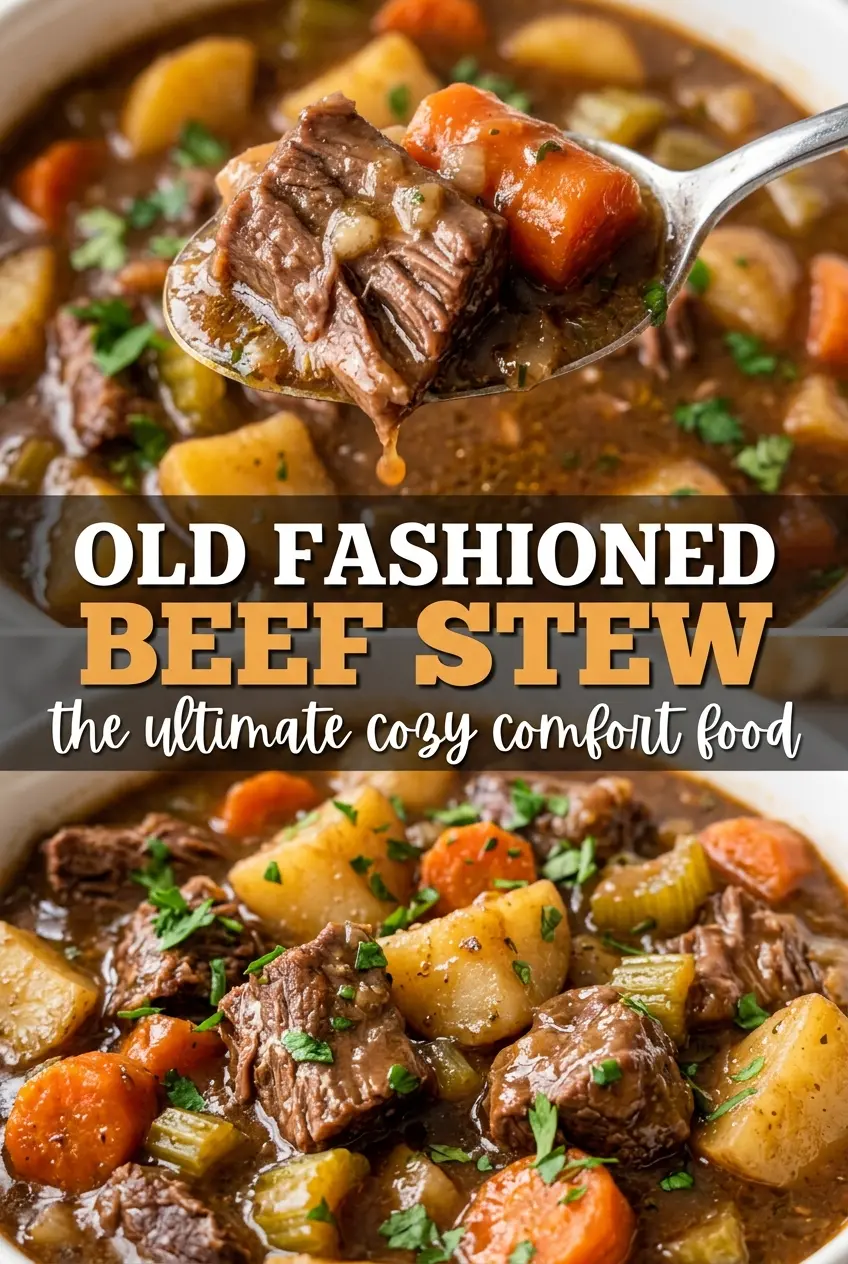
Save this old fashioned beef stew for a cold evening: tender chuck, soft vegetables, and a rich broth built right in the pot.
Why Rushing the Beef Browning Leaves Stew Flavor Behind
Browning isn’t just about giving the beef a darker surface. The seared pieces leave flavorful browned bits in the Dutch oven, and those become part of the broth when you scrape them up later. If the beef is crowded, it releases moisture and steams instead of browning, so work in batches and give each piece room.
Patting the cubes dry first helps the surface brown rather than turn wet in the pan. Let the oil get hot over medium-high heat, then leave the beef undisturbed long enough to develop color before turning it. The goal isn’t to cook the centers through; the covered simmer will take care of that. You’re building flavor on the outside now, then carrying it into the broth with the onion, garlic, tomato paste, and beef broth.
Use a plate for the browned pieces and pour any juices that collect there back into the pot. Those juices belong in the stew, too. If some pieces are darker than others, that’s fine; an even, deep brown on every side matters more than rushing through all the beef at once.
What Beef Chuck, Yukon Golds, and Flour Each Bring to the Pot
- Beef chuck — Chuck has enough connective tissue and fat to become tender during a long, gentle simmer. Choose well-trimmed pieces with some marbling; premium beef isn’t necessary, but avoid very lean cuts, which can turn dry before they soften. Cut the cubes evenly so they cook at a similar pace. Another beef cut won’t necessarily give the same tender texture in this cooking time.
- Yukon Gold potatoes — These potatoes hold their shape while still becoming creamy inside, which suits a stew where you want distinct pieces rather than a pot thickened by crumbling potatoes. Choose firm potatoes without soft spots. Keep the pieces close to the stated size so they become tender alongside the beef and other vegetables.
- All-purpose flour — The flour coats the base ingredients and thickens the broth as the stew simmers. It’s an inexpensive pantry staple, and there’s no need for a specialty brand. Skipping it will leave the broth thinner; a different thickener changes the method, so I stick with all-purpose flour for this version.
- Tomato paste and Worcestershire sauce — Tomato paste adds a concentrated savory note, while Worcestershire brings a little tang and depth. A standard grocery-store version of either works well. Cook the paste briefly with the garlic before the flour goes in, so it blends into the base rather than sitting in little raw-tasting pockets.
- Beef broth — The broth carries the flavor from the browned beef and forms the stew’s cooking liquid. A regular, everyday beef broth is fine; choose one whose taste you like, since it makes up most of the liquid in the pot. There isn’t a one-for-one non-beef replacement in this particular stew that keeps the same flavor.
Building the Broth Before the Vegetables Go In
Brown the Chuck Without Crowding the Pot
Pat the beef dry with paper towels and season it with black pepper. Heat the vegetable oil in a 6-quart Dutch oven over medium-high heat, then brown the beef on all sides in batches, about 6 to 8 minutes per batch. Transfer each batch to a plate rather than piling it back into the pot. If liquid pools around the cubes, the pan is too crowded; give the next batch more space.
Cook the Aromatics and Flour
Add the chopped onion and cook over medium heat, stirring occasionally, until softened, about 5 minutes. Stir in the minced garlic and tomato paste and cook for 1 minute, then stir in the flour and cook for 1 minute more. The onion should look softened, and the tomato paste should be worked through the pot rather than sitting in a single clump. Keep stirring once the flour goes in so it coats the mixture evenly.
Simmer the Beef Until It Starts to Soften
Gradually stir in the beef broth, scraping up the browned bits from the bottom as the liquid loosens them. Add the Worcestershire sauce, dried thyme, bay leaf, kosher salt, browned beef, and any juices from the plate, then bring everything to a gentle simmer. Cover the pot, reduce the heat to low, and simmer for about 1 1/2 to 2 hours, stirring occasionally. Keep the heat low enough for a gentle simmer; a hard boil can make the beef cook unevenly.
Add the Vegetables and Rest the Stew
Stir in the potatoes, carrots, and celery, then cover and simmer for about 35 to 45 minutes, until the beef is fork-tender and the vegetables are tender. Check a potato and a piece of beef rather than judging the pot by the carrots alone. Remove the bay leaf when everything is ready. Let the stew rest off the heat for 10 minutes before serving so the broth settles and the hot contents aren’t bubbling away in the bowl.
Small Changes for a Different-Tasting Pot
A Quieter, Less Tangy Broth
Leave out the Worcestershire sauce for a milder, more straightforward beef-and-vegetable flavor. The broth will lose some of its tang and savory depth, but the browned beef, tomato paste, and thyme still give it a familiar stew character.
A Milder Thyme Note
Use less dried thyme if you prefer the beef and vegetables to lead, or leave it out for a simpler broth. The stew will have less of that earthy herbal note, but the other ingredients still make a savory base.
A Less Salty Version
Reduce or omit the kosher salt for a less salty stew. This is a straightforward seasoning adjustment, but it won’t control the salt already present in the beef broth, so the finished flavor will depend on the broth you choose.
Storage and Reheating
- Refrigerator: Store in a covered container for 3 to 4 days. The broth may thicken as it chills, and the potatoes will soften a little more.
- Freezer: Freeze in airtight containers for up to 2 to 3 months for best quality. The potatoes can become softer after thawing, but the stew remains suitable for freezing.
- Reheating: Warm it gently in a saucepan, stirring occasionally, until it reaches 165°F. Avoid boiling it hard; that can break up the vegetables and make the beef seem stringier.
Questions That Come Up With Old Fashioned Beef Stew
Old Fashioned Beef Stew
Ingredients
Equipment
Method
- Pat the beef dry with paper towels.
- Season the beef with the black pepper.
- Heat the vegetable oil in a 6-quart Dutch oven over medium-high heat.
- Working in batches, brown the beef on all sides, about 6 to 8 minutes per batch.
- Transfer the browned beef to a plate.
- Add the onion to the pot and cook over medium heat, stirring occasionally, until softened, about 5 minutes.
- Stir in the garlic and tomato paste and cook for 1 minute.
- Stir in the flour and cook for 1 minute more.
- Gradually stir in the beef broth, scraping up the browned bits from the bottom of the pot.
- Add the Worcestershire sauce, thyme, bay leaf, salt, and browned beef with any accumulated juices.
- Bring the stew to a gentle simmer.
- Cover, reduce the heat to low, and simmer until the beef is starting to become tender, about 1 1/2 to 2 hours, stirring occasionally.
- Stir in the potatoes, carrots, and celery.
- Cover and simmer until the beef is fork-tender and the vegetables are tender, about 35 to 45 minutes.
- Remove the bay leaf.
- Let the stew rest off the heat for 10 minutes before serving.


