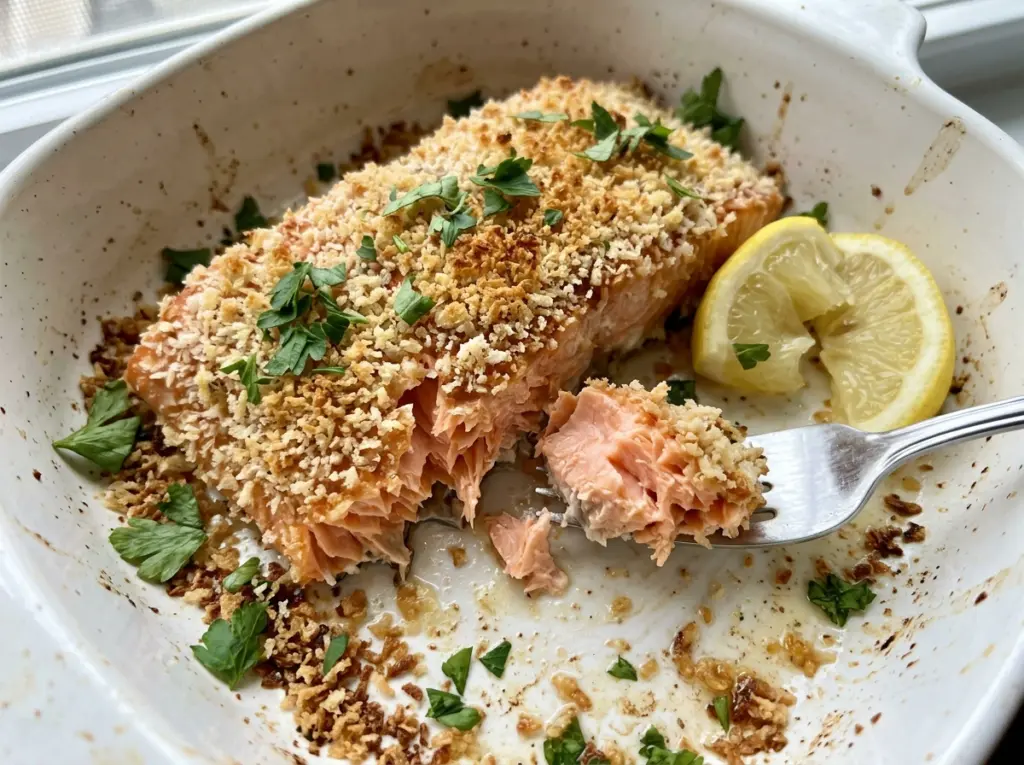
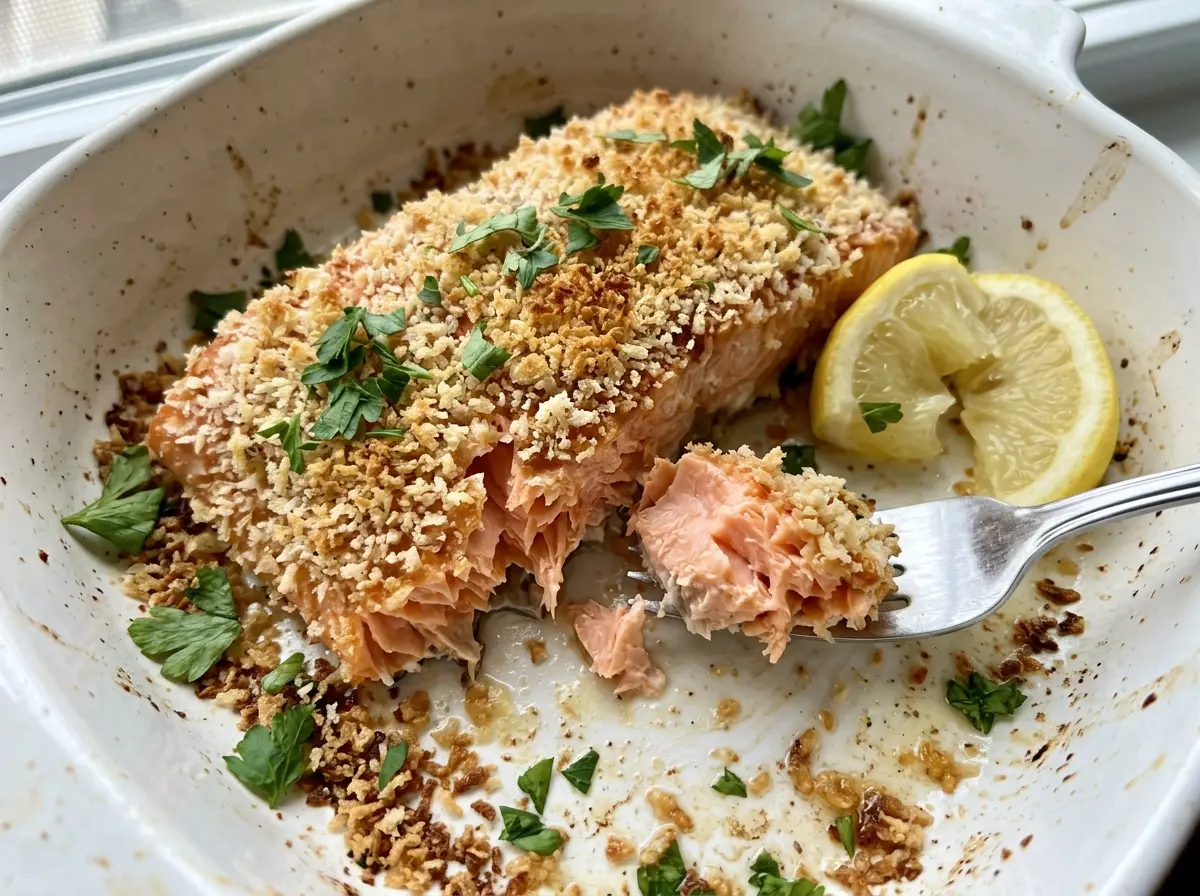
The panko goes from loose flakes to a damp, sandy mixture as soon as the melted butter hits the bowl. That’s the texture I want for this Panko Crusted Salmon: moist enough to cling, but still loose enough to bake into a crisp top. Dijon gives the crumbs something to hold on to, and a little lemon zest keeps the buttery crust bright.
I keep the topping on the salmon’s upper surface rather than trying to coat the whole fillet. It makes the prep straightforward and gives the panko direct exposure to the oven as it turns golden. A thermometer takes the guesswork out of the fish underneath, so the crust and salmon can finish together: crisp on top, tender through the center.
Kitchen Note
Give the salmon its full 3-minute rest before cutting. The topping stays in place better, and the fish is easier to portion without dragging the crust off.
Save this Panko Crusted Salmon for a crisp, buttery panko topping and a tender center, all baked on one sheet pan.
Why This Crust Goes on Top, Not Around the Salmon
A crisp top and a fully breaded fillet aren’t quite the same project. Here, the mustard-coated surface gives the panko a place to adhere, while leaving the sides and bottom uncovered keeps the preparation uncomplicated. There’s no need to turn or handle the fish once the topping is in place.
The topping also gets a clear run at the oven’s heat. Panko has larger, airier flakes than fine breadcrumbs, and the melted butter distributes through those flakes before baking. Spread that mixture in an even layer and the surface can brown while the salmon cooks beneath it. A thick mound in one spot and a bare patch in another would bake unevenly, so even coverage matters more than packing the crumbs down hard.
Think of Dijon as part of the crust’s construction, not just a sharp layer of flavor. It helps the crumbs cling to the top, and its tang gives the buttery coating a little contrast. The result is a simple, contained topping that doesn’t need a separate dredging station or a second pan.
What Panko, Dijon, and Fresh Lemon Bring to This Salmon

- Center-cut salmon — A center-cut fillet gives you a broad, even surface for the topping. Skin-on or skinless both work; if the skin is attached, keep it on the bottom against the baking sheet. Choose a fillet that looks moist and smells clean, rather than relying on a particular label or premium grade.
- Panko — Those coarse flakes are what give the crust its light, irregular crunch. A basic package works well; you don’t need a specialty brand, just breadcrumbs that are dry and loose rather than stale or clumped. For a gluten-free version, use gluten-free panko in the same amount; the crust may be a little different in texture depending on the brand.
- Dijon mustard — Smooth Dijon spreads into a thin, even layer and brings a clean tang beneath the crumbs. A fresh jar from the regular grocery aisle is fine. Grainy mustard would leave a bumpier layer, so Dijon is the better choice for even coverage here.
- Unsalted butter — Melted butter coats the panko and helps it toast as it bakes. Unsalted butter lets the seasoning stay balanced with the salt added directly to the salmon. Melt it before mixing so it can spread through the crumbs instead of leaving cold clumps.
- Parsley, lemon zest, and garlic — Fresh parsley contributes a mild herbal note, while finely grated lemon zest adds citrus fragrance without extra liquid. Use only the colored zest; the white pith underneath tastes bitter. Mince the garlic finely so it mixes through the crumbs instead of leaving a large, sharp piece in one bite.
Build the Topping and Bake Until the Salmon Is Done
Season the salmon on the prepared pan
Heat the oven to 400°F and line a rimmed baking sheet with parchment paper. Set the salmon on the sheet skin-side down if it has skin, then season it with the kosher salt and black pepper. Spread the Dijon over the top surface in a thin, even layer. Keep the coating on top rather than letting mustard pool around the sides.
Mix the panko until evenly moistened
Stir the panko, melted butter, chopped parsley, lemon zest, and minced garlic together in a small bowl. Keep stirring until the butter is distributed through the crumbs and you don’t see dry patches. The mixture should look evenly damp, not like a paste. That loose texture makes it easier to scatter and press across the fish.
Press on the crust and bake
Spread the panko mixture over the mustard-coated top in an even layer, then press it gently so it adheres. Avoid compressing it into a dense slab; the aim is an even coating that stays put. Bake for 12 to 16 minutes, watching for a golden crust and checking the thickest part of the salmon with an instant-read thermometer. The fish is ready when that center reaches 145°F.
Let the fish rest before serving
Take the pan from the oven and leave the salmon undisturbed for 3 minutes. This short rest gives you time to bring the pan to the table or get a serving utensil ready. When you portion it, slide a spatula between the salmon and parchment, then lift from underneath so the crust stays on top.
Three Small Changes That Suit Different Tables
Make the crust gluten-free
Replace the regular panko with the same amount of gluten-free panko and keep the rest of the method unchanged. The coating still gets buttered and pressed onto the mustard, though the flakes may bake up a little more compact depending on the product.
Leave out the garlic
Omit the minced garlic for a milder crust and let the lemon zest and parsley stand out more. The panko will still moisten and adhere as usual, so there’s no need to change the butter or mustard.
Skip the parsley for a simpler topping
Leaving out the parsley gives you a more direct lemon-and-garlic crust without changing its texture. This is a handy option if you don’t have fresh herbs; keep the lemon zest and garlic in the mixture.
Storage and Reheating
- Refrigerator: Store leftover salmon in an airtight container in the refrigerator within 2 hours; it keeps for 3 to 4 days. The panko softens after chilling, even though the fish stays good to eat.
- Freezer: Freeze cooked portions in an airtight freezer-safe container for up to 2 to 3 months for best quality. Thaw in the refrigerator before reheating; the crust won’t be as crisp as it is fresh.
- Reheating: Warm portions in a 300°F oven, loosely covered with foil, until the center reaches 165°F. Gentle oven heat is less likely to dry out the salmon than reheating it uncovered at a high temperature, though the topping will soften.
Questions That Come Up When Baking Panko Crusted Salmon
Panko Crusted Salmon
Ingredients
Equipment
Method
- Heat the oven to 400°F and line a rimmed baking sheet with parchment paper.
- Place the salmon skin-side down, if it has skin, on the baking sheet; season with salt and pepper, then spread the Dijon over the top.
- Stir the panko, melted butter, parsley, lemon zest, and garlic together in a small bowl until evenly moistened.
- Press the panko mixture onto the mustard-coated top of the salmon in an even layer.
- Bake for 12 to 16 minutes, until the crust is golden and the thickest part of the salmon reaches 145°F.
- Rest the salmon for 3 minutes before serving.


