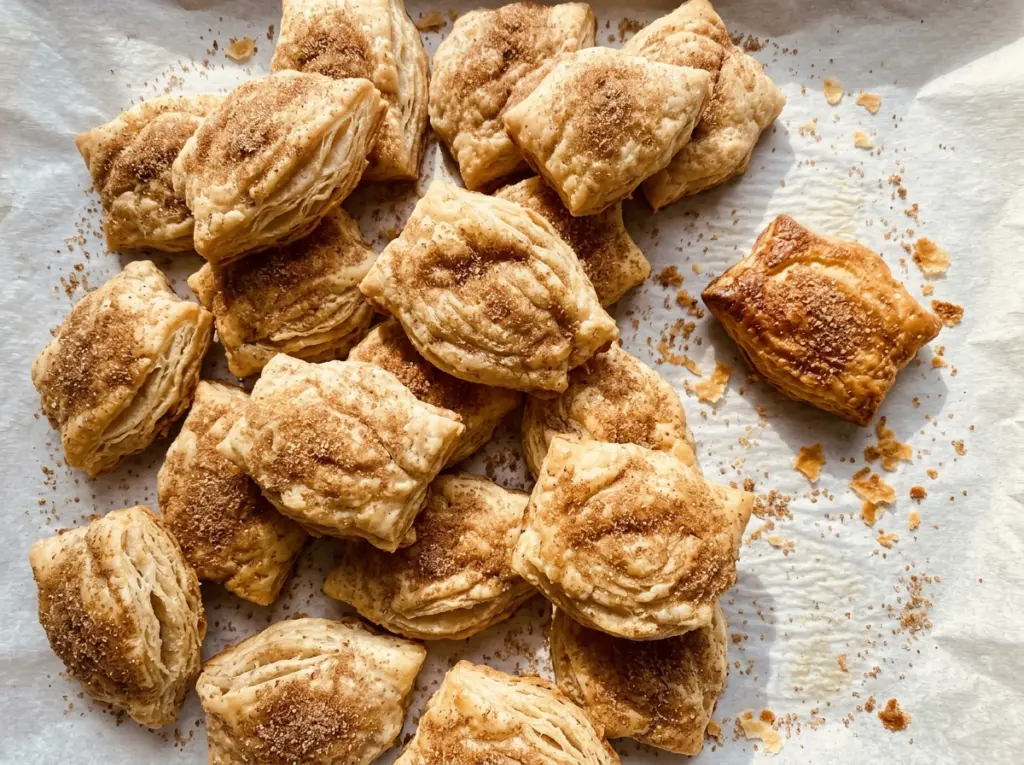
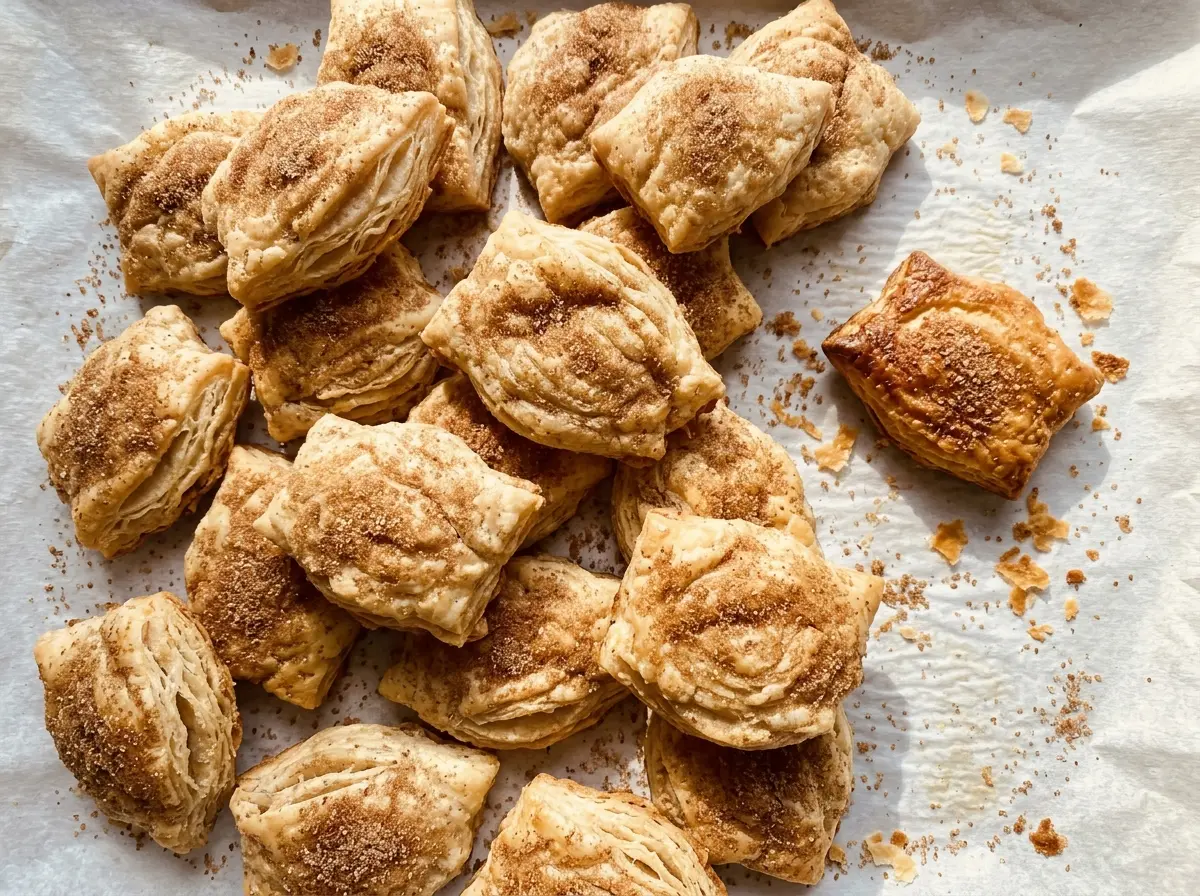
The cinnamon sugar starts to smell warm and toasty before the pie crust edges turn golden, and that’s your cue to stay close to the oven. These pie crust cookies are a handy way to turn refrigerated pastry into crisp, buttery wedges without mixing or chilling a dough from scratch.
I roll each crust into a 10-inch round, brush it with melted butter, then scatter on cinnamon sugar before cutting it into wedges. The crust needs a short rest at room temperature first; rolling it straight from the refrigerator can leave it stiff and prone to cracking. Once the edges are golden and the cookies have cooled on a rack, they’re light, crisp, and easy to nibble.
Kitchen Note
Brush the melted butter across the crust in a thin, even layer before adding the cinnamon sugar. Dry patches leave bare spots where the topping won’t cling as well.
Save these pie crust cookies for a quick cinnamon-sugar bake when you have refrigerated pie crusts on hand.
Why Pie Crust Needs a Short Rest Before You Roll It
Refrigerated pie crust is convenient, but it’s firm when it first comes out of the refrigerator. Give the crust 15 minutes at room temperature, or follow the timing on its package, before you try to roll it. That brief rest makes the pastry more pliable, so it’s easier to shape into a round without forcing it or creating cracks at the edges.
Keep the rest focused on handling rather than waiting for the dough to feel warm. The goal is a crust that rolls smoothly while still holding its shape. If it’s cold and stiff, pressing harder won’t make it more cooperative; it can split instead. Working with one crust at a time also keeps the second crust ready for its own short rest while the first batch bakes. A neat round gives you wedges that are closer in size, which helps them bake at a similar pace.
That small pause is especially useful with packaged crust because this bake doesn’t have a filling to hide uneven spots. The pastry itself is the cookie, so keeping it intact gives you crisp, tidy pieces with cinnamon sugar spread across the surface.
What the Crust, Butter, and Cinnamon Sugar Each Bring

- Refrigerated pie crusts — Roll-out crusts give these cookies their flaky, layered bite without extra dough prep. Use the refrigerated kind in a package with two crusts; a ready-made pie shell isn’t the same format. Parchment is useful when rolling because the pastry can be shaped without adding flour that would change the surface.
- Granulated sugar — Its dry, fine texture spreads easily over the buttered pastry and bakes into a delicate sweet coating. Ordinary granulated sugar is the right choice here; specialty sugar isn’t needed. Brown sugar has more moisture and won’t give the same light, even finish.
- Ground cinnamon — Cinnamon supplies the familiar warm aroma that makes these wedges taste like a pastry-shop treat. A fresh, fragrant jar gives the strongest flavor, though everyday ground cinnamon works well. Keep it dry and stir it thoroughly into the sugar so you don’t get concentrated pockets.
- Unsalted butter — Melted butter helps the cinnamon sugar adhere and adds a rich taste to the pastry. Unsalted butter keeps the result from becoming unexpectedly salty. If salted butter is the only option, it can work, but the cookies will have a slightly saltier finish.
From a 10-Inch Round to Golden Cinnamon Wedges
Get the Oven and Pastry Ready
Heat the oven to 375°F and line a large rimmed baking sheet with parchment paper. Let the refrigerated crusts stand at room temperature for 15 minutes, unless the package gives different directions. Stir the granulated sugar and cinnamon together in a small bowl while the pastry rests. Having the topping ready means you can spread it while the buttered crust is still easy to work with.
Roll and Top One Crust
Set one crust on a piece of parchment paper and roll it into a 10-inch round. Brush the surface with 1 tablespoon of melted butter, then sprinkle it evenly with half of the cinnamon sugar. Aim for a coating that reaches across the round rather than collecting in one area. Repeat the same sequence with the second crust after the first batch is in the oven.
Cut Even Wedges and Bake
Cut the topped round into 12 wedges and arrange them about 1/2 inch apart on the prepared baking sheet. Give the pieces space so the edges bake evenly instead of crowding against one another. Bake for 10–13 minutes, watching for golden-brown edges; the color is a clearer cue than relying on the shorter time alone. If the edges are still pale, give the batch a little more time within that range.
Cool, Then Repeat
Transfer the baked cookies to a wire rack to cool. Don’t stack them while they’re hot, since trapped warmth can soften the pastry as it cools. Once the first batch is out, arrange the remaining wedges on the sheet and bake them for 10–13 minutes, until their edges are golden brown. The two crusts make 24 wedges in all.
Three Practical Ways to Change the Batch
Make a 12-cookie half batch
Use one of the two crusts and half of the cinnamon sugar and melted butter. Roll it into the same 10-inch round and cut 12 wedges. This is a useful option when you want a small tray without leaving half a batch of baked cookies to store.
Cut strips instead of wedges
After topping the round, cut it into narrow strips instead of 12 wedges for a different shape. The ingredients stay the same, but the pieces will be slimmer and easier to pick up as a snack. Start checking at 10 minutes and use golden edges as your doneness cue, since the changed shape may bake at a slightly different pace.
Make a dairy-free batch
Choose refrigerated pie crusts labeled dairy-free and use an equal amount of melted dairy-free butter in place of the unsalted butter. The cinnamon sugar stays the same. The pastry’s exact flakiness depends on the crust and butter substitute, but this keeps the method and sweet-spiced finish intact.
Storage and Reheating
- Refrigerator: Refrigeration isn’t needed and can soften the crisp pastry. Keep fully cooled cookies in an airtight container at room temperature for up to 3 days.
- Freezer: Freeze completely cooled cookies in an airtight container for up to 1 month, with parchment between layers. Thaw at room temperature so condensation doesn’t collect on the surface.
- Reheating: If the cookies have softened, warm them on a baking sheet at 300°F for 3–4 minutes, then cool completely. Skip the microwave, which can make pastry chewy.
Questions That Come Up With Pie Crust Cookies
Pie Crust Cookies
Ingredients
Equipment
Method
- Preheat the oven to 375°F.
- Line a large rimmed baking sheet with parchment paper.
- Let the pie crusts stand at room temperature for 15 minutes, or as directed on the package.
- Stir the sugar and cinnamon together in a small bowl.
- On a piece of parchment paper, roll one pie crust into a 10-inch round.
- Brush the crust with 1 tablespoon melted butter.
- Sprinkle evenly with half the cinnamon sugar.
- Cut the crust into 12 wedges.
- Arrange the wedges about 1/2 inch apart on the prepared baking sheet.
- Bake for 10–13 minutes, until the edges are golden brown.
- Transfer the cookies to a wire rack to cool.
- Repeat with the remaining crust, butter, and cinnamon sugar.
- Bake the second batch for 10–13 minutes until the edges are golden brown.


