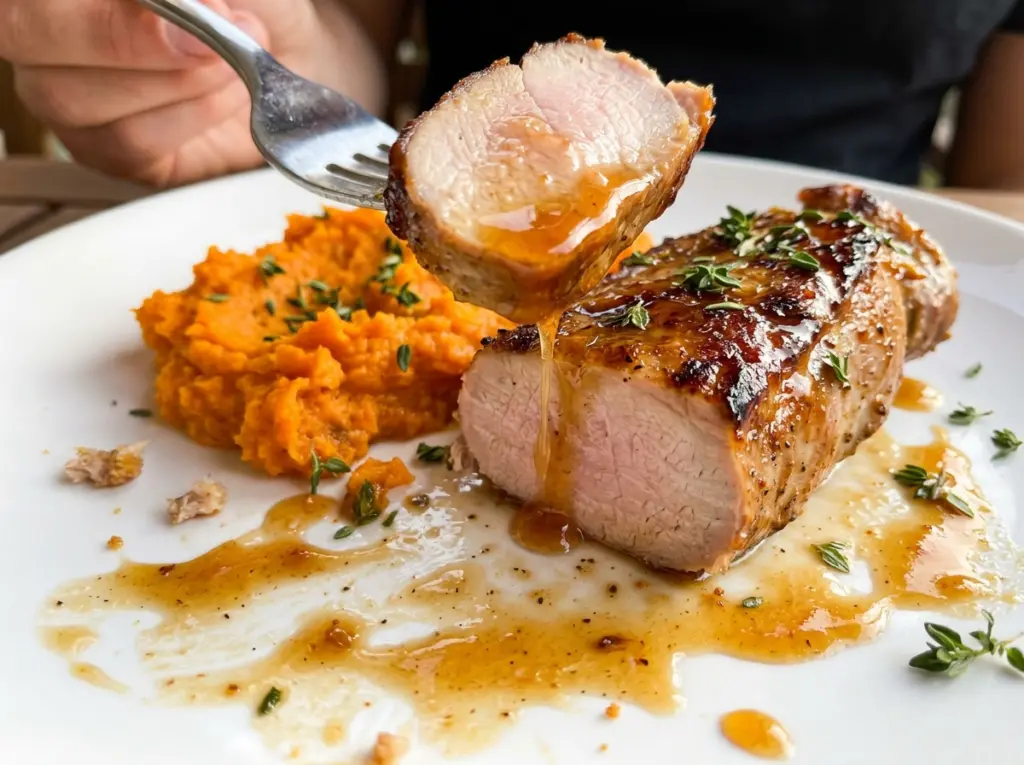
The glaze starts out looking like plain cider, but after a patient simmer it turns glossy and clings to a spoon. That reduction is what gives this pork tenderloin its sweet-tart finish without leaving a watery puddle on the plate. I serve it with smooth sweet potato mash, which makes the whole meal feel complete without adding another complicated side.
The timing makes a difference here: the pork gets browned first, then roasts for a few minutes before the glaze goes on. Brown sugar can darken quickly in a hot oven, so brushing it on later lets the tenderloin cook through without giving the glaze too much time to scorch. Keep an instant-read thermometer nearby, and you’ll have tender slices with a shiny cider coating beside buttery mash.
Kitchen Note
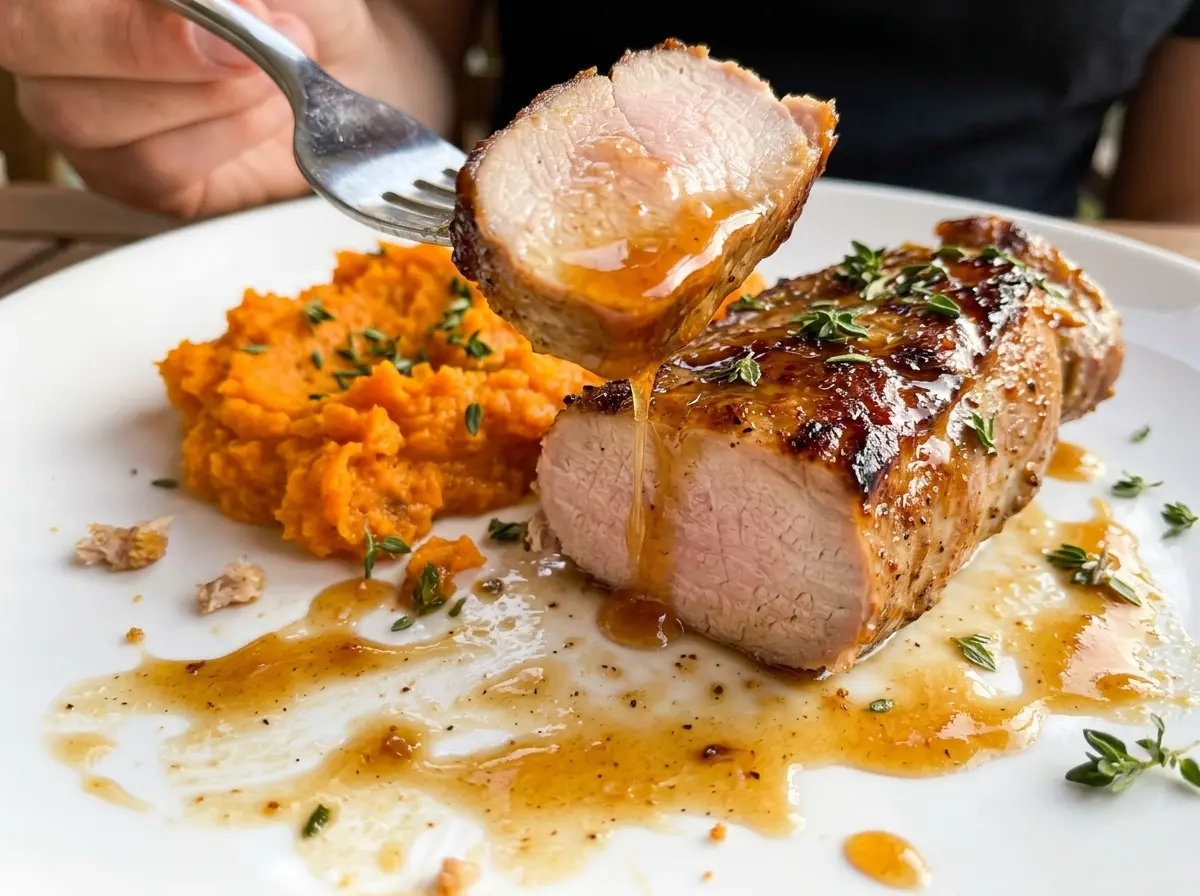
Use a clean brush when you glaze the pork, then keep the serving glaze in its saucepan. That way the portion you brush on the meat doesn’t mingle with the glaze you’ll spoon over dinner.
Save this pork tenderloin with its glossy apple cider glaze and buttery sweet potato mash for a dinner that feels special without fussy steps.
Why the Cider Glaze Goes on After the First Roast
It’s tempting to brush the glaze on before the tenderloin goes into the oven, but the glaze has brown sugar in it. Give the pork time to roast before adding that sweet coating. The first stretch in the oven lets the meat cook without the glaze sitting against high heat for the full roasting time.
The sequence also gives you two useful checkpoints. First, roast the seared tenderloin for 8 minutes at 425°F. Then brush on about 2 tablespoons of glaze and return the skillet to the oven. The thermometer—not the color of the glaze—tells you when the pork is ready: the thickest part should read 145°F. If you glaze too early, the outside can get darker than you want while the center still needs time. Late glazing gives you a shiny finish while keeping the cider flavor bright.
What Gives the Cider Glaze Its Sweet-Tart Balance

- Apple cider and cider vinegar — Cider brings the round, apple-forward sweetness, while a small amount of vinegar cuts through the brown sugar and butter. Use cider with a clean apple taste rather than a spiced drink, which would shift the glaze’s flavor. Apple juice can stand in for cider in the same amount, but it usually makes the glaze taste sweeter; keep the vinegar in the mixture.
- Brown sugar and Dijon mustard — The sugar helps the reduced cider turn syrupy, and Dijon gives the glaze a savory edge that keeps it from tasting like dessert. If Dijon isn’t available, use the same amount of yellow mustard; the result will be milder and less sharp. Stir the ingredients together before simmering so the mustard disperses instead of sitting in little pockets.
- Butter — Unsalted butter rounds out the glaze after it comes off the heat. Stir it in at the end rather than boiling it with the cider, so it melts into the reduced liquid and gives the glaze a smooth finish.
- Sweet potatoes and whole milk — Sweet potatoes make a naturally soft mash, and whole milk loosens it without making it watery when the potatoes have been drained well. Choose firm potatoes without soft spots; there’s no need to seek out a special variety. The milk should be whole milk for the creamy texture in this version.
- Pork tenderloin — Tenderloin is lean and cooks quickly, which suits the short sear-and-roast method. Buy one with the silver skin removed, or trim that tough membrane before seasoning; it won’t soften as the pork cooks. A different cut, such as pork loin, won’t follow the same timing.
Building the Glaze, Mash, and Pork in the Right Order
Reduce the Cider Until It Turns Syrupy
Combine the cider, brown sugar, Dijon, and cider vinegar in a 2-quart saucepan. Bring the mixture to a simmer over medium heat, stirring occasionally, and cook for 12 to 15 minutes. Look for about 1/3 cup of liquid with a syrupy consistency; if it still looks thin, give it the time it needs to reduce. Take the saucepan off the heat and stir in the butter.
Boil and Mash the Sweet Potatoes
Put the peeled, 1-inch sweet potato chunks and water in a 6-quart pot, then bring them to a boil over high heat. Boil for 12 to 15 minutes, until a fork meets very little resistance in the center of a chunk. Drain them well before returning them to the pot; excess water makes the mash loose. Mash with the salted butter and whole milk until smooth, then cover the pot to keep the mash warm.
Sear Every Side of the Tenderloin
Heat the oven to 425°F, pat the pork dry, and season it all over with kosher salt and black pepper. Warm the vegetable oil in a 12-inch oven-safe skillet over medium-high heat. Sear the tenderloin, turning it to brown all sides, for about 6 to 8 minutes total. If the skillet isn’t oven-safe, don’t put it in the oven; use an oven-safe skillet for this sear-and-roast method.
Glaze, Roast to Temperature, and Slice
Transfer the skillet to the oven and roast the pork for 8 minutes. If the glaze has cooled, warm it over low heat until it’s pourable, then brush about 2 tablespoons over the pork with a clean brush. Roast for another 4 to 10 minutes, checking the thickest part with an instant-read thermometer until it reads 145°F. Move the tenderloin to a cutting board, rest it for at least 3 minutes, then slice across the grain and serve with the mash and remaining glaze.
Two Ways to Adapt the Mash and Glaze
Make the Mash Dairy-Free
Replace the salted butter with dairy-free butter and use unsweetened oat milk in place of whole milk, matching the amounts in the recipe card. The mash will still be creamy, though the exact salt level depends on the plant-based butter you choose.
Keep the Sweet Potato Skins On
For a more rustic mash, leave the skins on instead of peeling the sweet potatoes and mash them with the butter and milk as usual. The texture will be heartier and less silky than the smooth version, with no change to the cider-glazed pork.
Storage and Reheating
- Refrigerator: Store the pork, mash, and glaze in separate airtight containers for 3 to 4 days. The mash firms as it chills, and the glaze will thicken.
- Freezer: The pork and mash freeze well in airtight containers for up to 2 to 3 months; freeze the glaze separately. The mash may be a little less smooth after thawing.
- Reheating: Warm the pork covered in short intervals in the microwave, and reheat the mash gently in a saucepan, stirring until hot. Warm the glaze over low heat until pourable. Reheat leftovers to 165°F, and avoid prolonged high heat on the pork, which can dry it out.
Questions That Come Up While Cooking This Pork Tenderloin
Pork Tenderloin with Apple Cider Glaze and Sweet Potato Mash
Ingredients
Equipment
Method
- Combine the apple cider, brown sugar, Dijon mustard, and cider vinegar in a 2-quart saucepan.
- Bring the mixture to a simmer over medium heat.
- Cook, stirring occasionally, for 12 to 15 minutes, until reduced to about 1/3 cup and syrupy.
- Remove the glaze from the heat and stir in the butter.
- Put the sweet potatoes and water in a 6-quart pot and bring to a boil over high heat.
- Boil for 12 to 15 minutes, until the potatoes are very tender when pierced with a fork.
- Drain the potatoes well and return them to the pot.
- Mash with the salted butter and milk until smooth.
- Cover to keep warm.
- Preheat the oven to 425°F.
- Pat the pork dry and season it all over with the kosher salt and black pepper.
- Heat the vegetable oil in a 12-inch oven-safe skillet over medium-high heat.
- Sear the pork, turning it to brown all sides, for about 6 to 8 minutes total.
- Transfer the skillet to the oven and roast for 8 minutes.
- If the glaze has cooled, warm it over low heat until pourable.
- Brush about 2 tablespoons of glaze over the pork with a clean brush.
- Continue roasting for 4 to 10 minutes, until an instant-read thermometer inserted into the thickest part reads 145°F.
- Transfer the pork to a cutting board and rest for at least 3 minutes.
- Slice across the grain and serve with the sweet potato mash and remaining glaze.


