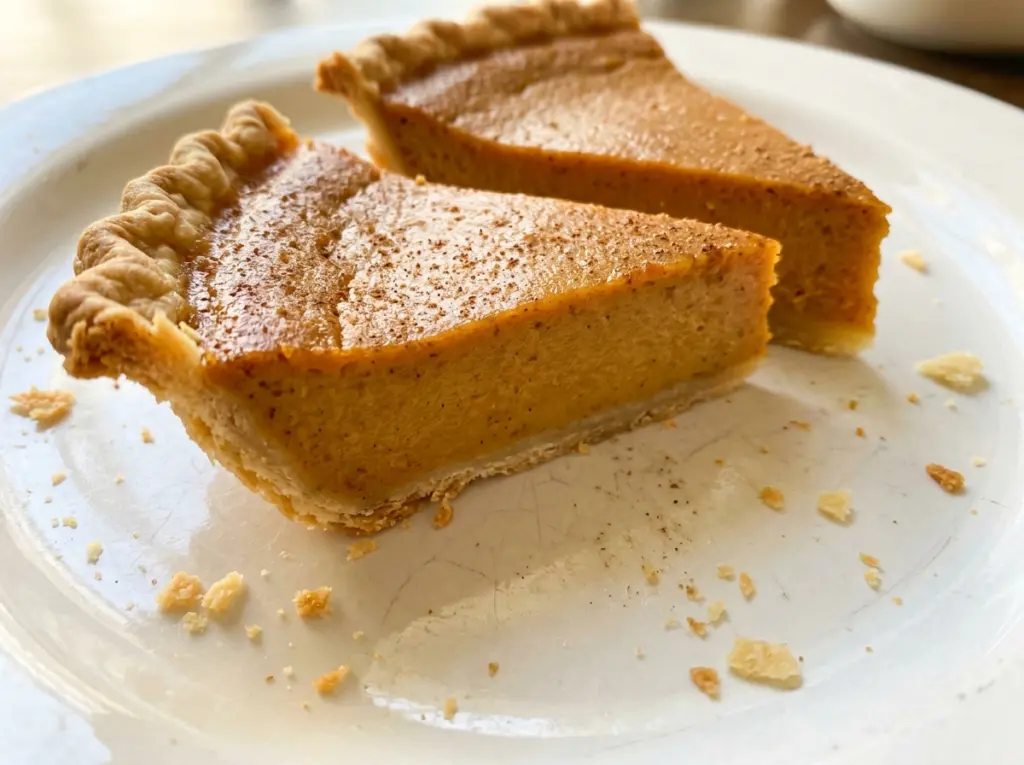
The first sign this pie is close is the center: it still has a gentle wobble when the edges have set. That small movement can look like a pie that needs more time, but pumpkin custard firms as it cools. Keep baking until the center is completely still and the filling can turn dense instead of tender.
Pumpkin Custard Pie gets its smooth texture from eggs and evaporated milk, while cinnamon, ginger, nutmeg, and just a touch of cloves keep the pumpkin in front. I make the crust with cold butter, then give the dough time to chill so it rolls neatly and holds its shape in the pie plate. After the oven, a patient rest lets the filling settle into clean slices with a soft, creamy center.
Kitchen Note
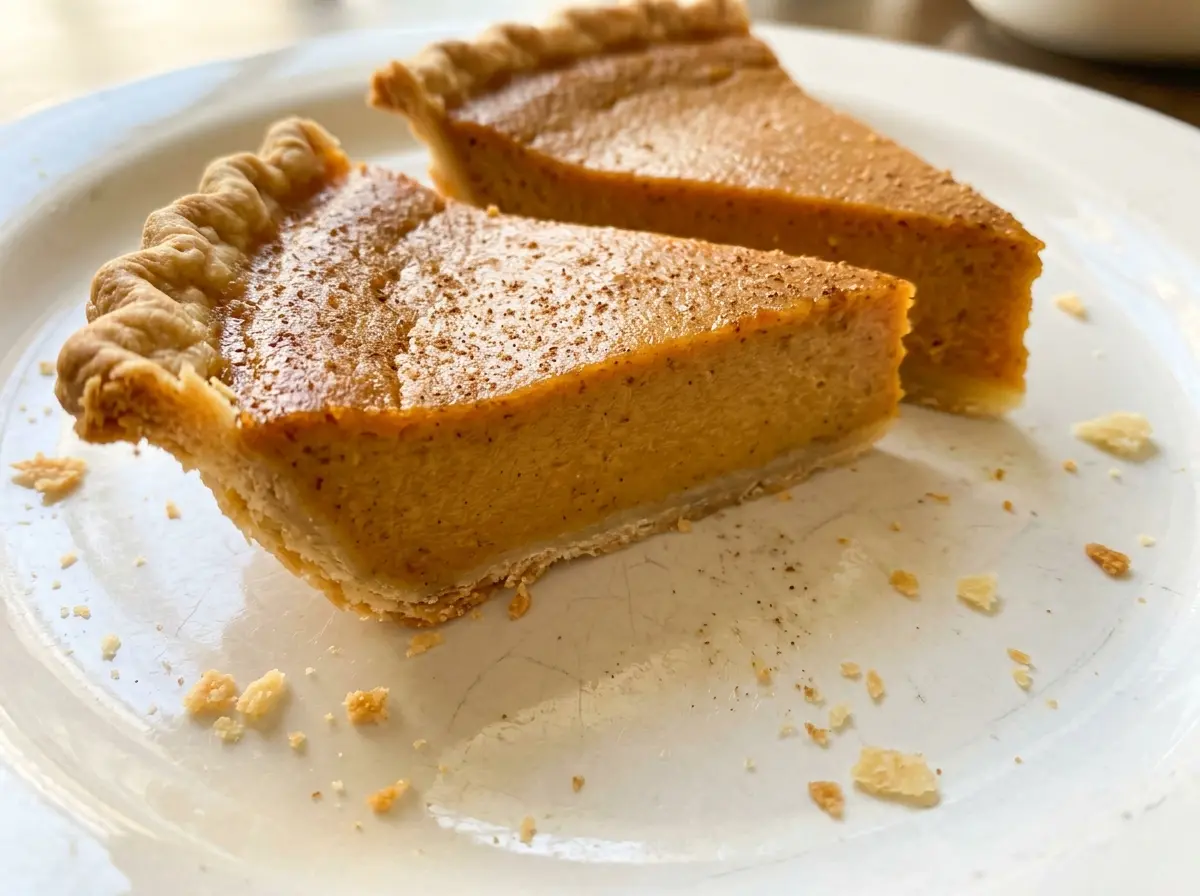
Don’t keep adding water just because the dough looks shaggy. Press a handful between your fingers; if it holds together, it’s ready to shape into a disk and chill.
Save Pumpkin Custard Pie for its smooth, warmly spiced filling and tender all-butter crust.
Why a Pumpkin Custard Center Should Still Wobble
Pumpkin pie doesn’t behave like a cake. The filling is a custard, and the eggs continue to set from the heat already in the pie after it leaves the oven. If you wait until the whole center looks firm, the custard can bake past its sweet spot and turn tight or slightly grainy. A small movement in the middle is a better cue than a perfectly still surface.
Look at the pie in two zones. The outside should be set, while the middle moves gently as one piece when you nudge the pie plate; it shouldn’t ripple like liquid. That distinction matters because the surface can look smooth before the center has finished baking, and a crack or overly firm texture often starts with leaving it in until every part appears motionless. The temperature check gives you a second, more dependable signal alongside that visual cue. Once it reaches the right point, cooling on a wire rack gives the custard time to finish settling instead of asking the oven to do all the work.
Why Evaporated Milk Gives This Filling Its Custard Texture

- Evaporated milk — Its concentrated, unsweetened dairy gives the filling a creamy body without adding the extra sugar found in sweetened condensed milk. Regular milk is thinner, so it isn’t a direct swap in this mixture; use evaporated milk for the intended texture.
- Pumpkin puree — Plain canned puree provides the pumpkin base and dependable thickness. Check that the can says pumpkin puree rather than pumpkin pie filling, which already contains sweetener and spices and would throw off the balance.
- Eggs — The eggs set the filling into slices while keeping it custardy. Use large eggs as listed; smaller eggs provide less structure, and there isn’t a simple replacement that gives this pie the same set.
- Cold unsalted butter — Cold pieces create small pockets in the crust as it bakes, while unsalted butter lets you control the salt. A good basic butter works well here; keep it cold and cut it into cubes before starting.
- All-purpose flour — Standard all-purpose flour makes a sturdy, tender crust and an inexpensive store brand is fine. For a gluten-free crust, use a cup-for-cup gluten-free baking blend formulated for pastry; see the variation below because the dough may be more delicate.
- Granulated sugar and spices — Sugar sweetens the pumpkin and helps the filling bake into a smooth custard. Fresh, fragrant ground spices matter more than a premium brand; cloves are assertive, so keep their small amount in proportion rather than adding extra by eye.
Build the Crust and Bake the Custard Without Guesswork
Cut in the Butter and Chill the Dough
Whisk the flour and salt in a medium bowl, then work in the cold butter with a pastry cutter until the pieces are about pea-sized. Sprinkle the ice water over the mixture and toss with a fork until it holds together when pressed. Shape the dough into a disk, wrap it, and refrigerate it for 1 hour. If the butter smears into the flour, the crust can lose its flaky texture, so keep the pieces cold as you work.
Roll a Circle That Fits the Pie Plate
Roll the chilled dough between sheets of parchment into a 12-inch circle. The parchment keeps the dough from sticking to the counter and makes it easier to lift without stretching it. Fit it into a 9-inch pie plate, trim the edges, and crimp them. Avoid pulling the dough to make it reach; stretched dough is more likely to shrink back during baking.
Whisk the Filling Until Smooth
In a large bowl, whisk together the pumpkin, eggs, sugar, cinnamon, ginger, nutmeg, cloves, and salt. Gradually whisk in the evaporated milk until the mixture looks even and smooth. Adding the milk gradually makes it easier to blend the thick pumpkin mixture without leaving streaks. Pour the filling into the unbaked crust once the oven is heated.
Use the Hot Start, Then Watch the Center
Heat the oven to 425°F and bake the pie for 15 minutes at that temperature. Reduce the oven to 350°F and continue baking for 40 to 50 minutes, until the edges are set, the center has a slight wobble, and the center reaches 175°F. If the crust edges brown too quickly, cover them loosely with foil. Transfer the pie to a wire rack and cool it for at least 2 hours before serving so the custard can settle.
Small Changes That Keep Pumpkin Custard Pie in Balance
Make the Crust Gluten-Free
Replace the all-purpose flour with an equal volume of cup-for-cup gluten-free baking flour made for pastry. Keep the butter cold and use the same press-to-check cue for the dough; gluten-free pastry can be more fragile, so roll it between parchment and lift it carefully into the plate.
Soften the Clove Warmth
Leave out the ground cloves for a gentler spice blend. Cinnamon, ginger, and nutmeg still give the pumpkin a familiar warmth, but the filling tastes less pungent; the custard texture stays the same.
Storage and Reheating
- Refrigerator: After cooling on the rack for 2 hours, cover and refrigerate promptly; keep the pie for 3 to 4 days. The crust softens somewhat as it sits.
- Freezer: It freezes well for up to 1 month. Wrap the cooled pie or individual slices airtight, then thaw in the refrigerator; the custard may be a little softer after thawing.
- Reheating: This pie is best served chilled or at room temperature, so reheating isn’t needed. Warming the whole pie can overcook the custard and make its texture firm.
Questions That Come Up When Baking Pumpkin Custard Pie
Pumpkin Custard Pie
Ingredients
Equipment
Method
- Whisk the flour and salt in a medium bowl.
- Cut in the cold unsalted butter with a pastry cutter until the pieces are about pea-sized.
- Sprinkle the ice water over the mixture and toss with a fork until the dough holds together when pressed.
- Shape the dough into a disk, wrap, and refrigerate for 1 hour.
- Roll the dough between sheets of parchment into a 12-inch circle.
- Fit the dough into a 9-inch pie plate, trim the edges, and crimp.
- Heat the oven to 425°F.
- Whisk the pumpkin puree, eggs, granulated sugar, cinnamon, ginger, nutmeg, cloves, and salt in a large bowl.
- Gradually whisk in the evaporated milk until smooth.
- Pour the filling into the unbaked crust.
- Bake for 15 minutes at 425°F.
- Reduce the oven temperature to 350°F and bake for 40 to 50 minutes, until the edges are set, the center has a slight wobble, and the center reaches 175°F; loosely cover the crust edges with foil if they brown too quickly.
- Cool the pie on a wire rack for at least 2 hours before serving.


