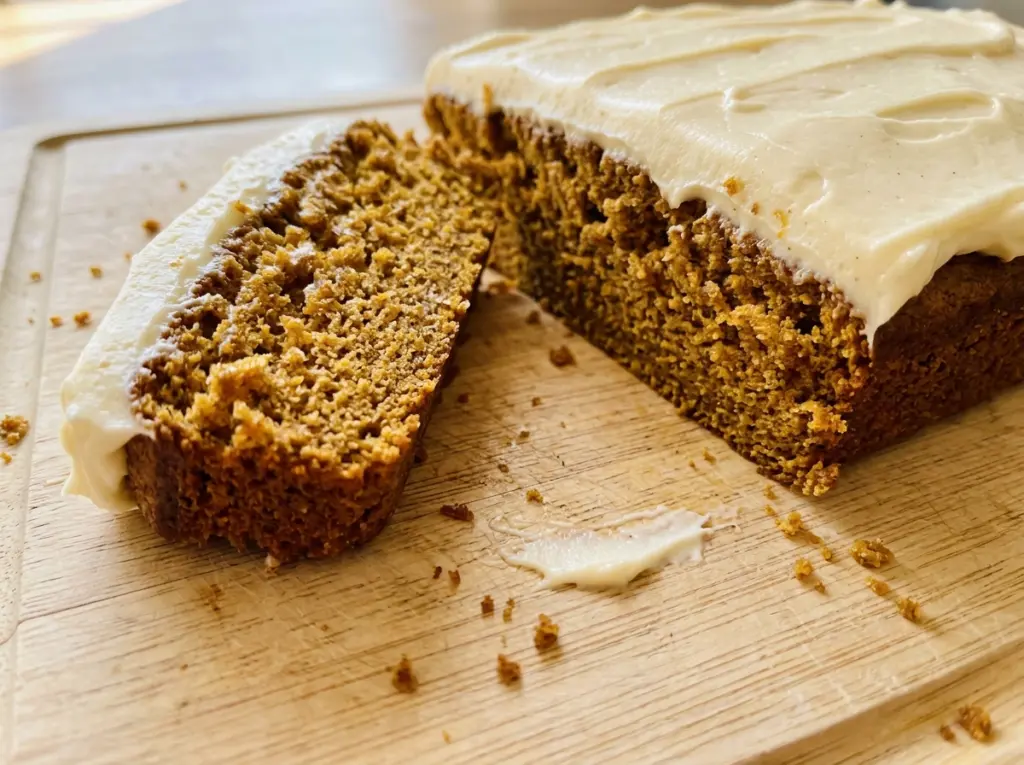
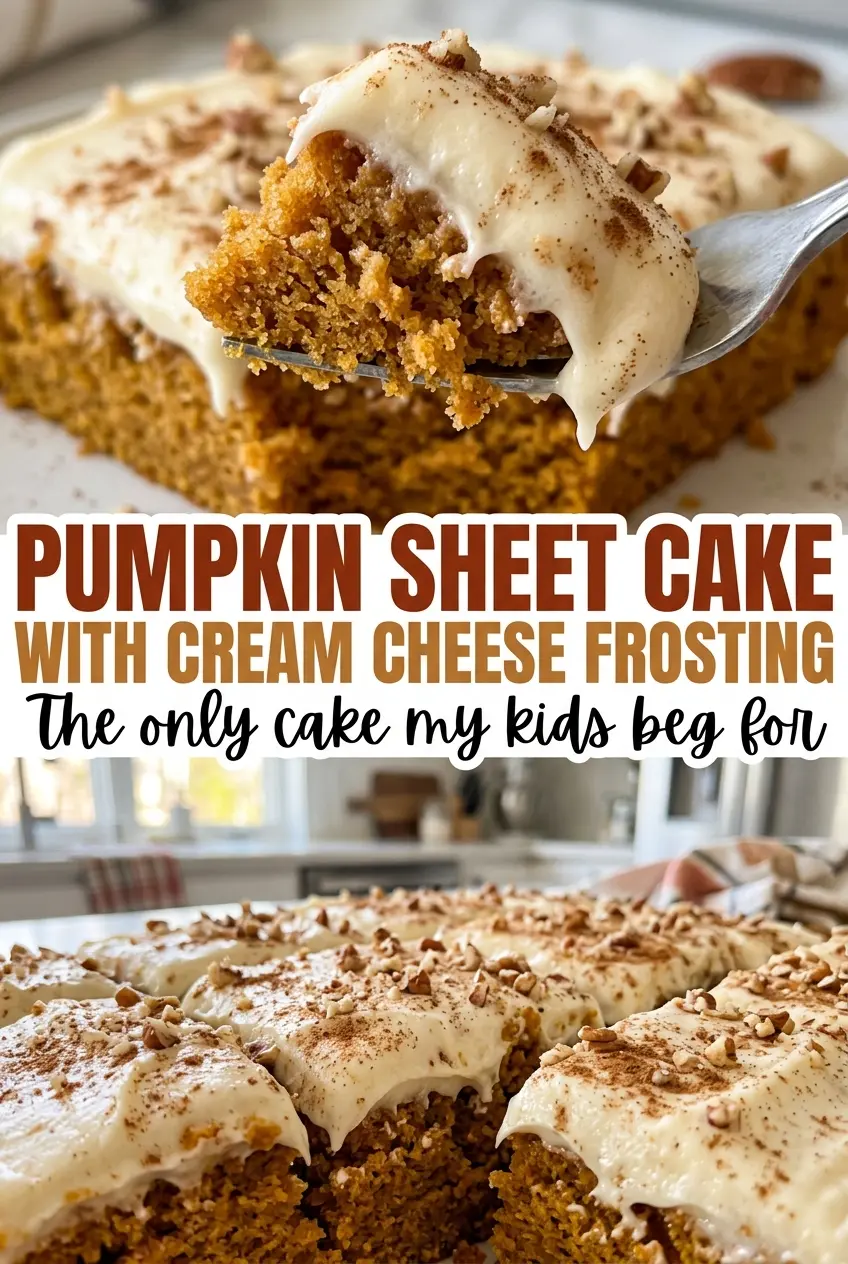
The warm smell of cinnamon and ginger reaches the kitchen before this cake is out of the oven, and the top can look ready to frost while the center is still warm. Give it time: cream cheese frosting softens and slides on a warm cake. This pumpkin sheet cake with cream cheese frosting bakes in a 15×10-inch pan, so there’s plenty to share without stacking layers or fussing with a tall cake.
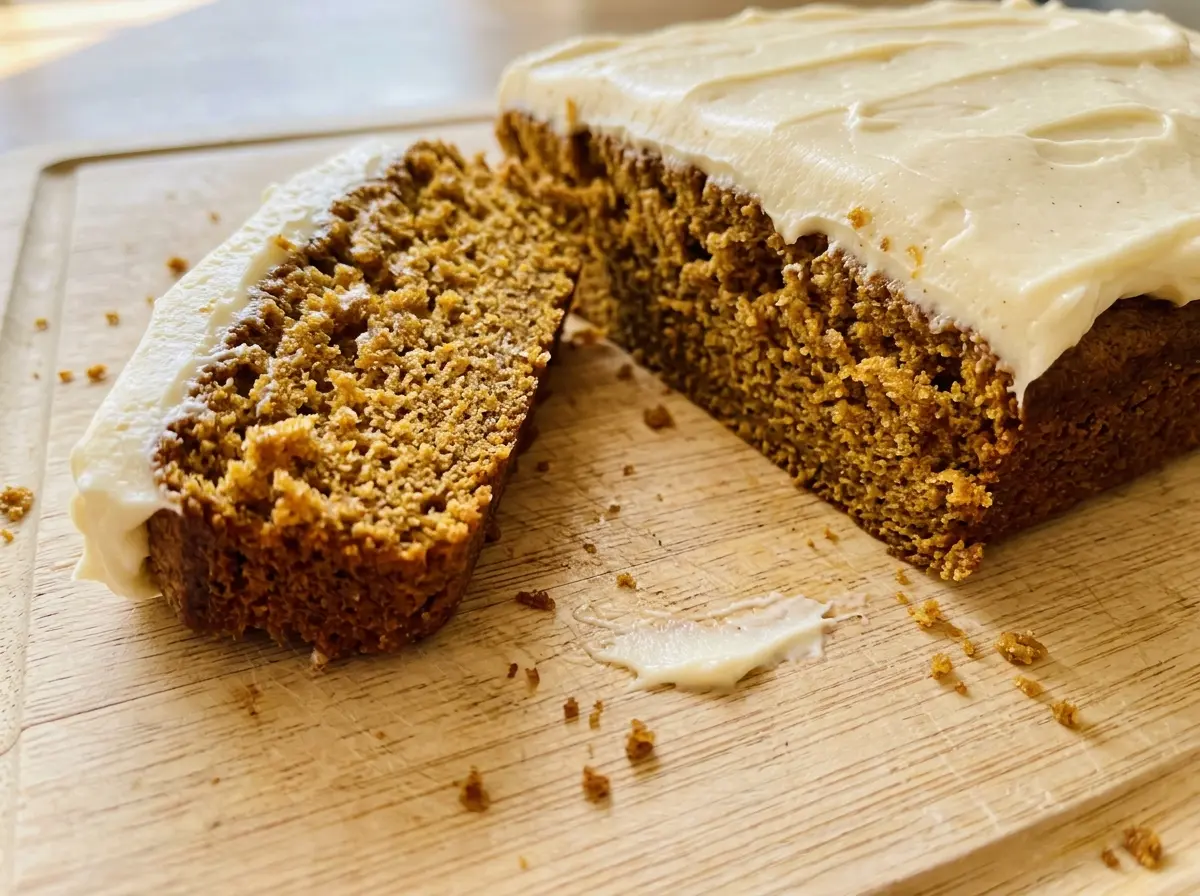
The batter comes together in bowls with a whisk, and the finished cake has a tender, moist crumb under a smooth layer of tangy frosting. I like how the pumpkin keeps the cake soft while the spices stay noticeable without overpowering the cream cheese. Once it’s cooled, the wide, even surface makes frosting and slicing straightforward.
It’s a good cake to bring to a gathering or keep on hand for a few days of dessert. The soft spiced crumb and cool frosting make each square feel like a proper slice of cake.
Kitchen Note
Let the cream cheese and butter soften all the way through before you beat them. If either is still cold in the middle, little lumps can linger in the frosting even after mixing.
Save this pumpkin sheet cake with cream cheese frosting for its soft spiced crumb and tangy, creamy finish.
Why Pumpkin Pie Filling Throws Off This Cake’s Sweetness
Canned pumpkin products can look nearly identical in the can, but they aren’t interchangeable here. Pumpkin puree is just pumpkin; pumpkin pie filling is already sweetened and spiced. This batter has its own measured sugar and warm spices, so pie filling would change the sweetness and could push the spice balance in a different direction.
Puree also brings the moisture that gives the cake its soft crumb. Use it straight from the can rather than draining it. The batter is meant to be moist, not watery, and the flour mixture gives it enough structure to bake into a sliceable sheet cake. If there’s leftover puree after measuring, save it for another use rather than adding extra to the batter; more moisture changes the balance.
That distinction matters more than finding a particular brand. Choose a can labeled pumpkin puree, not pumpkin pie filling, and the cake’s sweetness and spice stay where they belong.
Why Vegetable Oil Works Better Than Butter in This Pumpkin Sheet Cake
- Vegetable oil keeps the crumb tender after the cake cools and blends into the wet ingredients without creaming. If you’re out, canola oil works as a one-for-one replacement with a similarly neutral taste.
- All-purpose flour and the leaveners give the cake enough structure to hold its height without turning dense. Check that your baking powder and baking soda are fresh; old leaveners can leave the cake flatter than expected.
- Cinnamon, ginger, and nutmeg make a balanced warm-spice combination. Fresh, fragrant spices have the clearest aroma, but there’s no need to buy a specialty brand if the jars in your pantry still smell lively.
- Large eggs and granulated sugar help the pumpkin mixture turn smooth and give the cake structure and sweetness. Use large eggs so the batter proportions stay consistent.
- Block cream cheese and unsalted butter make a rich, smooth frosting. A tub-style spread is softer and can leave the frosting loose, so use a block of cream cheese for a layer that spreads neatly.
- Powdered sugar, vanilla, and salt round out the frosting. Powdered sugar dissolves smoothly and gives it body; granulated sugar won’t create the same silky texture.
From the Whisked Pumpkin Base to a Smooth Cream Cheese Finish
Prepare the pan and blend the dry ingredients
Heat the oven to 350°F and coat a 15×10-inch rimmed jelly-roll pan with nonstick cooking spray. Whisk the flour, baking powder, baking soda, kosher salt, cinnamon, ginger, and nutmeg together in a medium bowl. Distributing the leaveners through the flour now helps the cake rise evenly. Break up any visible lumps before moving on.
Whisk the pumpkin mixture until smooth
In a large bowl, whisk together the granulated sugar, eggs, vegetable oil, and pumpkin puree. Keep whisking until the mixture looks smooth and the oil is no longer sitting in a separate layer. A few seconds of extra whisking here helps the wet ingredients come together. Scrape the sides of the bowl if pumpkin or sugar is clinging there.
Fold in the flour without overworking
Add the flour mixture to the pumpkin mixture and stir just until no dry streaks remain. The batter will be thick enough to spread, so use a spatula to move it evenly into the prepared pan. Stop once the flour disappears; mixing well past that point can make the cake’s crumb tougher. Nudge the batter into the corners for an even layer.
Bake until the center tests clean, then cool completely
Bake for 25 to 30 minutes. A toothpick inserted in the center should come out clean or with a few moist crumbs, not streaked with wet batter. Set the pan on a wire rack and let the cake cool completely in the pan, about 1 1/2 hours. Frosting a warm center can make the frosting soft and difficult to spread.
Beat and spread the frosting
Beat the softened cream cheese and butter with an electric mixer on medium speed until smooth. Add the powdered sugar, vanilla, and kosher salt; mix on low until combined, then beat on medium until the frosting is smooth and fluffy. Starting on low keeps the powdered sugar from scattering around the bowl. Spread it over the cooled cake in an even layer.
Three Small Changes for a Different Spice, Texture, or Diet
Make the cake gluten-free
Replace the all-purpose flour with a cup-for-cup gluten-free baking blend that includes xanthan gum, measuring it as a direct swap. The cake may have a slightly more delicate crumb, so let it cool fully in the pan before frosting and cutting.
Turn up the ginger
For a sharper, more ginger-forward spice, use 1 1/2 teaspoons ground ginger and 1 1/2 teaspoons ground cinnamon, leaving the nutmeg unchanged. The cake will taste warmer and a little less cinnamon-led.
Make the frosting less sweet
Use 2 1/2 cups powdered sugar instead of 3 cups for a tangier frosting with a softer finish. It won’t be quite as fluffy or firm, so spread it gently over the completely cooled cake.
Storage and Reheating
- Refrigerator: Cover the frosted cake and refrigerate it for up to 4 days. The cake and frosting will be firmer when cold.
- Freezer: Freeze individual slices until the frosting is firm, then wrap them airtight and freeze for up to 2 months. Thaw in the refrigerator; the frosting may soften slightly.
- Reheating: Don’t microwave the frosted cake, since the frosting can melt. Let a slice sit at room temperature briefly before serving to soften the crumb.
Questions That Come Up Before Slicing This Pumpkin Sheet Cake
Pumpkin Sheet Cake with Cream Cheese Frosting
Ingredients
Equipment
Method
- Heat the oven to 350°F.
- Coat a 15x10-inch rimmed jelly-roll pan with the cooking spray.
- In a medium bowl, whisk together the flour, baking powder, baking soda, salt, cinnamon, ginger, and nutmeg.
- In a large bowl, whisk together the sugar, eggs, vegetable oil, and pumpkin puree until smooth.
- Add the flour mixture to the pumpkin mixture and stir just until no dry streaks remain.
- Spread the batter evenly in the prepared pan.
- Bake for 25 to 30 minutes, until a toothpick inserted in the center comes out clean or with a few moist crumbs.
- Cool the cake completely in the pan on a wire rack, about 1 1/2 hours.
- In a large bowl, beat the cream cheese and butter with an electric mixer on medium speed until smooth.
- Add the powdered sugar, vanilla, and salt and beat on low until combined, then on medium until smooth and fluffy.
- Spread the frosting over the cooled cake.


