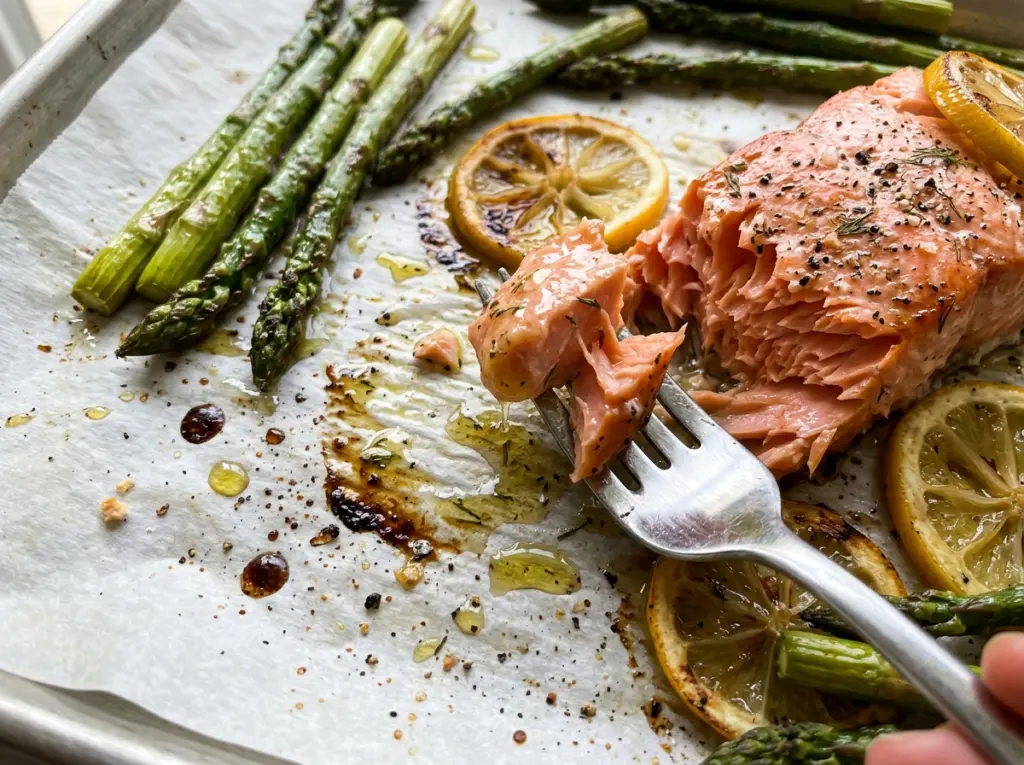
The asparagus gets a five-minute head start in the oven, which is just enough time to give the salmon a place on the pan without asking both ingredients to finish at once. I like this approach for a weeknight dinner because everything roasts together, but the timing still respects the fact that slender vegetables cook faster than thick fish fillets.
For this sheet pan salmon and asparagus, medium asparagus gets tossed with garlic, olive oil, salt, and pepper, while the salmon gets its own simple paprika seasoning. Lemon slices roast right on top of the fish, and wedges go on the plate at the end for a fresher, sharper squeeze. The result is tender asparagus and salmon that flakes easily, with the whole dinner coming off one pan.
Kitchen Note
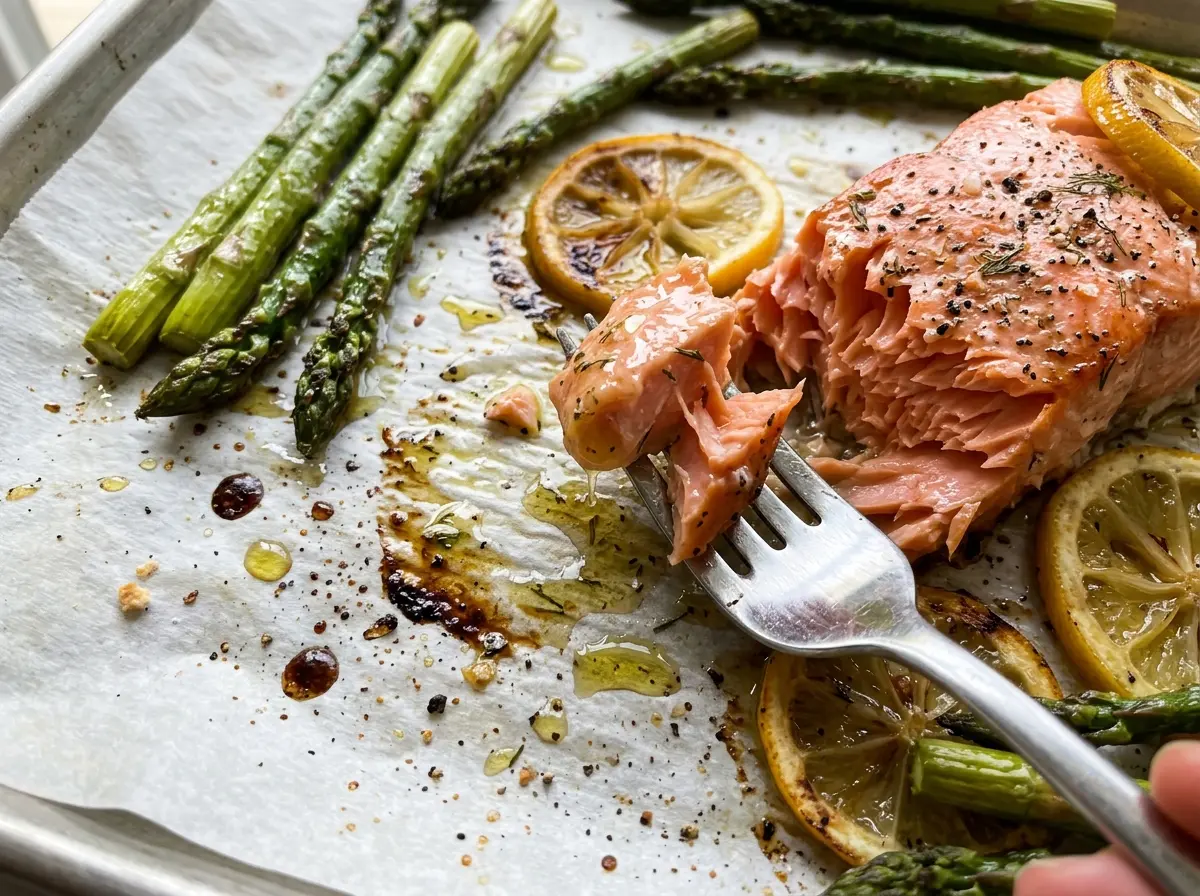
Let the salmon rest for the full three minutes before moving it. The fillets are delicate straight from the oven, and that brief pause makes them easier to lift without breaking apart.
Save this sheet pan salmon and asparagus for a dinner with flaky paprika-seasoned fish, garlicky spears, and lemon roasted right on top.
Why the Asparagus Goes Into the Oven Before the Salmon
Salmon fillets and asparagus don’t need the same amount of oven time. Put everything on the pan at once and the asparagus has to stay in while the fish cooks through; it can come out softer than you want. Giving the spears five minutes alone gets them started, then they finish roasting beside the salmon without asking the fish to wait around in a hot oven.
That short head start also gives you a useful window to season the salmon while the pan is already working. Keep the vegetables in a single layer, with room around the spears rather than piling them into a mound. Crowded asparagus releases moisture and steams instead of roasting, so an even spread matters more than arranging every spear in the same direction. The 18×13-inch rimmed pan leaves enough room for four fillets and a pound of asparagus to sit side by side.
The fish goes skin-side down, with lemon slices over each fillet, for its shorter second roast. Use both the temperature and the texture to judge doneness: the thickest part should reach 145°F, and the fish should separate into flakes when nudged with a fork. The asparagus gets a little more oven time during that stage, but the staggered start keeps it from carrying the whole dinner past its best texture.
What the Salmon, Asparagus, and Lemon Each Bring to the Pan
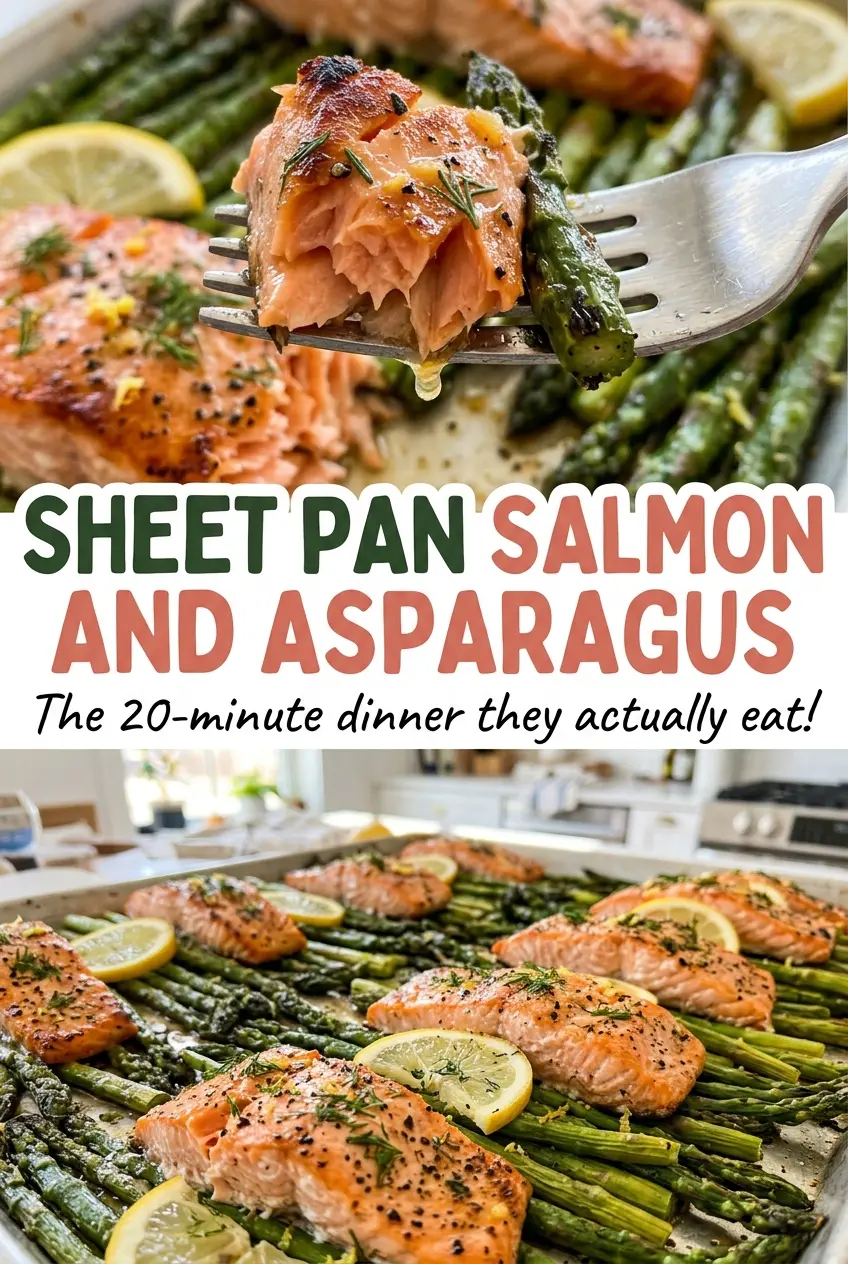
- Medium asparagus — Medium spears hold their shape through the two-stage roast and turn tender without disappearing beside the salmon. Trim off the tough ends so the whole spear is pleasant to eat. If choosing between bunches, look for firm stalks with closed tips; very thin spears cook faster and may soften more during the salmon’s roasting time.
- Salmon fillets — Fillets of similar thickness cook more evenly than a mix of thin tail pieces and thick center cuts. Fresh or previously frozen salmon both work; what matters at the pan is that each fillet is fully thawed and patted dry. The dry surface takes the oil and seasoning evenly instead of letting them slide off.
- Olive oil and garlic — Olive oil helps the asparagus roast and gives the salmon’s seasoning something to cling to. A mild, everyday olive oil is a good fit here; there’s no need to use an expensive finishing oil because the ingredients roast together. Fresh minced garlic gives the asparagus little fragrant bits, so spread it through the spears rather than leaving it in a clump where it could brown unevenly.
- Paprika — Regular paprika brings a gentle, warm pepper flavor without taking over the salmon. Smoked paprika is a useful one-for-one swap if you’d like a deeper, woodsy note; it changes the character of the fish but works with the lemon and garlic.
- Lemon — Slices sit on the salmon as it roasts, so their aroma warms into the fish, while wedges stay fresh for squeezing at the table. Bottled lemon juice can add acidity, but it can’t replace the fragrant roasted slices or give you the same fresh finishing squeeze. This ingredient list is also naturally free of dairy and gluten-containing ingredients.
Roast the Asparagus First, Then Finish the Salmon on the Same Pan
Get the Sheet Pan and Vegetables Ready
Heat the oven to 425°F and line an 18×13-inch rimmed sheet pan with parchment paper. Toss the trimmed asparagus with olive oil, minced garlic, kosher salt, and black pepper until the spears look lightly coated. Spread them in a single layer across the pan, leaving open space for the fillets. If the spears are stacked, separate them before roasting so they cook rather than steam.
Give the Asparagus Its Head Start
Roast the asparagus for 5 minutes before adding the fish. It won’t be fully tender yet; this first stretch simply starts the cooking while you prepare the salmon. Meanwhile, pat each fillet dry, rub it with olive oil, and season it with kosher salt, black pepper, and paprika. Keeping the fish prep separate from the vegetables makes it easier to coat the salmon without disturbing the asparagus.
Add the Salmon and Lemon
Set the fillets skin-side down beside the asparagus, then top each with lemon slices. Return the pan to the oven and roast for 10 to 12 minutes. Check the thickest part of a fillet rather than judging all four by the thinnest edge; the fish is ready at 145°F and flakes easily with a fork. The asparagus should be tender, not limp, when the pan comes out.
Rest and Finish with Fresh Lemon
Leave the salmon to rest for 3 minutes before serving. Keep the lemon wedges separate from the slices that roasted on the fish, so each person can add a fresh squeeze at the table. If you lift the fillets with a thin spatula, slide it underneath from the side rather than pulling at the top; the flakes stay more intact that way.
Three Small Changes for a Different Sheet Pan Dinner
Trade Regular Paprika for Smoked Paprika
Use smoked paprika in place of the regular paprika in the salmon seasoning. The amount stays the same, but the fish takes on a toasty, smoky edge that pairs especially well with the roasted lemon. Keep the rest of the seasoning unchanged so the smoke doesn’t bury the garlic and citrus.
Give the Salmon a Gentle Kick
Stir a small pinch of cayenne into the paprika, salt, and pepper before rubbing the seasoning over the fillets. Cayenne adds heat without changing the cooking method, but start with a light hand so it doesn’t overwhelm the lemon. The asparagus stays mild, which gives each bite a little contrast.
Use Skinless Salmon Fillets
Skinless fillets work if that’s what you have. Set the side that would have been the skin side down on the parchment and use the same roasting window, checking the thickest part for doneness because fillet thickness varies. Without the skin, the underside won’t have the same protective layer, so lift the fish carefully when serving.
Storage and Reheating
- Refrigerator: Store leftovers in a covered container for 3 to 4 days. The asparagus softens after chilling, while the salmon stays flaky if you reheat it gently.
- Freezer: Cooked salmon can be frozen in an airtight freezer-safe container for up to 2 to 3 months, though it may be a little drier after thawing. Roasted asparagus loses its texture in the freezer, so it’s best eaten from the refrigerator rather than frozen.
- Reheating: Cover the salmon and asparagus and warm them in a 275°F oven until the leftovers reach 165°F in the center. A covered dish helps limit moisture loss; high heat or prolonged reheating can dry out the fish.
Questions That Come Up When Roasting Salmon and Asparagus
Sheet Pan Salmon and Asparagus
Ingredients
Equipment
Method
- Heat the oven to 425°F.
- Line an 18x13-inch rimmed sheet pan with parchment paper.
- Toss the asparagus with 1 tablespoon olive oil, 1 garlic clove, 1/2 teaspoon kosher salt, and 1/4 teaspoon black pepper.
- Spread the asparagus in a single layer on the prepared pan.
- Roast for 5 minutes.
- Pat the salmon dry.
- Rub the salmon with 1 tablespoon olive oil.
- Season the salmon with 1/2 teaspoon kosher salt, 1/4 teaspoon black pepper, and 1/2 teaspoon paprika.
- Place the fillets skin-side down on the pan beside the asparagus.
- Top the salmon with the lemon slices.
- Roast for 10 to 12 minutes, until the salmon reaches 145°F at the thickest part and flakes easily with a fork, and the asparagus is tender.
- Rest for 3 minutes.
- Serve with the lemon wedges.


