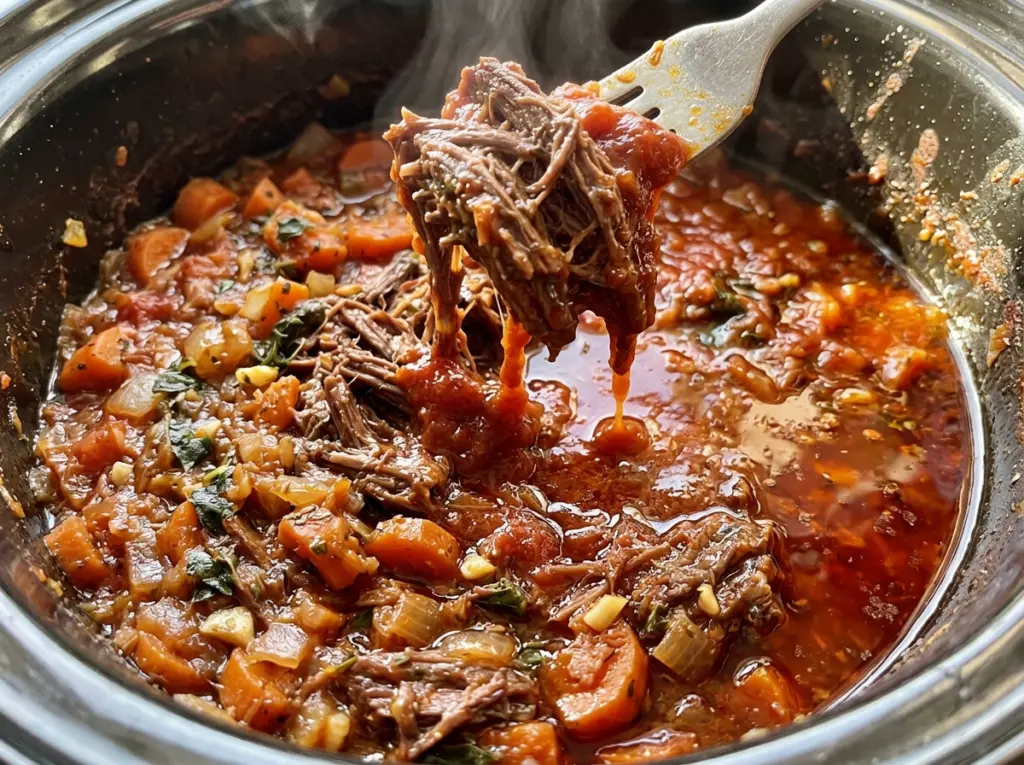
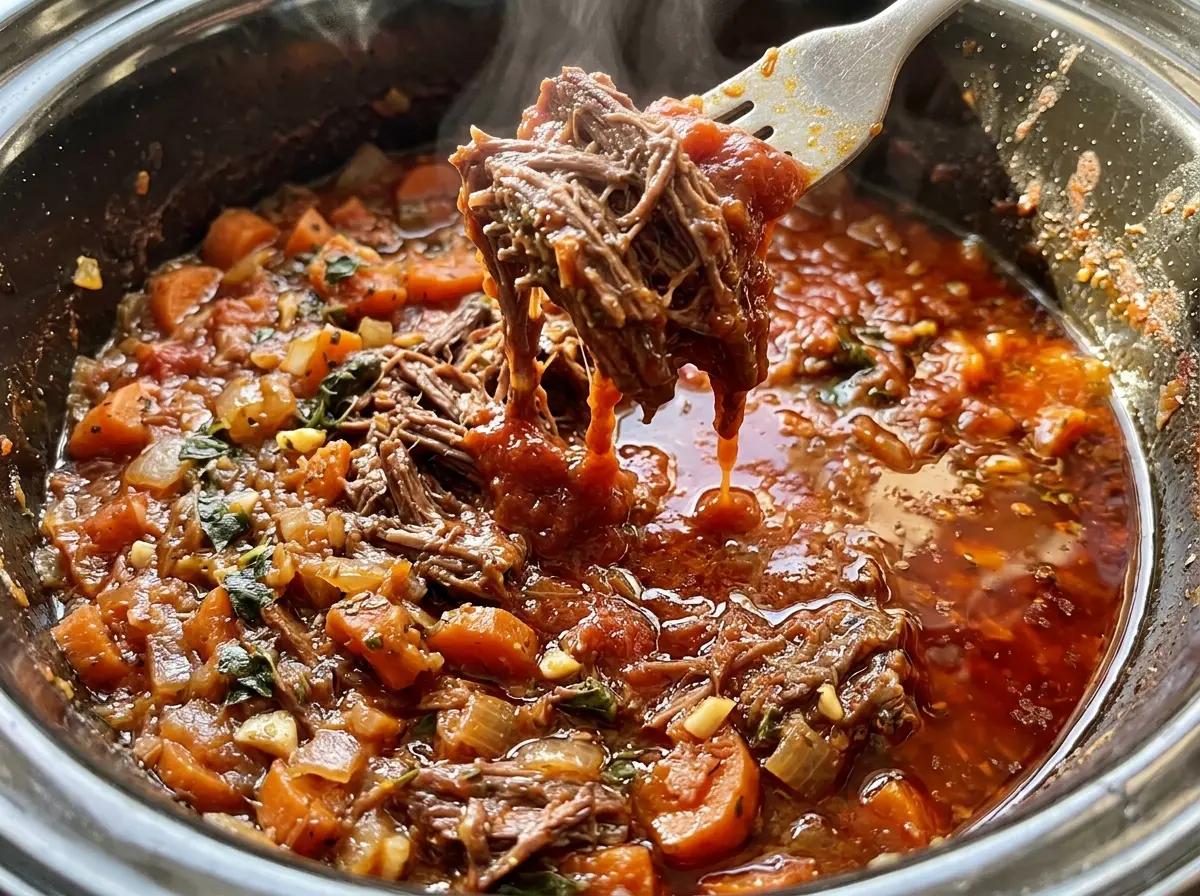
When the beef comes out of the slow cooker, it should pull apart with two forks and slip easily into the tomato sauce. I brown the chuck first, then let it cook slowly with crushed tomatoes, broth, and herbs until the meat is tender enough to shred. Tossed with broad pappardelle, this Slow Cooker Beef Ragu makes a hearty dinner for eight without asking you to watch a pot all afternoon.
The sauce gets its depth before the slow cooker even starts. Onion, carrot, and celery soften in the same skillet as the beef, then tomato paste cooks briefly with the garlic before red wine lifts up the browned bits. That skillet mixture goes into the slow cooker with the tomatoes and broth, where the beef has hours to become tender and the sauce turns rich and savory. Pappardelle gives the finished ragu plenty of wide, soft ribbons to cling to.
Kitchen Note
I wait to cook the pappardelle until the beef is shredded and back in the sauce. The pasta cooks quickly, and tossing it while hot means it reaches the table coated instead of sitting in the colander.
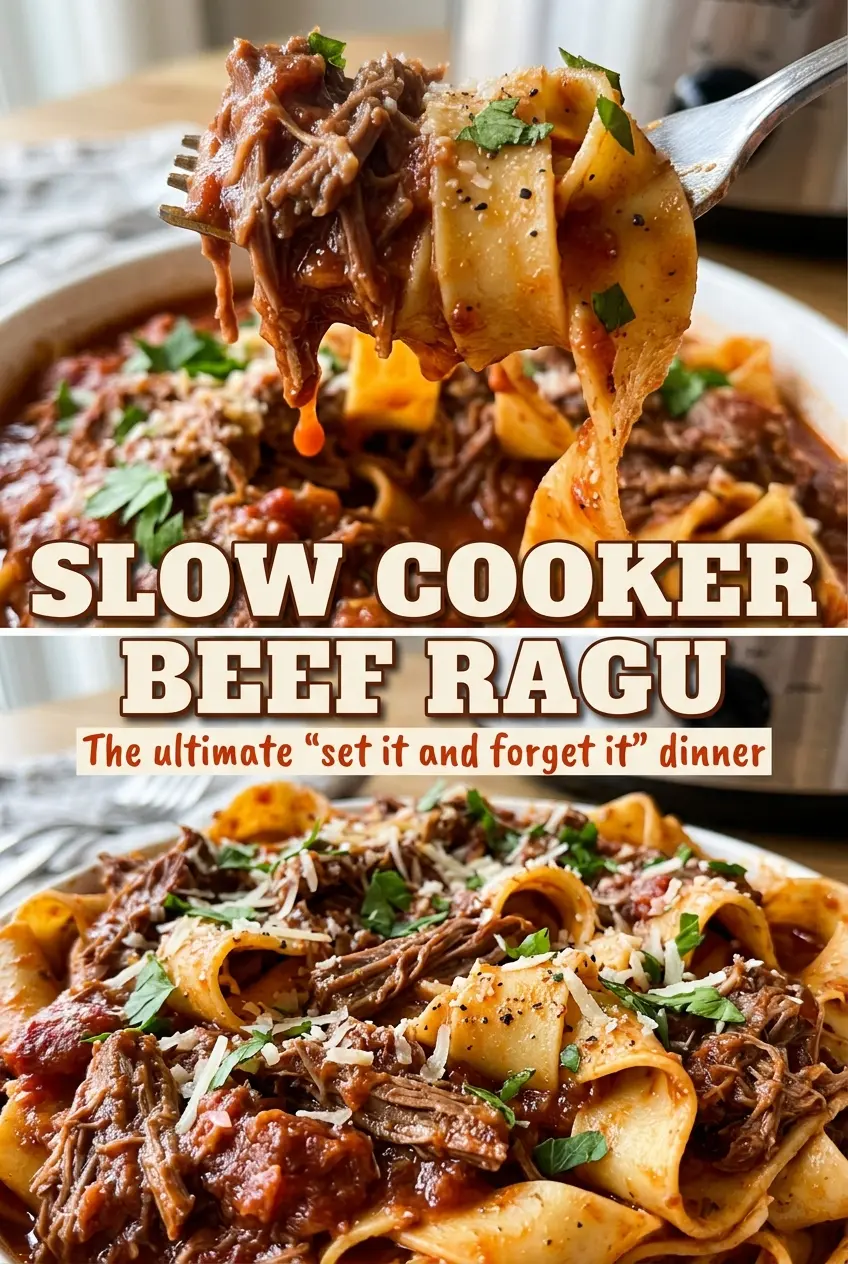
Save this Slow Cooker Beef Ragu for a hands-off dinner with fork-tender beef and wide pappardelle coated in tomato-rich sauce.
Why the Skillet Work Matters Before the Slow Cooker Starts
A slow cooker makes the beef tender, but it won’t create the browned flavor you get from a hot skillet. Searing the chuck on all sides gives the sauce a deeper, roastier base. The brown bits left behind are useful, too: the onion, carrot, and celery soften right in that skillet, then the wine loosens those savory bits so they become part of the sauce instead of staying stuck to the pan.
There’s a reason I keep the whole skillet sequence together rather than dropping everything into the slow cooker raw. Tomato paste gets a minute to cook with the garlic, which takes away its raw, sharp edge. The wine then simmers until it has reduced by about half, concentrating its flavor before the crushed tomatoes and broth go in. Those steps take only a few minutes, but they give the long-cooked sauce a fuller taste.
Cutting the roast into three pieces also gives you more surface to brown than leaving it whole, while keeping each piece substantial enough to stay moist through the long cook. Once the beef is tender, shredding it and stirring it back into the sauce spreads the meat through every serving. The result is a ragu that clings to pasta rather than a pot of sauce with one large roast sitting in it.
What Chuck, Tomato Paste, and Pappardelle Bring to the Ragu
- Boneless beef chuck — Chuck has the richness and connective tissue that make it a reliable choice for a long, slow cook; it turns tender enough to shred instead of staying firm and sliceable. Choose a roast with some visible marbling. A leaner cut won’t give the sauce the same beefy richness or shreddable texture.
- Tomato paste and crushed tomatoes — The paste adds concentrated tomato flavor to the skillet base, while crushed tomatoes provide the body of the finished sauce. Crushed tomatoes make a smoother ragu than diced tomatoes, which leave larger pieces behind. The store brand is fine here; look for a can labeled crushed tomatoes rather than tomato sauce.
- Dry red wine — Wine adds acidity and depth as it reduces with the skillet vegetables. Use a dry red you’d be comfortable drinking; there’s no need for an expensive bottle. For a no-wine version, replace it with the same amount of low-sodium beef broth, knowing the sauce will taste less layered.
- Onion, carrot, celery, and garlic — These finely chopped vegetables make a savory base that nearly disappears into the long-cooked sauce. Chop the carrot and celery small so they soften evenly. Fresh garlic gives the skillet mixture its bright, pungent note; mince it just before cooking if you can.
- Pappardelle — Its broad ribbons catch the shredded beef and thick sauce in each bite. Dried pappardelle works well, and a good-quality package is worth choosing if you have options. If it’s unavailable, another sturdy pasta shape can carry the ragu, though you’ll lose the wide ribbon-like bite.
Building a Ragu That Shreds, Not Slices
Brown the Chuck on Every Side
Season the three beef pieces on all sides with kosher salt and black pepper. Heat olive oil in a 12-inch skillet over medium-high heat, then brown the beef on all sides, about 8 to 10 minutes total. Look for deep brown patches rather than a gray surface; the beef doesn’t need to cook through in the skillet. Transfer the browned pieces to a 6-quart slow cooker.
Soften the Vegetables and Cook the Tomato Paste
Add the chopped onion, carrot, and celery to the skillet and cook over medium heat for 4 to 5 minutes, until softened. Stir in the minced garlic and tomato paste, then cook for 1 minute. Keep the mixture moving so the garlic and paste don’t scorch against the hot pan. The vegetables should look glossy and softened, not browned to a crisp.
Reduce the Wine, Then Let the Slow Cooker Work
Pour in the dry red wine and scrape the skillet to loosen the browned bits. Simmer for 2 to 3 minutes, until the wine has reduced by about half, then transfer the mixture to the slow cooker. Add the crushed tomatoes, beef broth, oregano, and bay leaves, stirring around the beef. Cover and cook on LOW for 8 to 9 hours or HIGH for 4 to 5 hours, until the beef is very tender.
Shred the Beef and Toss with Pappardelle
Transfer the beef to a cutting board and discard the bay leaves from the slow cooker. Shred the meat with two forks, return it to the sauce, and stir to combine. Bring a large pot of water to a boil, add the pasta salt and pappardelle, and cook according to the package directions until al dente; drain. Toss the hot pasta with the ragu and serve right away.
Easy Ways to Adapt This Beef Ragu
Make it without wine
Use an equal amount of low-sodium beef broth in place of the red wine. You’ll still be able to scrape up the browned bits, but the sauce will have a milder, less tangy flavor and won’t have the same wine-backed depth.
Use a different pasta shape
Rigatoni is a sturdy alternative if you can’t find pappardelle. Cook it according to the package directions until al dente, then toss it with the ragu; the sauce settles into the tubes, but you’ll miss the broad, silky pasta ribbons.
Make it gluten-free
Choose gluten-free pappardelle or another wide gluten-free pasta and cook it according to its package directions. The ragu itself contains no wheat ingredients, while gluten-free pasta may have a softer texture than wheat pappardelle, so take care not to cook it past al dente.
Storage and Reheating
- Refrigerator: Store the ragu and pasta in an airtight container for 3 to 4 days. The pasta will soften as it sits in the sauce.
- Freezer: The ragu freezes best without the pasta. Cool it, portion it into airtight freezer-safe containers, and freeze for up to 3 months; thaw in the refrigerator before reheating.
- Reheating: Warm the ragu gently in a saucepan over medium-low heat, stirring occasionally, until it reaches 165°F. Add a small splash of broth or water if the sauce has thickened in the refrigerator, and avoid boiling the pasta leftovers hard, which can make them mushy.
Questions That Come Up Before the Slow Cooker Starts
Slow Cooker Beef Ragu
Ingredients
Equipment
Method
- Season the beef on all sides with the kosher salt and black pepper.
- Heat the olive oil in a 12-inch skillet over medium-high heat.
- Brown the beef on all sides, about 8 to 10 minutes total, then transfer it to a 6-quart slow cooker.
- Add the onion, carrot, and celery to the skillet and cook over medium heat until softened, 4 to 5 minutes.
- Stir in the garlic and tomato paste and cook for 1 minute.
- Pour in the red wine, scrape up the browned bits, and simmer until reduced by about half, 2 to 3 minutes.
- Transfer the mixture to the slow cooker.
- Add the crushed tomatoes, beef broth, oregano, and bay leaves to the slow cooker and stir around the beef.
- Cover and cook on LOW for 8 to 9 hours or HIGH for 4 to 5 hours, until the beef is very tender.
- Transfer the beef to a cutting board and discard the bay leaves.
- Shred the beef with two forks, return it to the slow cooker, and stir it into the sauce.
- Bring a large pot of water to a boil, add the tablespoon of kosher salt and pappardelle, and cook according to the package directions until al dente.
- Drain the pasta.
- Toss the pasta with the ragu and serve hot.


