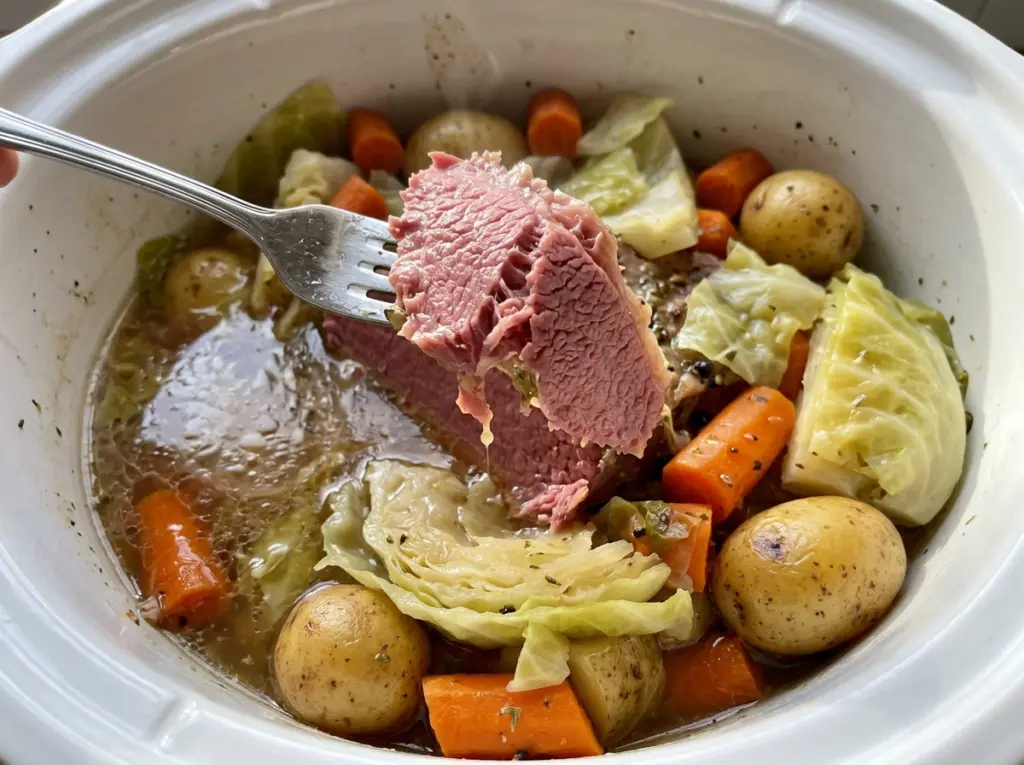
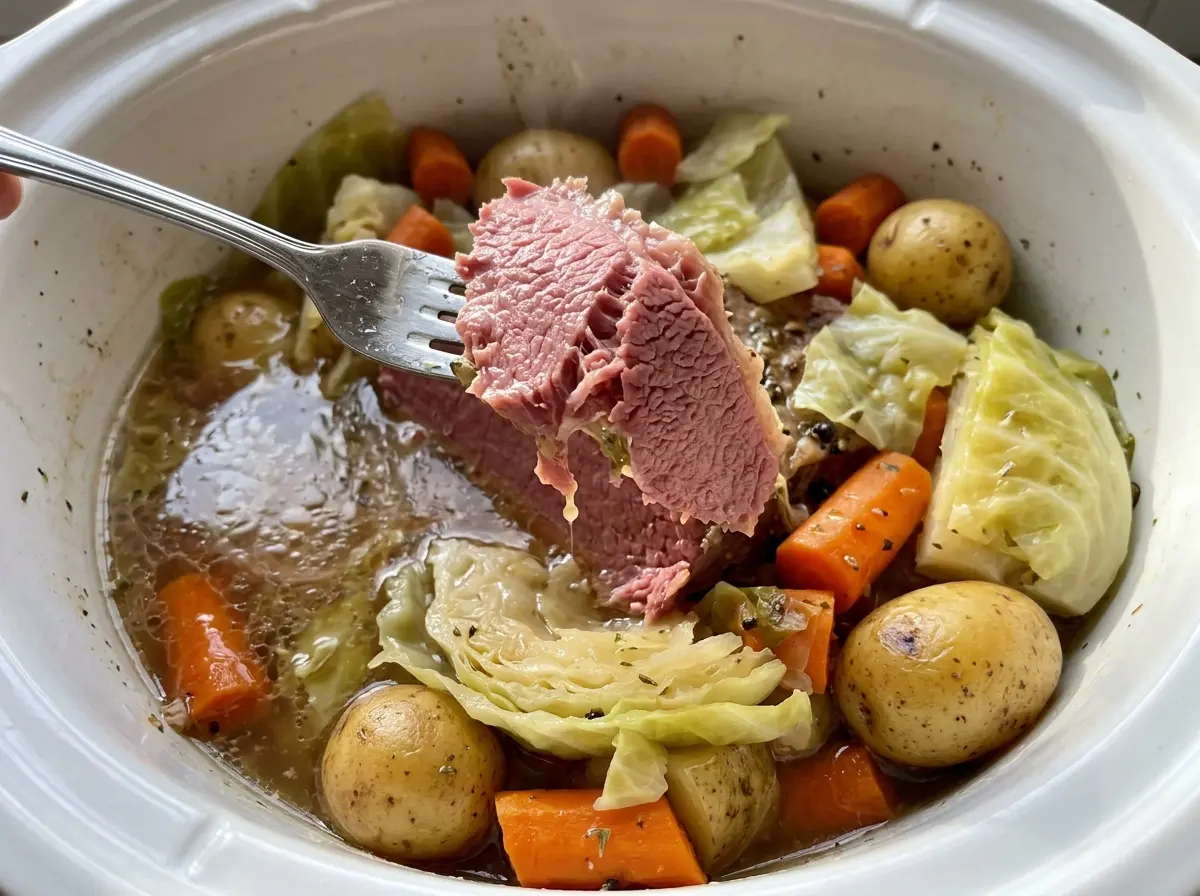
The cabbage is the part that can go wrong fastest in a slow cooker: give it the brisket’s full cooking time and it turns too soft before the meat is ready. I add it near the end, once the brisket has had time to become nearly fork-tender. That timing is what makes this Slow Cooker Corned Beef and Cabbage work as a complete meal instead of a pot of overcooked vegetables.
The potatoes and carrots get their own turn in the cooker before the cabbage joins them, so each vegetable has time to become tender without sitting through the brisket’s long cook. I keep the brisket fat-side up on a bed of onion, then let it rest before slicing across the grain. You’ll have tender slices, soft red potatoes, sweet carrots, and cabbage wedges that still hold their shape.
Kitchen Note
Rinse the brisket under cool water before it goes into the cooker, and keep the spice packet. That quick rinse clears the surface brine; the packet still brings the seasoning this dish needs.
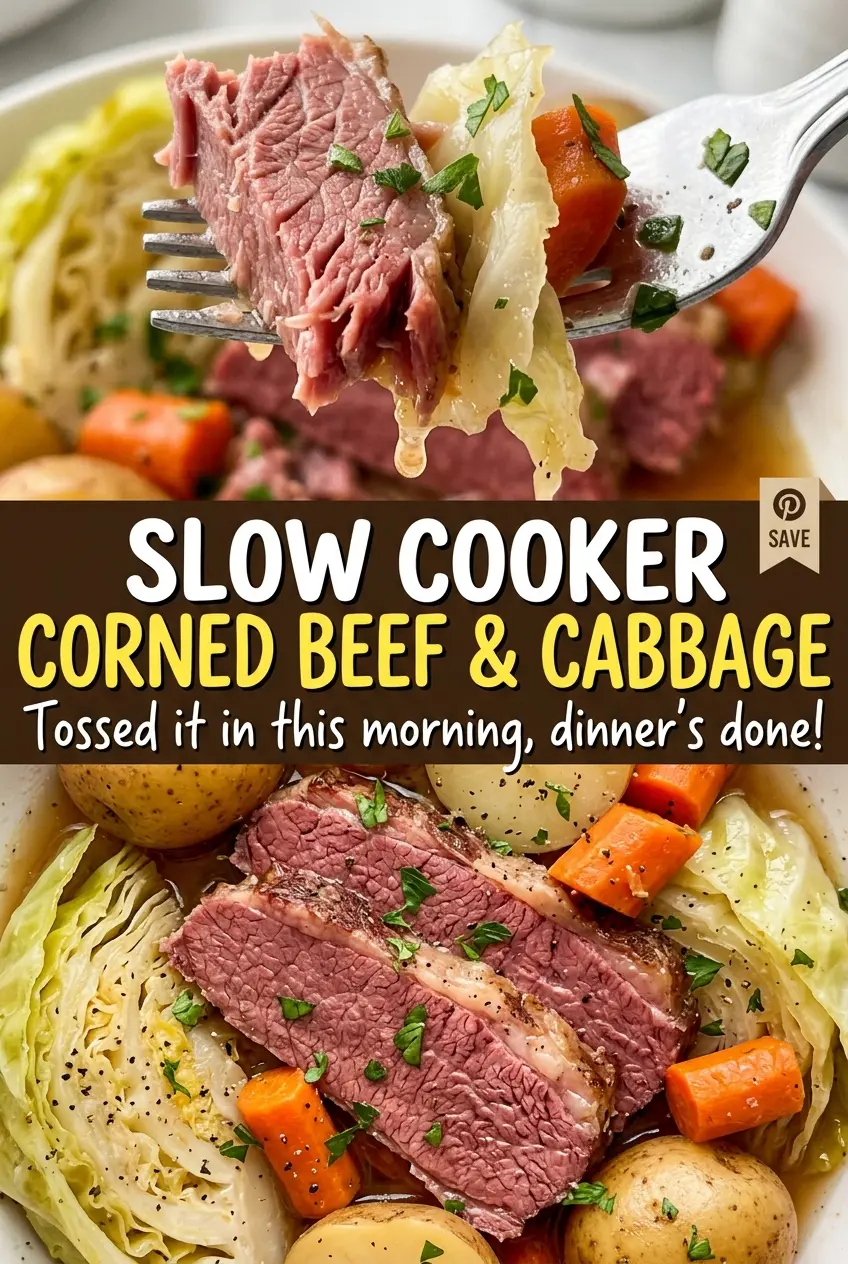
Save Slow Cooker Corned Beef and Cabbage for a hands-off dinner with tender slices and vegetables that don’t spend all day in the pot.
Why the Vegetables Go In After the Brisket, Not at the Start
A brisket needs hours in the slow cooker to become tender, but the vegetables don’t all need the same amount of time. Red potatoes and carrots can handle a longer stretch than cabbage, yet they’re still likely to become too soft if they cook from the very beginning. Cabbage is more delicate still; a long cook can leave the wedges limp and difficult to lift out intact.
Adding the vegetables in stages lets the brisket lead and gives each one a shorter finish. The potatoes and carrots go in when the meat is nearly fork-tender, then the cabbage joins them later. It’s a small change in timing, but it gives you a better mix of textures: tender meat, potatoes and carrots that hold together, and cabbage that’s soft without collapsing.
This order also makes serving easier. The brisket stays the main event while the vegetables cook around it, and everything is ready to transfer when the meat reaches the right tenderness.
What Helps the Brisket and Vegetables Hold Up in the Slow Cooker
- Corned beef brisket and spice packet — Buy a brisket that comes with its spice packet; the packet is the built-in seasoning for the meat and cooking liquid. The brisket’s cut varies: a flat cut tends to give you more uniform slices, while a point cut is generally richer and less even in shape. Either works in the same weight range, though the finished slices will look different.
- Yellow onion — Wedges form a base beneath the brisket and soften as the meat cooks. A medium onion is a practical choice here; cut it into wedges rather than dicing it so the pieces don’t disappear as quickly in the long cook.
- Garlic — Smashing the cloves opens them up so they can release their flavor into the cooking liquid. There’s no need to mince them finely; the cloves cook alongside the brisket.
- Water — The water provides moisture in the slow cooker while the brisket cooks. Keep the listed amount rather than adding extra; the meat and vegetables also release liquid as they cook.
- Small red potatoes — Halving them gives the potatoes a head start once they’re added, and their compact shape is useful in a slow-cooker meal where you want pieces that are easy to lift out. Choose firm potatoes without soft spots.
- Carrots — Cutting them into 2-inch pieces keeps them substantial enough to cook alongside the potatoes. Cut the pieces evenly so they soften at a similar pace.
- Green cabbage — Wedges are easier to nestle around the other ingredients and serve intact than loose shreds. Choose a small head that can be cut into six wedges for this batch.
How to Time the Brisket, Potatoes, Carrots, and Cabbage
Set the Brisket on Its Onion Bed
Put the onion wedges in a 6-quart slow cooker. Rinse the brisket under cool water, set it fat-side up on the onion, and sprinkle the spice packet over the top. Add the smashed garlic and water, then cover the cooker. Keeping the brisket on top of the onion puts the meat in place before the long, slow cook begins.
Cook Until the Brisket Is Nearly Fork-Tender
Cook on LOW for 6 to 7 hours or on HIGH for 3 to 4 hours. At this point, the brisket should be nearly fork-tender, not fully finished. That texture cue matters more than trying to rush ahead to the vegetables while the meat is still firm. Keep the lid on during cooking so the slow cooker can hold its heat.
Add the Potatoes and Carrots
Arrange the halved potatoes and 2-inch carrot pieces around the brisket, then cover the cooker again. Cook them until nearly tender: 1 to 2 hours on LOW or about 1 hour on HIGH. Check the vegetables for tenderness without waiting for them to become completely soft; they still have another stretch of cooking ahead.
Nestle In the Cabbage, Then Rest the Meat
Fit the six cabbage wedges into the slow cooker, cover, and cook until the vegetables are tender and the brisket is fork-tender. This final stretch takes about 1 to 1 1/2 hours on LOW or 45 to 60 minutes on HIGH. Transfer the brisket to a cutting board and let it rest for 10 minutes. Slice across the grain and serve with the vegetables.
Two Useful Ways to Adapt the Brisket and Seasoning
Choose Flat-Cut or Point-Cut Brisket
Either cut works in the 3- to 4-pound range. Flat-cut brisket is the better pick when you want neater, more even slices; point-cut brisket has more marbling and gives you richer, less uniform pieces. Keep the spice packet with the brisket whichever cut you choose.
Make It Gluten-Free With a Labeled Brisket and Packet
Choose a corned beef brisket whose included spice packet is labeled gluten-free, then use the same vegetables and cooking method. The seasoning packet is the part that needs checking for this adaptation; the rest of the ingredient list stays unchanged.
Storage and Reheating
- Refrigerator: Store the brisket and vegetables in airtight containers for 3 to 4 days. The potatoes and cabbage will soften more as they sit.
- Freezer: Freeze sliced brisket and vegetables in airtight containers for up to 2 to 3 months. The meat freezes well; the potatoes and cabbage will be softer after thawing.
- Reheating: Warm covered portions gently in a saucepan with a little cooking liquid, or microwave in short intervals, until the center reaches 165°F. High heat can dry the brisket before it warms through.
Questions About Slow Cooker Corned Beef and Cabbage
Slow Cooker Corned Beef and Cabbage
Ingredients
Equipment
Method
- Put the onion in a 6-quart slow cooker.
- Rinse the corned beef under cool water and place it fat-side up on the onion.
- Sprinkle the spice packet over the corned beef.
- Add the garlic and water, cover, and cook until the brisket is nearly fork-tender, 6 to 7 hours on LOW or 3 to 4 hours on HIGH.
- Add the potatoes and carrots around the brisket, cover, and cook until nearly tender, 1 to 2 hours on LOW or about 1 hour on HIGH.
- Nestle the cabbage wedges into the cooker, cover, and cook until the vegetables are tender and the brisket is fork-tender, about 1 to 1 1/2 hours on LOW or 45 to 60 minutes on HIGH.
- Transfer the brisket to a cutting board and rest for 10 minutes.
- Slice the brisket across the grain and serve with the vegetables.


