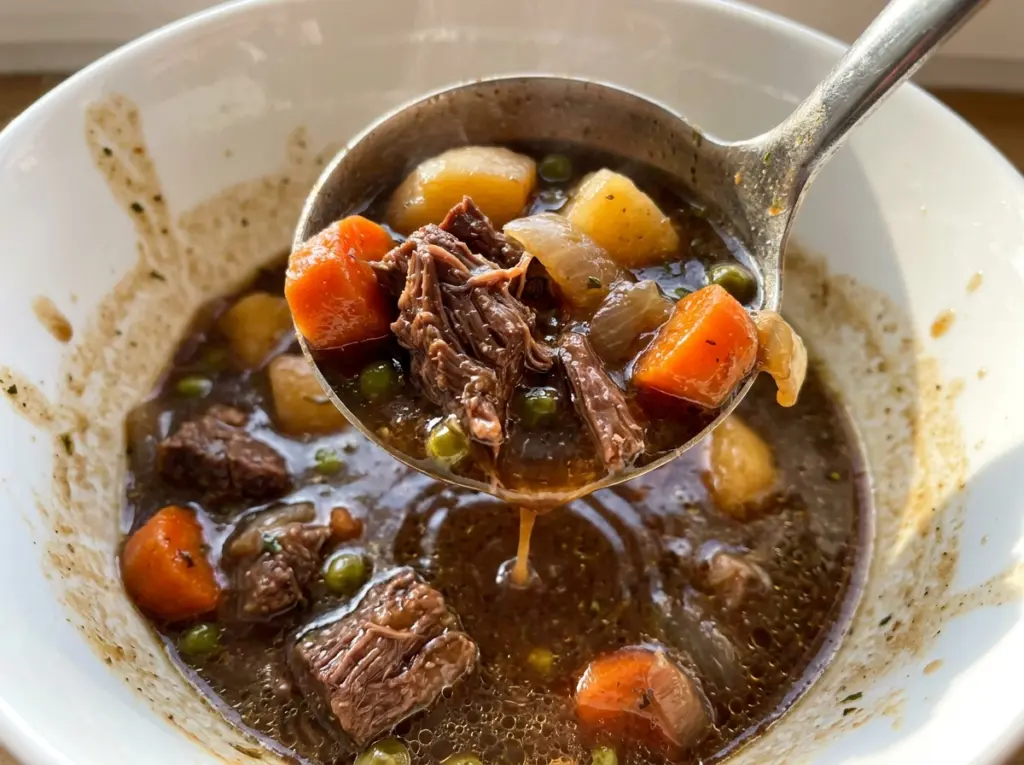
When the browned beef and onions hit the slow cooker, the skillet is full of dark bits that look like they might be stuck for good. A pour of Guinness loosens them, and suddenly that browned layer becomes the start of a deep, savory broth. That’s the moment this Slow Cooker Guinness Beef Stew starts to taste like more than meat and vegetables left to cook all day.
I brown the beef first, then use the same skillet for the onion, garlic, and tomato paste. It gives the Guinness something savory to pick up before it joins the carrots and Yukon Gold potatoes in the cooker. The slow heat takes care of the rest, turning chuck into fork-tender bites while the vegetables soften without needing much attention.
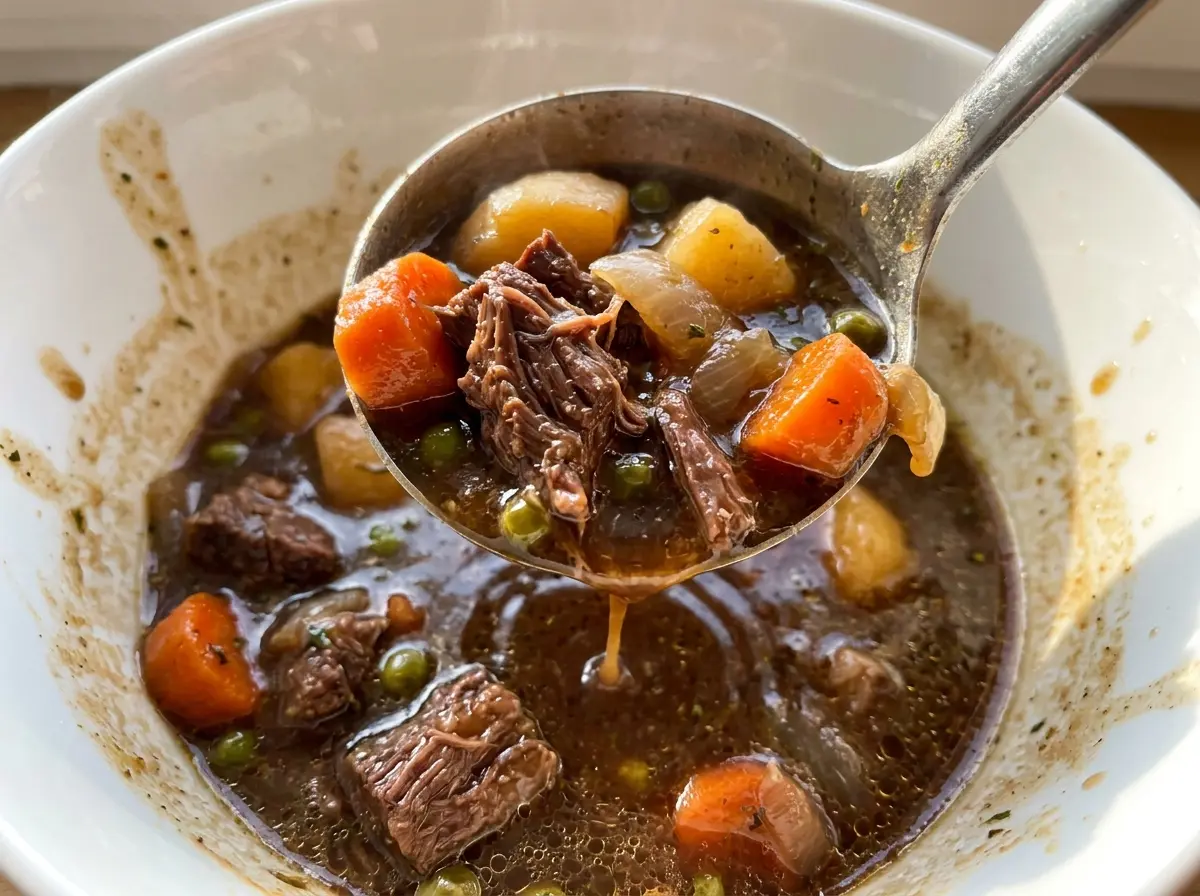
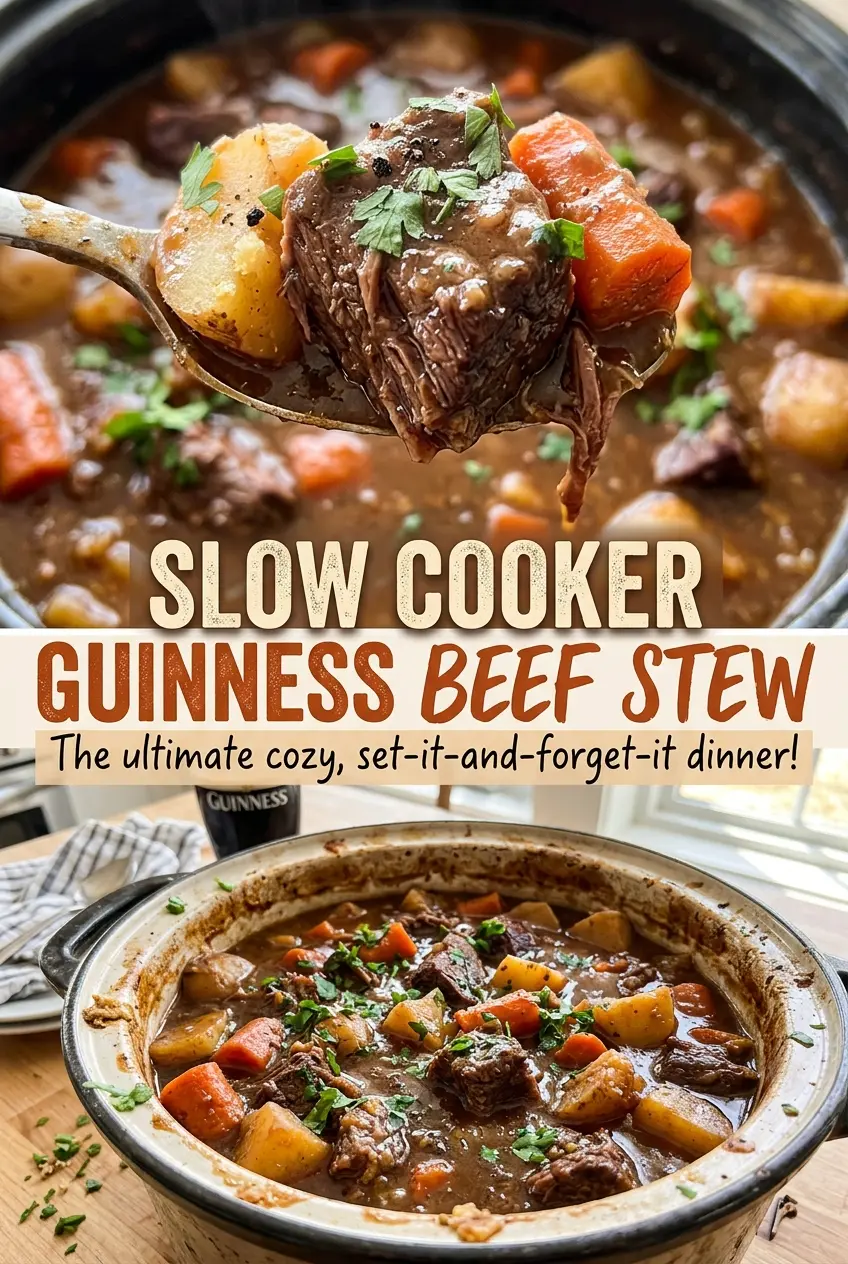
The finished stew has a dark, malty broth, tender chunks of beef, and vegetables that still hold their shape. A quick cornstarch slurry at the end gives the liquid enough body to cling to everything in the bowl.
Kitchen Note
Keep the beef cubes close to the same 1 1/2-inch size. That gives the pieces a similar amount of time to turn tender during the long cook, instead of having small bits soften well before the larger ones.
Save this Slow Cooker Guinness Beef Stew for a cozy pot of fork-tender beef, vegetables, and rich stout broth.
Why Guinness Belongs in the Broth, Not Just in the Pot
Guinness Draught brings roasted malt notes and a gentle bitterness, which gives the stew a darker, more rounded taste than beef broth alone. The beef broth is still essential: it keeps the stout from becoming the whole story and gives the meat and vegetables a familiar savory base. Worcestershire adds another layer of savory tang, while thyme keeps the broth from tasting heavy.
The short simmer in the skillet does useful work before anything goes into the slow cooker. Guinness loosens the browned bits left by the beef, onion, and tomato paste, so those concentrated flavors join the liquid instead of staying on the pan. Then the broth, Worcestershire, and thyme get stirred in together, ready to coat the vegetables and beef.
That balance is why I use Guinness Draught rather than treating any dark beer as interchangeable. Its roasted character should come through, but the finished broth still needs to taste like beef stew. The long, covered cook softens the edges of the stout and lets the chuck and vegetables take on its flavor.
What the Chuck, Guinness, and Yukon Golds Bring to the Pot
- Beef chuck — Chuck is a good fit for a long, slow cook because it becomes tender as it cooks. Patting the cubes dry before seasoning also helps them brown in the skillet instead of releasing moisture against the hot surface.
- Guinness Draught and beef broth — The stout contributes roasted malt depth; broth supplies a savory base. Keep the specified Draught for the intended flavor. The broth is a useful counterweight, not a replacement for the beer’s character.
- Yukon Gold potatoes and carrots — Cutting both into 1-inch pieces gives them a similar size for the slow cooker. Yukon Golds have a creamy, buttery texture that holds up well in stew, while carrots add sweetness and stay distinct from the potatoes.
- Onion, garlic, and tomato paste — These build the savory foundation in the skillet. Tomato paste adds concentrated richness, so give it its brief minute of cooking with the garlic rather than stirring it straight into the slow cooker.
- Thyme, bay leaves, and Worcestershire sauce — Each brings a different background note: herbal, aromatic, and savory-tangy. Bay leaves are there to steep in the stew, not to eat, so take them out before serving.
- Cornstarch — This thickens the broth at the end without requiring a separate roux. Cold water makes it easy to stir the starch smooth before it goes into the hot stew.
Building the Stew in the Skillet Before the Slow Cooker Takes Over
Brown the Chuck in Manageable Batches
Pat the beef dry, season it with kosher salt and black pepper, and heat the olive oil in a 12-inch skillet over medium-high heat. Brown the meat in batches for 2 to 3 minutes per side, then transfer each batch to the 6-quart slow cooker. The pieces need contact with the pan to develop browned surfaces; crowding them makes that harder. Don’t worry about cooking the beef through here, since it finishes in the slow cooker.
Soften the Onion and Cook the Tomato Paste
Add the chopped onion to the same skillet and cook for 3 to 4 minutes, stirring, until softened. Stir in the minced garlic and tomato paste, then cook for 1 minute. Keep the garlic moving through the paste and onion so it cooks without scorching. The mixture should smell savory and look evenly coated before the liquid goes in.
Loosen the Browned Bits with Guinness
Pour the Guinness into the skillet and scrape up the browned bits from the bottom. Let it simmer for 2 minutes, then stir in the beef broth, Worcestershire sauce, and dried thyme. Scraping as the beer goes in lifts the flavorful residue into the liquid. Once the broth mixture is combined, take the skillet off the heat and move on to the slow cooker.
Slow-Cook Until Tender, Then Thicken
Add the carrots, potatoes, and bay leaves to the slow cooker, pour the skillet mixture over everything, and stir to combine. Cover and cook on LOW for 8 to 9 hours or HIGH for 4 to 5 hours, until the beef is fork-tender and the vegetables are tender. Stir the cornstarch and cold water together in a small bowl until smooth, then stir the slurry into the stew. Cover and cook on HIGH for 15 to 20 minutes, until thickened, and remove the bay leaves before serving.
Two Easy Ways to Shift the Stout or Vegetables
A Milder, Guinness-Free Broth
Replace the 14.9-ounce can of Guinness Draught with 14.9 ounces of beef broth. The stew will lose the stout’s roasted, malty edge and taste more directly of beef and vegetables; keep the skillet step and use the broth to scrape up the browned bits.
Make It Carrot-Forward
For a version without potatoes, replace the Yukon Golds with another 1 1/2 pounds of carrots cut into 1-inch pieces. The stew will be sweeter and less starchy, with more tender carrot in each serving. The cornstarch slurry still thickens the broth.
Storage and Reheating
- Refrigerator: Store leftovers in a covered container for 3 to 4 days. The potatoes will soften a little as they sit in the broth.
- Freezer: Freeze in airtight containers for up to 3 months. The potatoes may become softer after thawing, but the stew remains suitable for reheating.
- Reheating: Warm on the stovetop over low to medium-low heat, stirring occasionally, or heat individual portions in the microwave. Reheat leftovers to 165°F; avoid a hard boil, which can break up the potatoes and make the beef seem drier.
Questions That Come Up While This Stew Cooks
Slow Cooker Guinness Beef Stew
Ingredients
Equipment
Method
- Pat the beef dry.
- Season the beef with the salt and pepper.
- Heat the olive oil in a 12-inch skillet over medium-high heat.
- Brown the beef in batches for 2 to 3 minutes per side, then transfer it to a 6-quart slow cooker.
- Add the onion to the skillet and cook for 3 to 4 minutes, stirring, until softened.
- Add the garlic and tomato paste and cook for 1 minute.
- Pour in the Guinness and scrape up any browned bits.
- Simmer for 2 minutes, then stir in the beef broth, Worcestershire sauce, and thyme.
- Add the carrots, potatoes, and bay leaves to the slow cooker.
- Pour the skillet mixture over everything and stir to combine.
- Cover and cook on LOW for 8 to 9 hours or HIGH for 4 to 5 hours, until the beef is fork-tender and the vegetables are tender.
- Stir the cornstarch and cold water together in a small bowl until smooth.
- Stir the slurry into the stew.
- Cover and cook on HIGH for 15 to 20 minutes, until the stew has thickened.
- Remove the bay leaves before serving.


