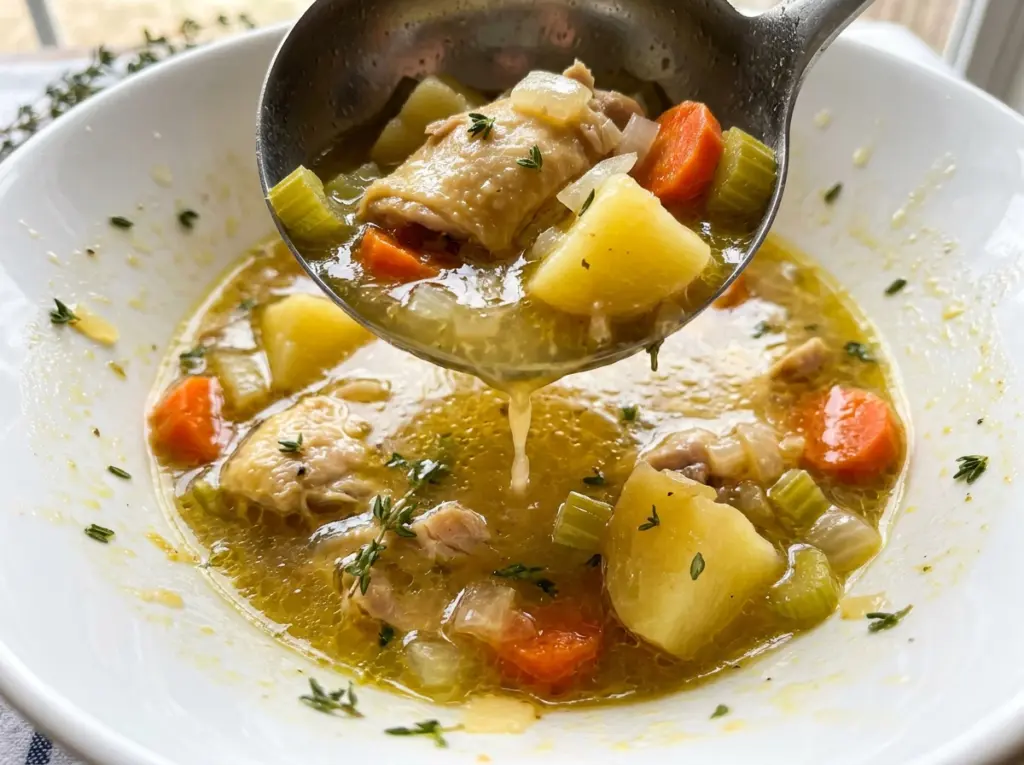
When I lift the lid near the end of a slow-cooker meal, I want the carrots to give to a spoon and the broth to cling lightly to a potato instead of pooling like thin stock. The chicken should be tender enough to cut into pieces but not so soft that it disappears into the vegetables. That’s the balance I built into this Slow Cooker White Wine Chicken Stew: a hearty bowl with a broth that still feels bright.
I add the peas and cream near the end, rather than letting them spend the whole day in the cooker. The peas keep their shape, and the cream has just enough time to blend into the broth. Yukon gold potatoes and boneless thighs make the long cook forgiving, while the white wine gives the vegetables and chicken a lift that plain broth alone can’t quite manage. Each spoonful is creamy, savory, and full of tender vegetables.
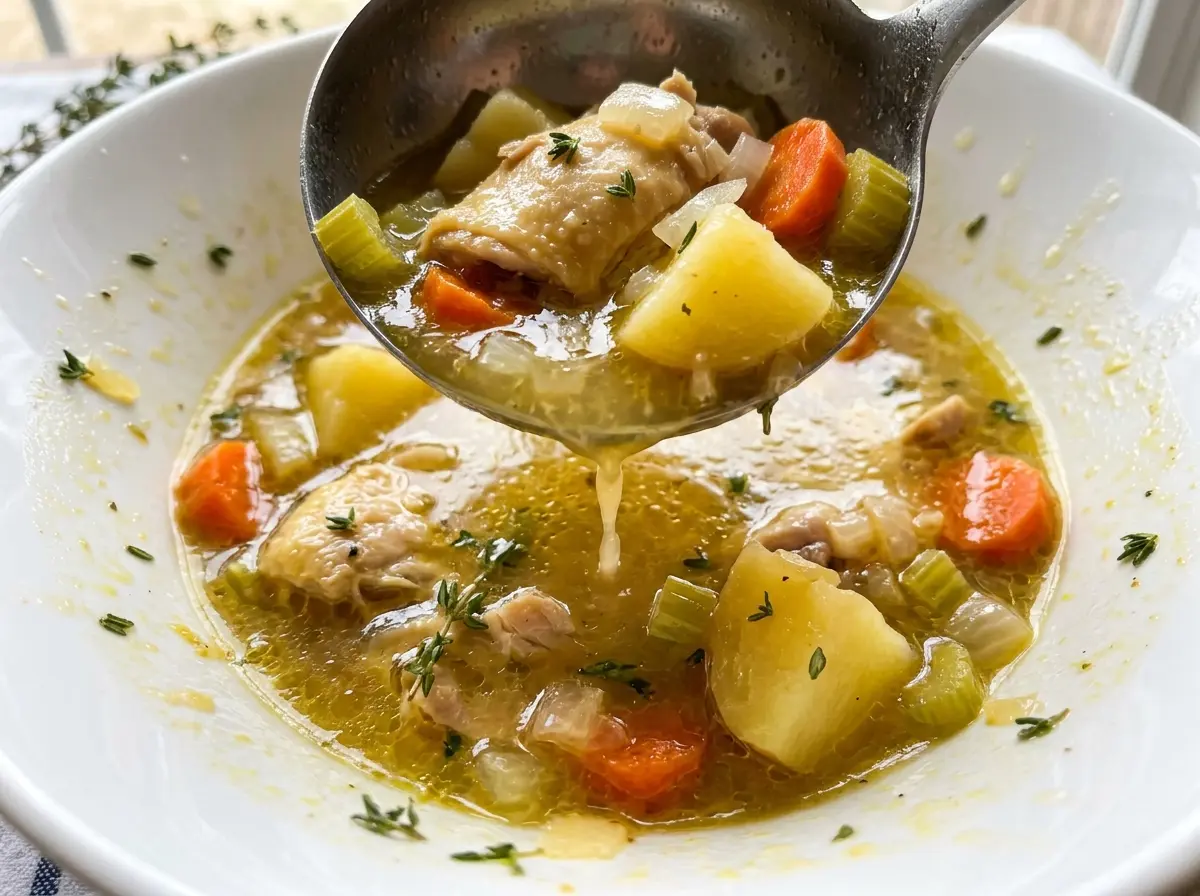
Kitchen Note
Keep the lid on during the long cook. Every peek lets heat escape, and the vegetables need steady warmth to turn tender within the cooking window.
Save this Slow Cooker White Wine Chicken Stew for a cozy, hands-off dinner with tender chicken and a creamy, wine-bright broth.
Why White Wine Belongs Beside the Broth, Not Instead of It
Wine and chicken broth do different jobs here. The dry white wine brings a little acidity that keeps the slow-cooked vegetables and creamy finish from tasting heavy, while the broth supplies the familiar savory base. Using both gives the stew depth without making the wine the main event. The finished broth should taste rounded and savory, with a gentle brightness in the background.
Choose a dry white wine, not a sweet one. A sweeter wine can leave the broth tasting oddly sugary once it cooks with the carrots and cream. You don’t need an expensive bottle; a straightforward dry wine is plenty. Keep the balance in mind if you’re tempted to pour in extra wine: it isn’t a replacement for the broth, and more isn’t automatically better. The broth is what makes this stew feel like dinner, while the wine keeps each spoonful from landing flat.
Why Yukon Gold Potatoes and Chicken Thighs Hold Up Together

- Yukon gold potatoes — Their creamy texture works well in a long, moist cook, and they hold their shape better than floury russets. Red potatoes are the closest easy swap if that’s what you have; cut them into evenly sized chunks so they soften at a similar pace. There’s no need to seek out a premium brand.
- Boneless, skinless chicken thighs — Thighs stay juicy through the extended cook and are easy to cut into bite-size pieces at the end. A neatly trimmed value pack works just as well as a pricier one. Chicken breasts are leaner and more likely to turn dry over this cooking window, so thighs are the better choice for the texture this stew is meant to have.
- Onion, carrots, celery, and garlic — These vegetables build the savory base rather than acting as background garnish. Fresh carrots and celery give the stew its best texture, and evenly cut pieces cook more consistently. Mince the garlic so it disperses through the broth instead of leaving large, sharp bites.
- Low-sodium chicken broth and dried thyme — Low-sodium broth lets the vegetables, wine, and seasoning stay in balance as the liquid cooks down. A basic grocery-store broth is fine; regular broth can make the finished stew saltier. Dried thyme holds up well during the slow cook, and the bay leaf adds a subtle savory note that’s easy to remove before serving.
- Frozen peas and heavy cream — Frozen peas can go straight into the cooker at the finishing stage, so they warm through without spending hours softening. Heavy cream gives the broth a full, smooth finish. A standard grocery-store carton works; the texture depends more on adding it near the end than on buying a specialty brand.
- Cornstarch — This is what turns the broth from loose cooking liquid into a stew-like sauce. It’s an inexpensive pantry thickener, so brand doesn’t matter. Keep it for the finishing stage rather than expecting the potatoes to thicken the broth on their own.
How to Layer the Vegetables, Cook the Thighs, and Finish the Broth
Build the vegetable base first
Add the diced onion, carrot rounds, celery, potato chunks, and minced garlic to a 6-quart slow cooker. Sprinkle in the kosher salt and black pepper, then toss the vegetables so the seasoning is distributed. Set the thawed chicken thighs on top rather than burying them beneath the vegetables. Pour in the dry white wine and low-sodium broth, then add the dried thyme and bay leaf.
Let the covered cooker do the slow work
Cover and cook on LOW for 6 to 7 hours or on HIGH for 3 to 4 hours. The chicken should reach 165°F, and the vegetables should be tender when pierced. If the carrots or potatoes still feel firm, give the stew more time within the listed window rather than trying to fix it during the finishing stage. Keep the lid closed while it cooks so the heat stays steady.
Cut the chicken and add the creamy finish
Lift the chicken onto a cutting board and remove the bay leaf from the cooker. Cut the chicken into bite-size pieces, then return it to the vegetables and broth. Stir in the frozen peas and heavy cream until they’re distributed throughout the stew. The peas will heat through during the final cook.
Thicken the broth until it coats a spoon
Whisk the cornstarch and cold water together in a small bowl until the mixture is smooth. Stir the slurry into the stew, cover, and cook on HIGH for 20 to 30 minutes. The broth should thicken and the peas should be hot before you serve it. Give the stew a thorough stir so the creamy broth and thickened liquid are evenly combined.
Two Swaps for a Wine-Free or Dairy-Free Pot
Leave Out the Wine
Replace the dry white wine with an equal measure of low-sodium chicken broth. The stew will still be savory, but it’ll have less of the gentle acidity and lift the wine brings. Keep the rest of the method the same.
Make It Dairy-Free with Coconut Milk
Swap the heavy cream for the same amount of full-fat canned coconut milk, stirring it in with the peas. The cornstarch still thickens the broth, though you’ll notice a light coconut flavor beneath the thyme and wine. This version is creamy without dairy, but it won’t taste exactly like the original.
Storage and Reheating
- Refrigerator: Store in a covered container for 3 to 4 days. The potatoes soften a little as they sit.
- Freezer: Freeze in airtight portions for up to 2 to 3 months. The potatoes may soften and the cream may separate after thawing; thaw overnight in the refrigerator.
- Reheating: Warm gently in a saucepan over medium-low heat, stirring often, until steaming throughout. Avoid a hard boil, which can make the creamy broth separate.
Questions That Come Up Once the Lid Comes Off
Slow Cooker White Wine Chicken Stew
Ingredients
Equipment
Method
- Put the onion, carrots, celery, potatoes, and garlic in a 6-quart slow cooker.
- Sprinkle with the salt and pepper, then toss to distribute.
- Set the thawed chicken thighs on top of the vegetables.
- Pour in the wine and broth, then add the thyme and bay leaf.
- Cover and cook on LOW for 6 to 7 hours or HIGH for 3 to 4 hours, until the chicken reaches 165°F and the vegetables are tender.
- Transfer the chicken to a cutting board.
- Remove and discard the bay leaf.
- Cut the chicken into bite-size pieces and return it to the cooker.
- Stir in the frozen peas and heavy cream.
- Whisk the cornstarch and cold water in a small bowl until smooth.
- Stir the cornstarch mixture into the stew.
- Cover and cook on HIGH for 20 to 30 minutes, until the broth is thickened and the peas are hot.


