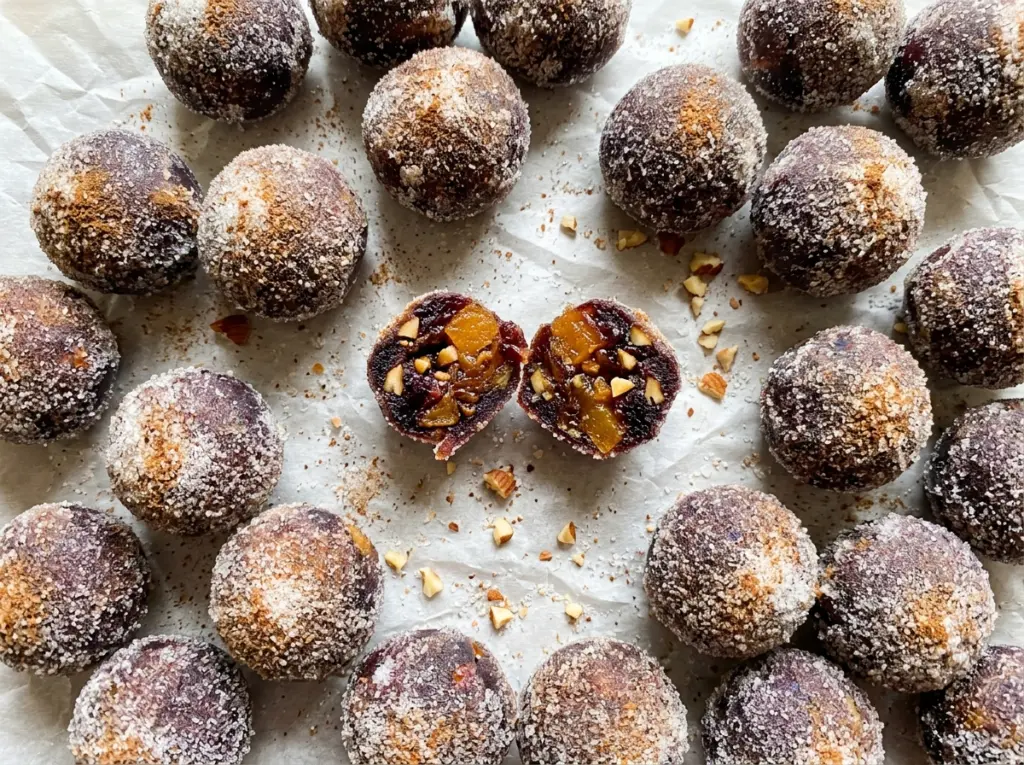
When the food processor starts to turn dried fruit into a sticky mass, it’s easy to keep running it and end up with something closer to paste than a truffle. I stop as soon as the fruit is finely chopped and the mixture holds when I press it between my fingers. That’s the texture I want for these sugar plums: tender and chewy, with little bits of almond in every bite.
These are no-bake fruit-and-nut candies, not fresh plums dipped in sugar. Figs and dates give the mixture its naturally sticky center, while apricots add a tart edge and orange zest keeps the warm spices from tasting heavy. A short chill firms everything up enough to shape neatly, and a roll in granulated sugar gives each little ball a crisp, sparkling finish.
Kitchen Note
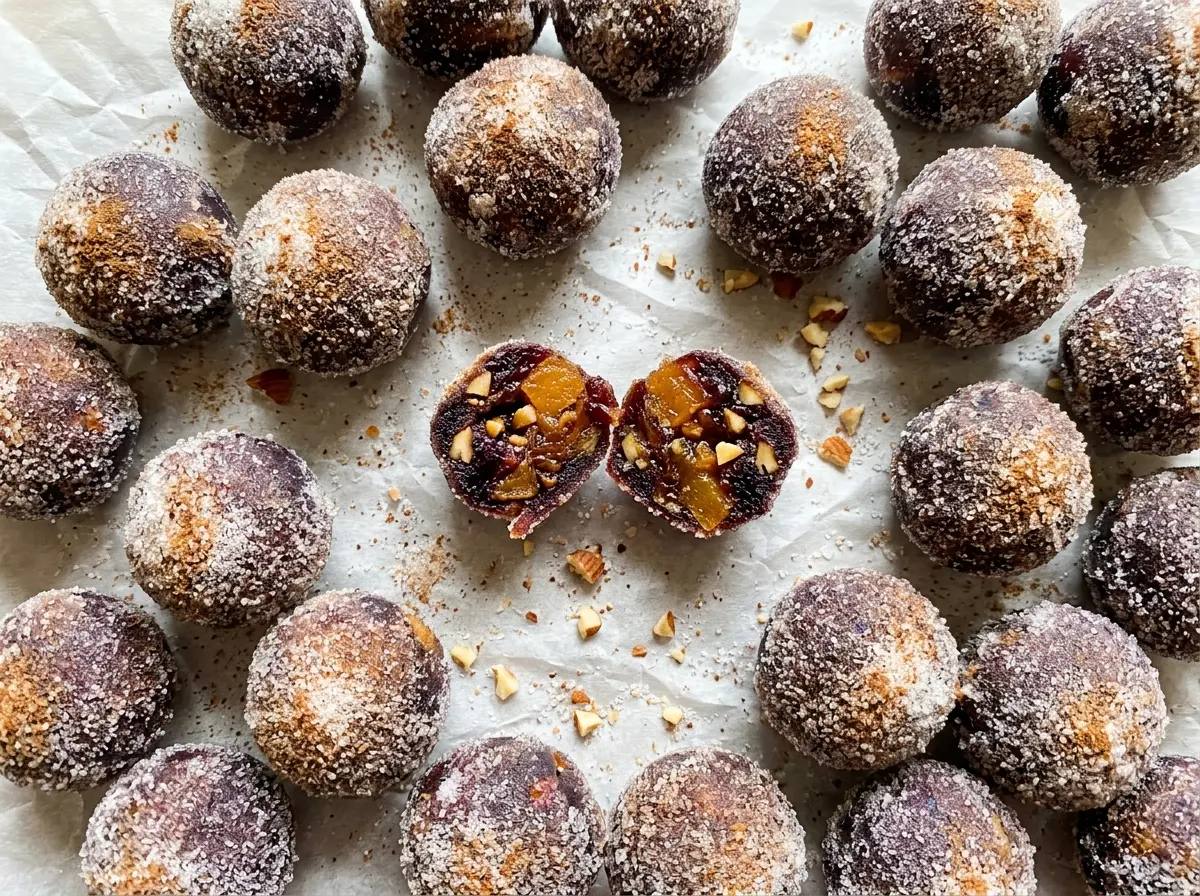
Give the fruit mixture its full 30 minutes in the refrigerator before shaping. It should feel firm rather than squishy, which makes it much easier to roll tidy balls without the mixture smearing across your hands.
Save these sugar plums for a no-bake treat with chewy dried fruit, warm spice, and a sparkling sugar coating.
Why Fresh Plums Would Make These Sugar Plums Fall Apart
The name can make this candy sound like it should contain fresh plums, but the texture depends on dried fruit. Figs, dates, and apricots have concentrated flavor and far less moisture than fresh fruit, so they can be chopped into a mixture that holds its shape. Fresh plums would bring in juice and loosen that balance; the result would be wet and difficult to roll rather than a firm, chewy confection.
That difference also explains why these aren’t meant to have the soft, juicy bite of a fresh-fruit dessert. Think small, dense candies with a little chew and a fine crunch from the almonds. The sugar coating adds a delicate crispness at the surface, but it doesn’t turn the center into a hard candy. Keeping the fruit dried lets the orange zest and spices come through without watering them down, and gives you a batch of 24 pieces that are easy to portion and serve.
Dates, Figs, and Apricots Each Have a Different Job

- Whole roasted unsalted almonds — They provide a nutty backbone and a small crunch against the soft fruit. Fresh-tasting almonds matter more than an expensive brand; stale nuts can make the whole batch taste dull. Keep them whole for the first pulse so you can stop while they’re chopped, not oily. Roasted unsalted pecans work as a swap, though they make the mixture richer and a little softer.
- Figs, dates, and apricots — Dates are the stickiest fruit in the mix and help the chopped ingredients clump together. Figs add a deeper, seed-speckled chew, while apricots bring a brighter tartness. Choose fruit that’s pliable rather than hard and leathery; if your dates are unusually dry, they won’t bind as readily. Soft dried figs can stand in for dates, but expect a less cohesive mixture and pulse until it holds when pressed.
- Honey — A spoonful adds a touch of floral sweetness and helps the fruit mixture gather. Mild honey is a good choice because a strongly flavored variety can take over the orange and spices. Maple syrup can replace it in the same amount, with a slightly less floral finish.
- Orange zest — Finely grated zest gives the rich fruit a fresh, fragrant lift. Use only the colored outer peel; the white pith underneath tastes bitter. Lemon zest is a useful swap for a sharper citrus note.
- Cinnamon, allspice, and cloves — Together they give the candies a warm, rounded spice without masking the fruit. Ground spices lose their fragrance as they sit, so a fresh jar makes a noticeable difference here. If you’re out of allspice, a pinch of ground nutmeg is a better fit than increasing the cloves, which can quickly taste medicinal.
- Granulated sugar — The coating adds a dry, crisp outside to contrast with the chewy center. Regular granulated sugar is inexpensive and works well; pour it into a shallow bowl so each ball can roll through it without being pressed flat.
Pulse the Fruit Until It Holds Without Turning to Paste
Chop the Almonds on Their Own
Start with the almonds in a 7-cup food processor and pulse until they’re finely chopped. Stop before they look damp or begin clumping into almond butter. A few slightly larger pieces are fine; the goal is a consistent chopped texture, not a powder. Keeping the nuts in the bowl first gives you a clear view of their texture before the sticky fruit goes in.
Let the Fruit Mixture Tell You When to Stop
Add the figs, dates, apricots, honey, orange zest, cinnamon, allspice, cloves, and kosher salt. Pulse until the fruit is finely chopped and the mixture holds together when pressed. If you can still see large pieces of fruit, pulse again in short bursts rather than running the machine continuously. The finished mixture should clump when squeezed, but it shouldn’t look like a smooth paste.
Chill, Shape, and Coat
Transfer the mixture to a bowl, cover it, and refrigerate for 30 minutes. While it chills, pour the granulated sugar into a shallow bowl. Shape the firm mixture into 24 balls, about 1 inch each, then roll each one in the sugar until coated. Arrange them on a plate or small baking sheet and refrigerate for another 30 minutes to set; if the balls feel soft while you’re shaping them, pause and chill the mixture again rather than pressing harder.
Three Small Changes for Different Sugar Plum Batches
Make a nut-free batch with sunflower kernels
Replace the almonds with an equal amount of roasted unsalted sunflower kernels and pulse them to the same finely chopped texture. They give the candies an earthier, less buttery flavor while keeping the little bits of crunch. For an allergy-sensitive batch, use kernels that are safe for the person eating them.
Use lemon zest for a sharper citrus finish
Swap the orange zest for the same amount of finely grated lemon zest. The finished candies taste brighter and a little more tart, which is especially nice if your dried apricots are quite sweet. Keep the zest fine so it disperses through the fruit mixture.
Trade the cloves for cardamom
Use ground cardamom in place of the ground cloves for a softer, more aromatic spice note. It shifts the flavor away from a classic warm-spice feel without changing the texture or the shaping process. Keep the cinnamon and allspice in the mixture.
Make-Ahead and Storage
- Refrigerator: Store the finished sugar plums in an airtight container for up to 2 weeks. The sugar coating may gradually lose some of its sparkle as it takes on moisture.
- Freezer: Freeze them in a single layer until firm, then transfer to an airtight freezer container for up to 2 months. Thaw in the refrigerator while still covered.
- Serving: No reheating is needed; serve chilled. Keep the candies covered between servings so the fruit doesn’t dry out and the coating stays in better shape.
Sugar Plum Questions About Texture, Swaps, and Serving
Sugar Plums
Ingredients
Equipment
Method
- Pulse the almonds in a 7-cup food processor until finely chopped but not pasty.
- Add the figs, dates, apricots, honey, orange zest, cinnamon, allspice, cloves, and salt, then pulse until the fruit is finely chopped and the mixture holds together when pressed.
- Transfer the mixture to a bowl, cover, and refrigerate for 30 minutes, until firm enough to shape.
- Pour the granulated sugar into a shallow bowl.
- Shape the chilled mixture into 24 balls, about 1 inch each.
- Roll each ball in the sugar to coat.
- Arrange the coated balls on a plate or small baking sheet and refrigerate for 30 minutes to set.


