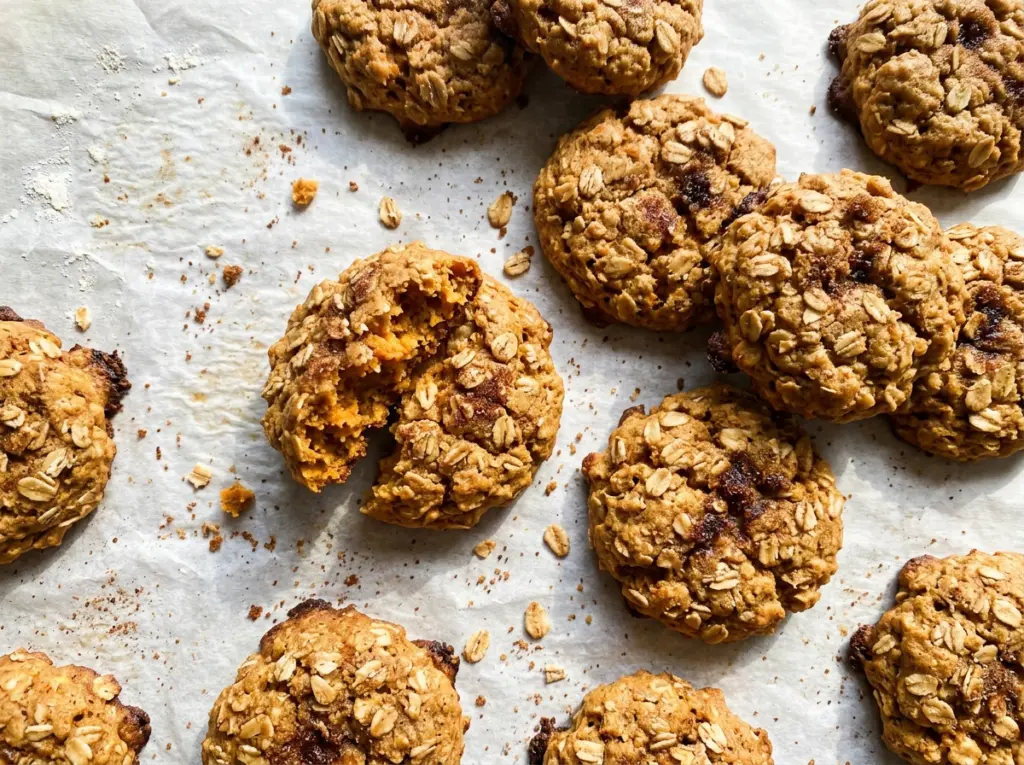
The dough has a softer feel than a standard oatmeal cookie dough once the sweet potato goes in. I’ve found that a short rest in the refrigerator makes it much easier to scoop without adding extra flour, which would throw off the balance of these sweet potato oatmeal cookies. The baked cookies have tender centers, chewy oats, and just enough cinnamon to make the sweet potato feel right at home.
For the best texture, start with mashed sweet potato that’s fully cooled, then give the mixed dough its full 30-minute chill. That pause helps the dough firm up before it hits the oven, while the old-fashioned oats bring the familiar hearty bite you want in an oatmeal cookie. Flatten each portion slightly and watch for lightly browned edges; the centers should look just set, not dry. Once they cool, you’ll have soft-centered cookies with a gentle cinnamon flavor and plenty of oat texture.
Kitchen Note
Let the mashed sweet potato cool completely before it goes into the butter mixture. Warm mash can soften the butter before the dough is ready, and that changes how the dough comes together.
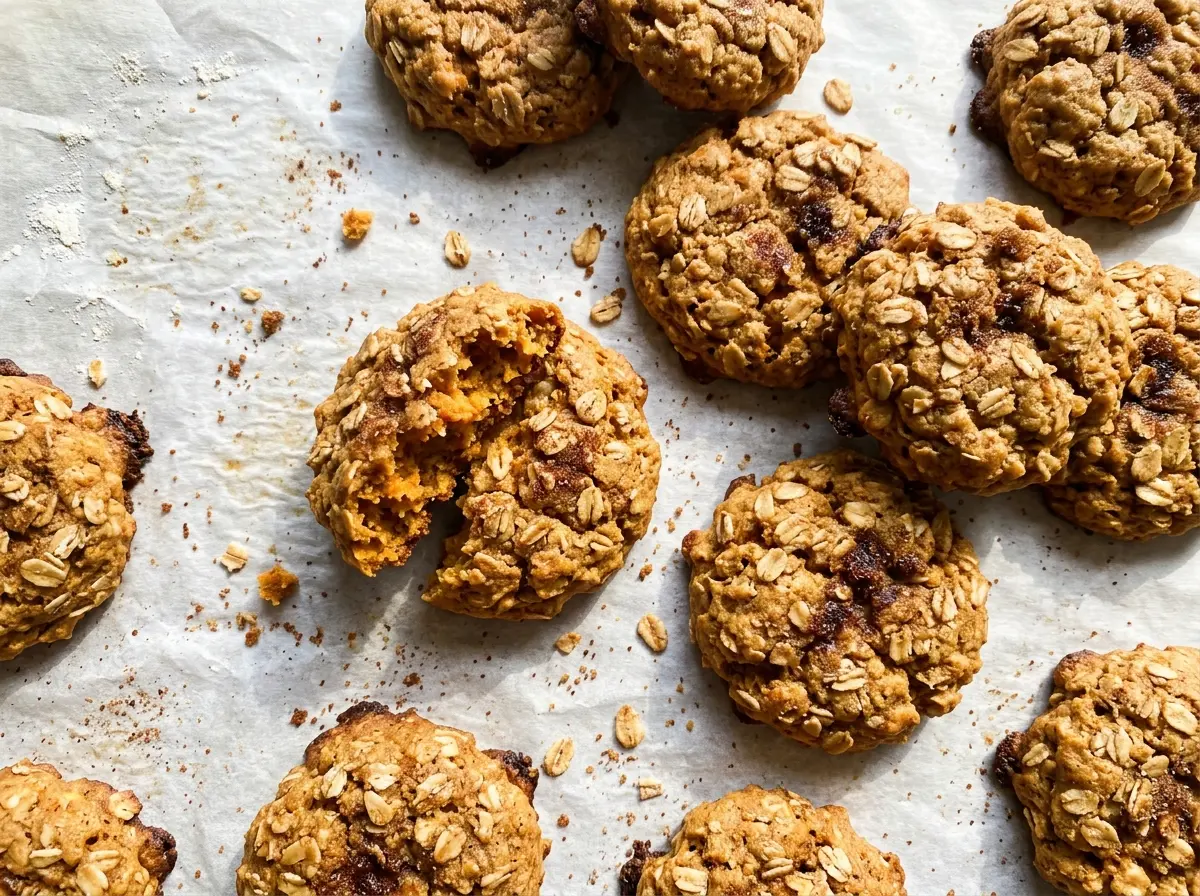
Save these sweet potato oatmeal cookies for a cozy bake: tender centers, cinnamon warmth, and chewy old-fashioned oats in every bite.
Why This Dough Needs Its 30-Minute Chill
Sweet potato brings moisture to cookie dough, and that makes this mixture softer than one built only from butter and sugar. Adding extra flour to make it easier to handle might seem like a quick fix, but it would dilute the cinnamon and oat balance and can leave the cookies more bready than tender. Chilling firms the butter and gives the oats time to take up some of the moisture.
That pause also makes portioning more manageable. After 30 minutes in the refrigerator, the dough should feel less loose and hold its shape when you scoop it. It won’t become stiff like a firm slice-and-bake dough, so use a scoop or spoon and keep the portions rounded before flattening them slightly.
Since the dough is chilled before baking, resist the urge to skip that rest because the oven is ready. The brief wait is part of the texture, not just a convenience. You’ll get cookies that spread into an even shape while keeping a soft, substantial middle.
How Sweet Potato, Brown Sugar, and Oats Shape Each Cookie

- Mashed sweet potato — It contributes moisture and a mild earthy sweetness, so use plain cooked sweet potato rather than a seasoned or sweetened preparation. Mash it evenly so you don’t leave dense chunks in the dough; a premium variety isn’t necessary.
- Old-fashioned rolled oats — These give the cookies their chewy, distinct oat texture. Quick oats absorb moisture and bake up differently, so they aren’t a direct swap here; the standard store-brand rolled oats work well.
- Light brown sugar — Its moisture helps keep the centers tender, while the granulated sugar balances the sweetness and supports a little edge browning. Packed brown sugar measures consistently; there’s no need for a specialty brand.
- Softened unsalted butter — Softened butter creams smoothly with the sugars and gives the dough its structure. It should yield when pressed but shouldn’t be oily or melted; ordinary unsalted butter is exactly right.
- Large egg — The egg binds the dough and helps the cookies hold together around the oats. Use a large egg for the intended balance rather than sizing up.
- All-purpose flour — Flour supplies the structure that keeps the moist dough from baking into a loose, fragile cookie. A standard all-purpose flour is the right choice; changing to a different flour can alter how much moisture the dough absorbs.
- Ground cinnamon and vanilla — Cinnamon gives the cookies their warm spice, and vanilla rounds out the sweet potato. Fresh, fragrant cinnamon makes the most difference; a basic vanilla extract works well.
- Baking soda — This is the leavener that helps the cookies spread and brown. Check that it’s fresh if your cookies routinely bake up dense, since old baking soda loses strength.
From Creamed Butter to Soft-Centered Cookies
Whisk the Dry Ingredients Evenly
Whisk the flour, cinnamon, baking soda, and salt in a medium bowl so the leavener and spice are distributed throughout. Stir in the rolled oats once the flour mixture looks uniform. This gives every portion a more even mix of cinnamon and oats, rather than leaving pockets of either in the finished cookies.
Cream the Sugars, Then Add the Sweet Potato
Beat the softened butter with both sugars in a large bowl until creamy, about 2 minutes. Scrape the bowl if butter or sugar clings to the sides, then beat in the egg, cooled sweet potato, and vanilla until combined. The mixture may look softer once the sweet potato is incorporated; that’s expected. Add the flour mixture and mix only until the dry streaks disappear.
Chill and Portion the Dough
Cover the bowl and refrigerate the dough for 30 minutes. Line an 18×13-inch rimmed baking sheet with parchment while the dough chills, and preheat the oven to 350°F. Scoop rounded 1 1/2-tablespoon portions onto the sheet about 2 inches apart, then flatten each one slightly. Bake in batches rather than crowding the pan.
Bake to the Right Visual Cue
Bake each batch for 11 to 13 minutes, until the edges are lightly browned and the centers look just set. If the edges are still pale, give the cookies more time within that range; if they look dry across the middle, they’ve gone past the soft-centered stage. Let the cookies cool on the baking sheet for 5 minutes before moving them to a wire rack to cool completely. They’re delicate while hot, so give them that time on the pan.
Small Shape Changes for a Different Bite
A Little More Edge in Every Bite
For a thinner cookie with more browned edge, flatten each portion a little more than usual before baking. Keep the portions spaced about 2 inches apart and use the same edge-color cue, since thinner cookies may reach it sooner within the stated bake range.
A Fuller, Softer Middle
For a thicker center, keep the rounded portions taller and press them only lightly. The result is a more substantial middle and less browned surface area, so rely on the edges and center’s appearance rather than expecting every cookie to look identical.
Storage and Reheating
- Refrigerator: Store cooled cookies in an airtight container for up to 5 days. Chilling firms their texture, so let them come back to room temperature before eating.
- Freezer: Freeze fully cooled cookies in an airtight container, with parchment between layers, for up to 2 months. Thaw at room temperature before serving.
- Reheating: Warm a cookie briefly in the microwave if you want a softer, just-warmed center. Avoid heating it until hot throughout, which can dry the edges.
Questions That Come Up While Baking These Cookies
Sweet Potato Oatmeal Cookies
Ingredients
Equipment
Method
- Preheat the oven to 350°F and line an 18x13-inch rimmed baking sheet with parchment paper.
- Whisk the flour, cinnamon, baking soda, and salt in a medium bowl, then stir in the oats.
- Beat the butter, brown sugar, and granulated sugar in a large bowl until creamy, about 2 minutes.
- Beat in the egg, sweet potato, and vanilla until combined.
- Add the flour mixture and mix just until no dry streaks remain.
- Cover and refrigerate the dough for 30 minutes.
- Scoop rounded 1 1/2-tablespoon portions onto the prepared baking sheet, spacing them about 2 inches apart, and flatten each slightly; bake in batches.
- Bake for 11 to 13 minutes, until the edges are lightly browned and the centers look just set.
- Cool the cookies on the baking sheet for 5 minutes, then transfer them to a wire rack to cool completely.


