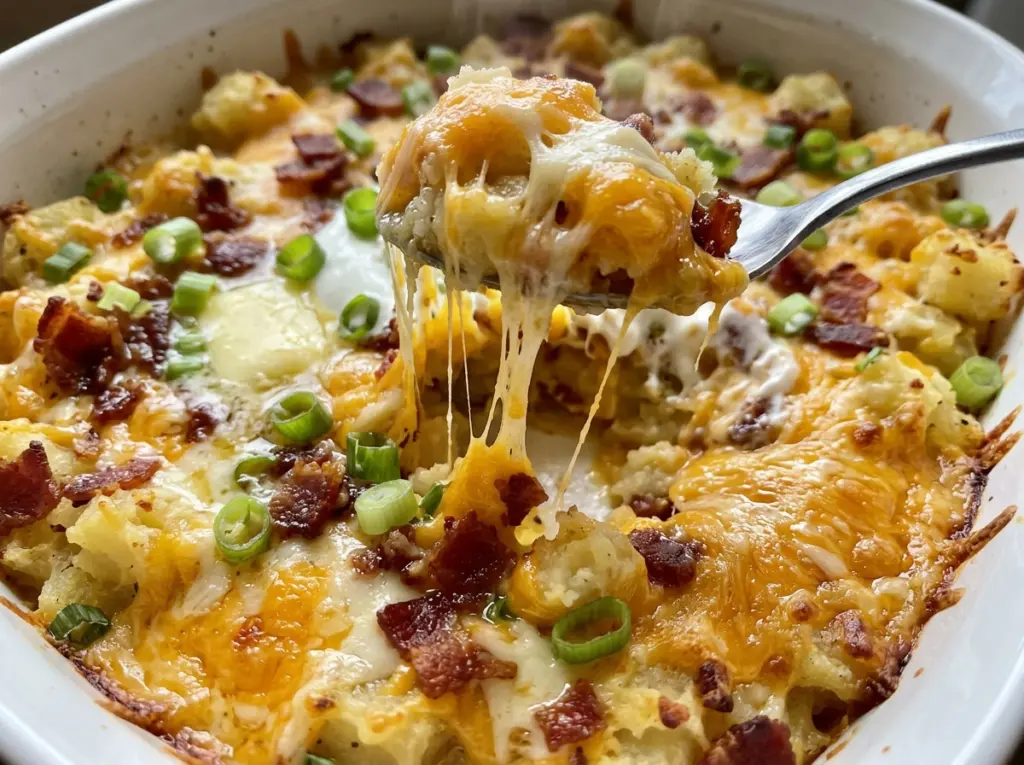
When a russet is fully baked, a skewer slips into the center without resistance and the inside breaks apart into soft, fluffy pieces. That’s the texture I want before these twice baked potato casserole potatoes meet the sour cream and butter; starting with firm potatoes leaves you chasing lumps in the bowl.
I bake the potatoes right on the oven rack, then scoop out the flesh while they’re still warm enough to mash easily. Warm milk blends in more smoothly than cold milk, and folding in the cheddar at the end keeps the filling tender rather than dense. The casserole goes into the oven with bacon and another layer of cheddar on top, then comes out bubbling and ready for scallions.

Kitchen Note
Warm the milk just until it feels lukewarm, not hot. It loosens the mash without cooling the potatoes, so the butter and sour cream blend in evenly.
Save this twice baked potato casserole for its fluffy sour cream filling, crisp bacon, and cheddar top.
Why Baking the Russets First Keeps This Casserole Fluffy
Potatoes for a casserole like this are often boiled, but baking the russets directly on the oven rack gives their moisture a way to escape as they cook. The result is a drier, fluffier interior that absorbs butter, sour cream, and milk without turning loose or waterlogged. It also means you don’t have to drain a pot or worry that the potatoes are holding extra cooking water.
That dry, tender texture matters once the filling is mashed and baked again. If you start with potatoes that are still firm in the middle, the mash stays lumpy; if you work the cooked potatoes aggressively trying to force out every last lump, the filling can turn gluey. Let the fork or skewer test guide you: it should slide easily into the center of each potato before you take them out of the oven.
Russets are a good fit because their starchy flesh breaks down readily and stays light after baking. After they cool just enough to handle, peel them into the bowl and mash until mostly smooth. A few soft, small bits are fine; the casserole doesn’t need the whipped texture of a purée.
What the Russets, Sour Cream, and Cheddar Each Bring

- Russet potatoes — Their fluffy, starchy centers make a soft filling that holds its shape in the dish. Choose potatoes that feel firm and have no soft spots; scrubbing them well is worthwhile because they bake directly on the rack.
- Unsalted butter — Butter gives the mash richness, while unsalted butter lets the measured kosher salt do the seasoning. Divide it as directed: one tablespoon greases the baking dish and the rest goes into the warm potatoes.
- Sour cream and whole milk — Sour cream brings tang and body, while whole milk loosens the potatoes into a mash that spreads easily. Warming the milk briefly helps it blend into the still-warm potatoes without making the filling feel chilled.
- Sharp cheddar — Sharp cheddar gives the filling a clear cheese flavor that still comes through beside the potatoes and bacon. Use one portion folded into the mash and save the other for the top; freshly shredded cheese melts smoothly, though pre-shredded cheddar works when convenience matters.
- Bacon and scallions — Crisp bacon adds salty crunch over the creamy filling, and thinly sliced scallions bring a fresh, mild onion note after baking. Cook the bacon until crisp before crumbling it so it keeps some texture under the melted cheese.
From Oven-Baked Potatoes to a Hot, Cheesy Center
Bake the Russets Until a Skewer Slides In Easily
Heat the oven to 400°F, pierce the scrubbed potatoes several times with a fork, and set them directly on the oven rack. Bake for 50 to 60 minutes, checking that a skewer slides easily into the centers rather than stopping at a firm spot. Potato size affects timing, so rely on that tenderness cue as well as the clock. Let them cool for about 10 minutes, until they’re easy to handle.
Crisp the Bacon While the Oven Cools
Lower the oven to 350°F and grease a 9×13-inch baking dish with one tablespoon of butter. Cook the bacon in a 12-inch skillet over medium heat for 8 to 12 minutes, turning it as needed so it browns on both sides. It should feel crisp rather than bendy when lifted from the pan; drain it on paper towels, then crumble it once it’s cool enough to handle. If the bacon is still soft, give it more time in the skillet before draining.
Mash the Warm Potato Flesh Until Mostly Smooth
Warm the milk in a microwave-safe cup for 20 to 30 seconds, just until it feels warm. Peel the potatoes into a 4-quart bowl and add the remaining butter, sour cream, warm milk, kosher salt, and black pepper. Mash until mostly smooth, stopping before the potatoes become pasty from overworking. Fold in one cup of the cheddar so it’s distributed through the filling.
Top and Bake Until the Middle Is Hot
Spread the potato mixture evenly in the prepared dish, then scatter the remaining cheddar and crumbled bacon over the surface. Bake at 350°F for 20 to 25 minutes, until the center is hot and the cheese has melted. If the cheese is melted but the center still feels cool, give the dish a little more time rather than serving it straight from the oven. Sprinkle with the sliced scallions and let the casserole rest for five minutes before serving.
Two Simple Ways to Change the Casserole
Leave Off the Bacon for a Vegetarian Version
Omit the bacon and keep the cheddar and scallions in place. The topping loses its smoky, crisp bite, but the cheddar still melts into a savory top and the scallions add freshness. The rest of the casserole stays the same.
Keep the Potato Skins for a More Rustic Texture
Instead of peeling the baked potatoes, scoop or break the flesh into the bowl with some of the skins attached, then mash as usual. The filling will be less uniform, with tender bits of skin throughout; scrub the potatoes carefully before baking if you make this change.
Storage and Reheating
- Refrigerator: Store covered in the refrigerator for 3 to 4 days. The bacon topping softens as it sits, while the potato filling firms up.
- Freezer: Freeze portions in an airtight container for up to 2 months. The thawed potatoes may be a little less fluffy, but the casserole reheats well.
- Reheating: Cover the casserole with foil and warm it in a 350°F oven until hot in the center; microwave individual portions in short intervals. Uncovered reheating can dry the edges before the middle warms through.
Questions That Come Up While Making Twice Baked Potato Casserole
Twice Baked Potato Casserole
Ingredients
Equipment
Method
- Preheat the oven to 400°F.
- Pierce the potatoes several times with a fork.
- Bake the potatoes directly on the oven rack for 50 to 60 minutes, until a skewer slides easily into the centers.
- Remove the potatoes and cool until easy to handle, about 10 minutes.
- Reduce the oven temperature to 350°F.
- Grease a 9x13-inch baking dish with 1 tablespoon of the butter.
- Cook the bacon in a 12-inch skillet over medium heat for 8 to 12 minutes, turning as needed, until crisp.
- Drain the bacon on paper towels, then crumble.
- Warm the milk in a microwave-safe cup for 20 to 30 seconds, until just warm.
- Peel the potatoes into a 4-quart bowl.
- Add the remaining 4 tablespoons butter, sour cream, warm milk, salt, and pepper, and mash until mostly smooth.
- Fold in 1 cup of the cheddar.
- Spread the potato mixture in the prepared baking dish.
- Sprinkle with the remaining 1 cup cheddar and the crumbled bacon.
- Bake for 20 to 25 minutes, until hot in the center and the cheese is melted.
- Sprinkle with the scallions and rest for 5 minutes before serving.


