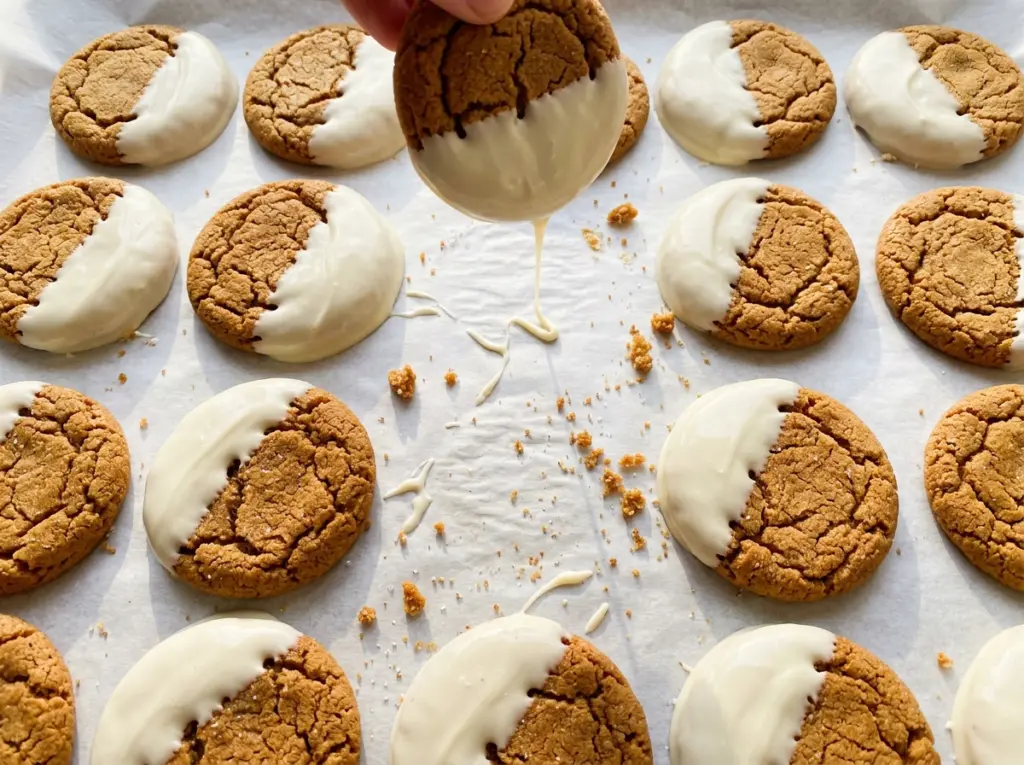
When the tray comes out of the oven, the sugar-coated tops have split into little cracks and the edges look set. That’s the moment I watch for with these white chocolate dipped gingersnap cookies: a few more minutes can take them from tender to hard, and the timer matters as much as the color.
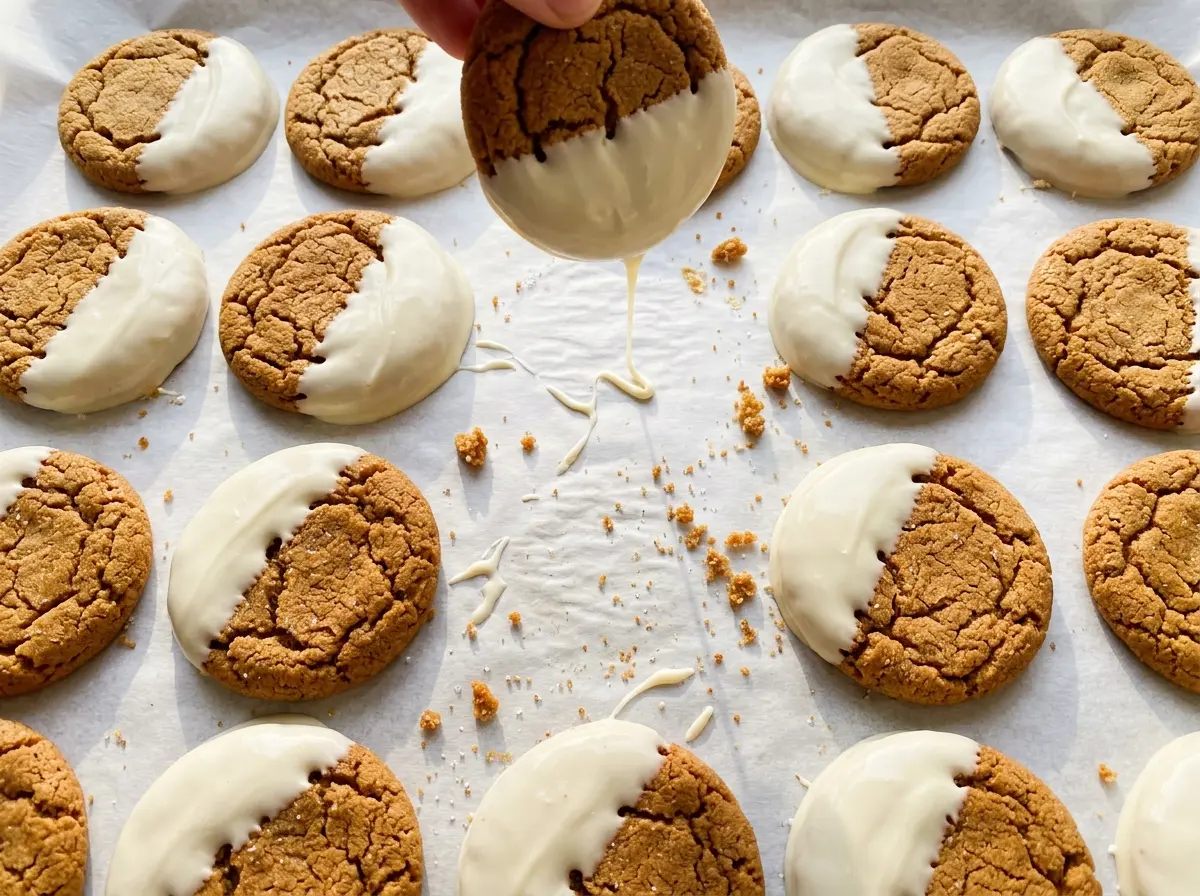
The dough gets its warmth from ginger, cinnamon, cloves, and unsulphured molasses, then a dip in white chocolate softens the spice with a sweet, creamy finish. I chill the dough before rolling it, which makes the balls easier to handle and helps them hold their shape as they bake. Once the cookies have cooled completely, dipping half of each one leaves the crackled top visible beside a smooth chocolate coating.
Kitchen Note
Set the chocolate bowl over barely simmering water, not down in it. If water gets into the chocolate, it can turn thick and lumpy instead of staying smooth enough for dipping.
Save these white chocolate dipped gingersnap cookies for a spiced cookie with a smooth, sweet finish and a crackled sugar top.
The Sugar-Coated Dough Is What Gives These Gingersnaps Their Crackled Tops
Rolling each dough ball in granulated sugar before baking does more than add a sparkly finish. As the cookies spread in the oven, the surface breaks into visible cracks, while the sugar leaves a delicate, crisp-edged coating around the spiced cookie. That contrast is part of what makes a gingersnap look and feel different from a plain molasses cookie.
Keep the balls evenly sized and coat each one all the way around. A bare patch won’t have the same sugared finish, and oversized balls won’t bake at the same pace as the rest of the sheet. The cookies are ready when they’re crackled and their edges are set; they’ll continue to settle as they cool on the pan. The goal isn’t a uniformly smooth top. Those irregular fissures are just what you want to see.
Why Unsulphured Molasses and Finely Chopped White Chocolate Matter

- Unsulphured molasses — It brings the deep, mellow sweetness that rounds out the spices and gives the dough its familiar ginger-cookie character. Use unsulphured rather than blackstrap molasses, which is more bitter and can overwhelm the other flavors.
- Ground ginger, cinnamon, and cloves — The spices carry most of the cookie’s aroma, so fresh, fragrant jars make a noticeable difference. Ground cloves are especially assertive; measure carefully rather than adding extra by instinct.
- All-purpose flour — It gives the cookies enough structure to keep their shape and support the coating. A standard grocery-store brand works well here; there’s no need for specialty flour.
- Unsalted butter — Softened butter creams smoothly with the sugar and lets the salt in the dough stay under your control. It should yield when pressed but shouldn’t look shiny or melted.
- White chocolate — Since it forms the coating, choose chocolate you enjoy eating on its own. Finely chopped pieces melt more evenly than large chunks and make it easier to get a smooth dip; inexpensive bars are fine if they’re labeled white chocolate.
From Chilled Dough to a Smooth Half-Dip
Mix the dough without overworking it
Whisk the flour, baking soda, ginger, cinnamon, cloves, and salt together in a medium bowl. In a large bowl, beat the softened butter with the sugar until light and fluffy, about 2 minutes, then beat in the molasses and egg until combined. Add the flour mixture and mix only until no dry streaks remain. Mixing longer than that can make the cookies tougher than they need to be.
Chill, shape, and coat the dough balls
Cover the dough and refrigerate it for 30 minutes. While it chills, heat the oven to 350°F and line two 18×13-inch baking sheets with parchment paper. Roll the dough into 1-inch balls, coat each in the remaining granulated sugar, and arrange them about 2 inches apart. Leave the second sheet ready, but bake one sheet at a time.
Bake until crackled, then cool completely
Bake each sheet for 10 to 12 minutes, looking for crackled tops and set edges. If the edges still look wet, give the cookies another minute and check again rather than waiting for the whole surface to look firm. Let the cookies cool on the sheet for 5 minutes, then move them to a wire rack. They need to be completely cool before the chocolate dip.
Melt the chocolate and dip halfway
Set finely chopped white chocolate in a heatproof bowl over a saucepan of barely simmering water, stirring until smooth. Keep the bottom of the bowl from touching the water as the chocolate melts. Dip half of each cooled cookie, let the excess drip back into the bowl, and place the cookies on parchment. Give the coating about 30 minutes to set before stacking or packing the cookies.
Three Ways to Change the Chocolate or Make a Gluten-Free Batch
Use semisweet chocolate for a less-sweet finish
Swap the white chocolate for the same amount of finely chopped semisweet chocolate. The coating will taste darker and less sweet, which makes the molasses and spices stand out more.
Make the cookies gluten-free
Replace the all-purpose flour with a cup-for-cup gluten-free baking blend that contains xanthan gum. The cookies may be a little more delicate, so handle them gently when transferring them to the cooling rack and dipping them.
Leave them uncoated for classic gingersnaps
Skip the chocolate dip and serve the sugar-coated cookies on their own. You’ll get a more direct molasses-and-spice bite without the extra sweetness of the coating.
Storage and Reheating
- Room temperature: Keep the cookies in an airtight container for up to 4 days. The coating stays neatest when the cookies aren’t stacked until it has fully set.
- Freezer: Freeze completely cooled, undipped cookies in an airtight container for up to 2 months. Thaw them at room temperature before dipping for a smoother finish.
- Reheating: These cookies are best served at room temperature, so reheating isn’t needed. Don’t microwave dipped cookies; the white chocolate can soften or melt unevenly.
Questions That Come Up While Baking These Gingersnaps
White Chocolate Dipped Gingersnap Cookies
Ingredients
Equipment
Method
- Whisk the flour, baking soda, ginger, cinnamon, cloves, and salt in a medium bowl.
- Beat the butter and 3/4 cup sugar in a large bowl until light and fluffy, about 2 minutes.
- Beat in the molasses and egg until combined.
- Add the flour mixture and mix just until no dry streaks remain.
- Cover and refrigerate the dough for 30 minutes.
- Heat the oven to 350°F and line two 18x13-inch baking sheets with parchment paper.
- Roll the dough into 1-inch balls, coat each in the remaining 1/3 cup sugar, and arrange them about 2 inches apart on the baking sheets.
- Bake one sheet at a time for 10 to 12 minutes, until the cookies are crackled and the edges are set.
- Cool the cookies on the sheet for 5 minutes.
- Transfer the cookies to a wire rack to cool completely.
- Melt the white chocolate in a heatproof bowl set over a saucepan of barely simmering water, stirring until smooth and keeping the bowl from touching the water.
- Dip half of each cooled cookie into the melted chocolate, let excess drip back into the bowl, and place the cookies on parchment until the coating sets, about 30 minutes.


