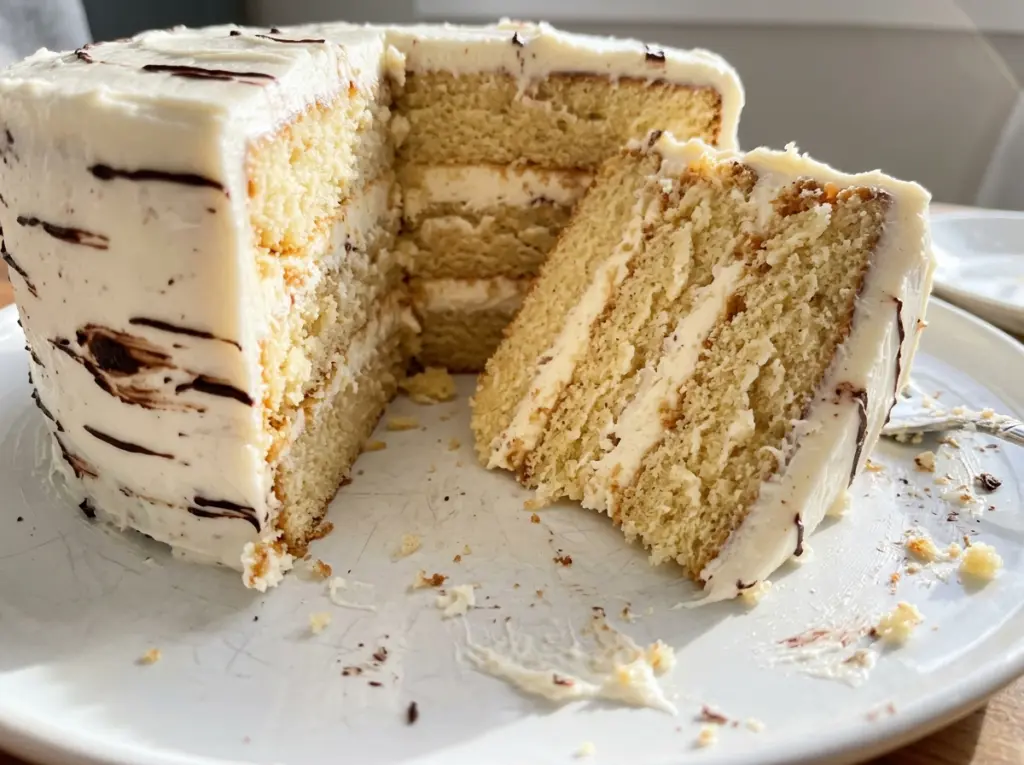
At the decorating stage, the chocolate has a small window where it’s cool enough to hold its shape but still soft enough to pipe. I watch for it to thicken, then draw a few uneven lines down the sides and short marks across them. Those imperfect strokes are what make the Winter Birch Tree Cake look like bark instead of a tidy stripe pattern.
The cake itself is built in three round layers, with a generous buttercream filling and a smooth coat on the outside. I like that the design doesn’t depend on elaborate piping: a zip-top bag with a tiny snipped corner is enough to make the birch marks and slender branches on top.
Give the crumb coat time to firm before adding the final layer of frosting, and the finished cake has a clean, pale canvas for the chocolate. The result is a tall, snowy cake with dark bark lines running around its sides.
Kitchen Note
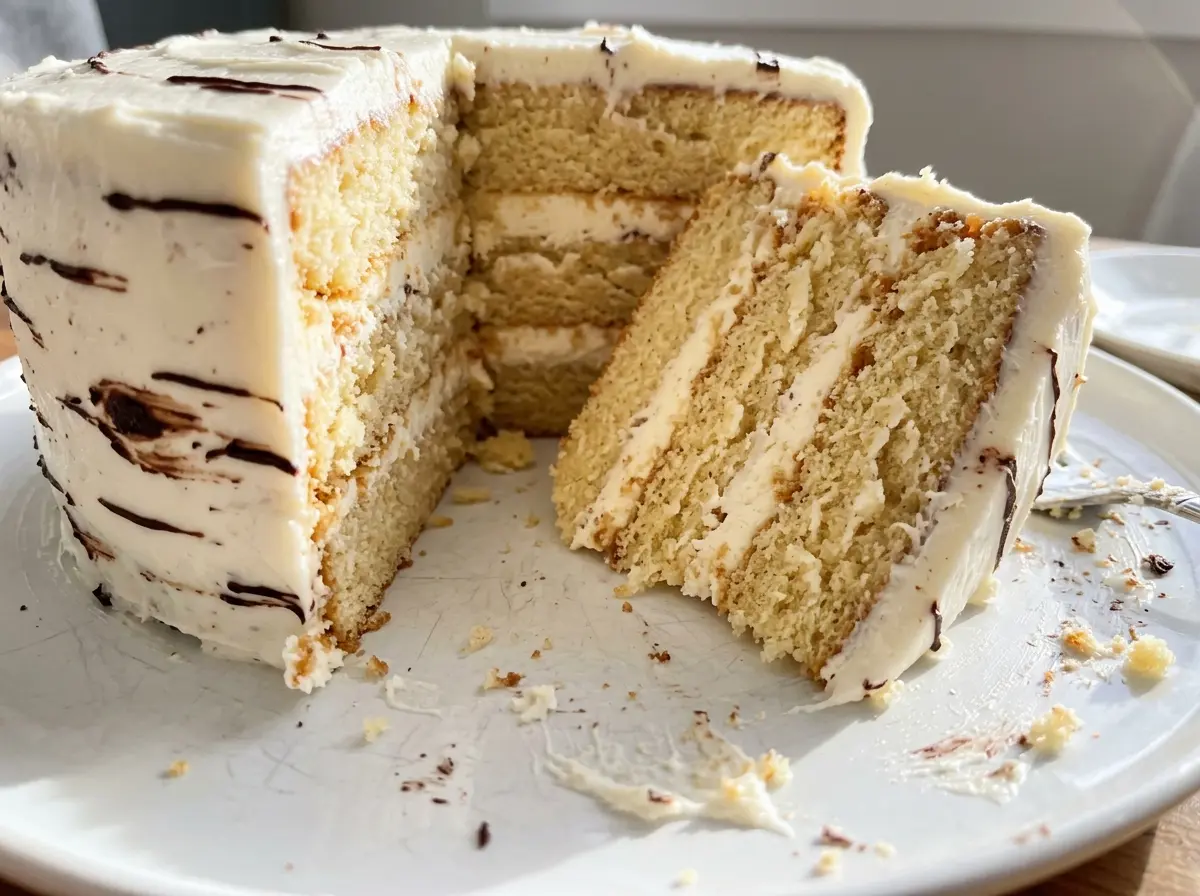
Wait for the melted chocolate to thicken slightly before you pipe it. If it’s still runny, the bark marks spread; if it gets too firm, it won’t flow neatly from the bag.
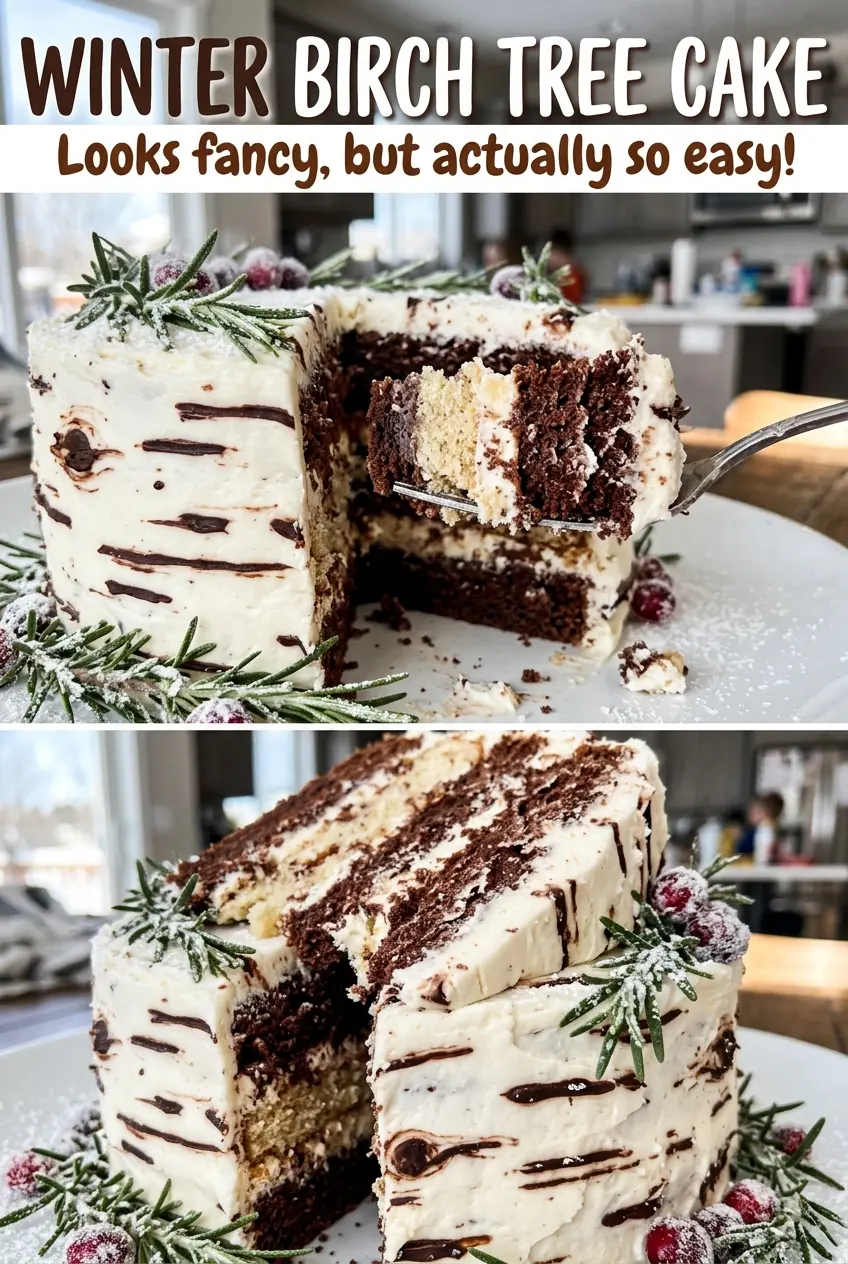
Save the Winter Birch Tree Cake for a special table centerpiece, with snowy buttercream and hand-piped chocolate bark.
Three Flour Additions Keep This Oil Cake Tender—If You Stop Whisking in Time
It’s easy to treat cake batter like it needs a long, vigorous mix. Here, that works against you. Once the flour is added, whisking develops gluten, and too much of it can leave the layers firm or chewy instead of tender. Adding the dry mixture in three rounds gives it time to incorporate without asking you to beat the batter smooth.
Stop as soon as the last dry streak disappears. A few small lumps are less troublesome than overworked batter, and you’ll get a more even result by dividing the mixture evenly among the pans rather than trying to smooth out every trace with extra whisking. The vegetable oil also keeps the batter fluid, so it comes together without creaming butter and sugar first. That makes the mixing straightforward, but it’s still worth keeping a light hand once the flour goes in.
Why Oil, Whole Milk, and Semisweet Chocolate Matter in This Birch Cake
- All-purpose flour — It gives these layers enough structure to stack while keeping a tender crumb. Regular all-purpose flour is the right choice here; bread flour can make the cake tougher. If you’re adapting for gluten-free baking, use a cup-for-cup baking flour blend designed to replace all-purpose flour.
- Vegetable oil — Oil stays liquid at room temperature, which helps keep the cake soft after it cools. A neutral vegetable oil lets the frosting and chocolate decoration stand out; strongly flavored oils would change the taste.
- Whole milk and eggs — Room-temperature dairy and eggs blend more readily into the wet mixture than cold ingredients. Whole milk contributes richness; unsweetened soy milk is the most useful dairy-free replacement because it has enough body for cake batter.
- Unsalted butter and powdered sugar — Butter gives the frosting its creamy body, while powdered sugar thickens it enough to fill and cover three layers. Softened butter should yield when pressed without looking shiny or melted. Unsalted butter keeps the frosting’s sweetness in balance.
- Semisweet chocolate — Its darker color makes the bark pattern stand out against the pale frosting, and its moderate sweetness keeps the decoration from overwhelming each slice. Choose chopped chocolate that melts smoothly; a dairy-free semisweet chocolate works for a dairy-free version.
Build the Layers First, Then Give the Birch Bark a Firm Canvas
Mix a Batter That’s Just Combined
Heat the oven to 350°F, grease three 8-inch round cake pans with cooking spray, and line their bottoms with parchment rounds. Whisk the flour, baking powder, and salt in one bowl, then whisk the sugar, eggs, vegetable oil, and room-temperature milk in a large bowl until smooth. Add the flour mixture in three additions, whisking only until no dry streaks remain. Divide the batter evenly among the pans so the layers bake at a similar rate.
Bake Until the Centers Spring Back
Bake the layers for 24–29 minutes. The tops should spring back when lightly pressed, and a toothpick inserted in the center should come out clean or with a few moist crumbs. If the toothpick comes out with wet batter, the centers need more time. Cool the cakes in their pans for 10 minutes, then turn them onto wire racks, remove the parchment, and cool completely before frosting.
Whip the Buttercream and Stack the Cake
Beat the softened butter with an electric mixer on medium speed for 2 minutes, until creamy. Add the powdered sugar 1 cup at a time on low speed; this keeps a cloud of sugar from puffing out of the bowl. Beat in the vanilla and heavy cream, then mix on medium-high for 2 minutes until fluffy. Level the layers if needed, stack them with about 1 cup of frosting between each pair, and put the third layer on top.
Seal the Crumbs Before Piping the Bark
Spread a thin coat of frosting over the top and sides to seal in crumbs, then chill the cake for 20–30 minutes, until the frosting feels firm. Cover the cake with the remaining frosting in an even layer. Melt the chopped chocolate in a microwave-safe bowl in 15-second bursts, stirring between bursts, then let it cool until slightly thickened but still pipeable. Pipe irregular vertical streaks and short horizontal marks around the sides, add a few slender branches on top, and chill for 15 minutes to set.
Three Practical Ways to Adapt This Birch Tree Cake
Make the layers gluten-free
Replace the all-purpose flour with the same volume of a cup-for-cup gluten-free baking blend made for cakes. The layers may have a slightly more delicate crumb, so let them cool fully before turning them out and handle them gently while stacking.
Adapt it for a dairy-free table
Use unsweetened soy milk in place of the whole milk, stick-style plant butter instead of butter, plant-based cream in the frosting, and dairy-free semisweet chocolate for the bark. The frosting may be softer than the butter version, so keep the cake chilled while you decorate and serve it.
Use bittersweet chocolate for a darker bark
Swap the semisweet chocolate for bittersweet chocolate if you want the bark lines to taste less sweet. It keeps the same dark contrast against the frosting, with a more pronounced cocoa edge in each bite.
Storage and Reheating
- Refrigerator: Keep the frosted cake covered for 3–4 days. The buttercream firms up when cold, and the cake is less tender straight from the refrigerator.
- Freezer: For the best finish, freeze unfrosted, fully cooled layers. Wrap each layer tightly and freeze for up to 2 months; thaw them while still wrapped before decorating. The piped chocolate design is more likely to crack if the finished cake is frozen.
- Reheating: Don’t heat frosted cake. Let slices sit at room temperature for 20–30 minutes to soften the buttercream, and return the remaining cake to the refrigerator within 2 hours.
Questions That Come Up While Making Winter Birch Tree Cake
Winter Birch Tree Cake
Ingredients
Equipment
Method
- Heat the oven to 350°F.
- Grease three 8-inch round cake pans with cooking spray and line the bottoms with parchment rounds.
- Whisk the flour, baking powder, and salt in a medium bowl.
- In a large bowl, whisk the sugar, eggs, vegetable oil, and milk until smooth.
- Add the flour mixture to the wet mixture in three additions, whisking just until no dry streaks remain.
- Divide the batter evenly among the pans.
- Bake for 24–29 minutes, until the tops spring back when lightly pressed and a toothpick inserted in the centers comes out clean or with a few moist crumbs.
- Cool the cakes in the pans for 10 minutes.
- Turn the cakes onto wire racks, remove the parchment, and cool completely.
- Beat the butter in a large bowl with an electric mixer on medium speed for 2 minutes, until creamy.
- Beat in the powdered sugar 1 cup at a time on low speed.
- Add the vanilla and heavy cream, then beat on medium-high for 2 minutes, until fluffy.
- Level the cake layers if needed.
- Place one layer on a serving plate and spread about 1 cup frosting over it.
- Place a second layer on top and spread about 1 cup frosting over it.
- Place the third layer on top.
- Spread a thin coat of frosting over the top and sides to seal in crumbs.
- Chill the cake for 20–30 minutes, until the frosting is firm.
- Spread the remaining frosting evenly over the top and sides of the cake.
- Melt the chocolate in a microwave-safe bowl in 15-second bursts, stirring between bursts.
- Let the chocolate cool until thickened slightly but still pipeable.
- Transfer the chocolate to a small zip-top bag and snip a tiny corner.
- Pipe irregular vertical streaks and short horizontal marks on the sides to resemble birch bark, then add a few slender branching lines on top.
- Chill for 15 minutes to set.


