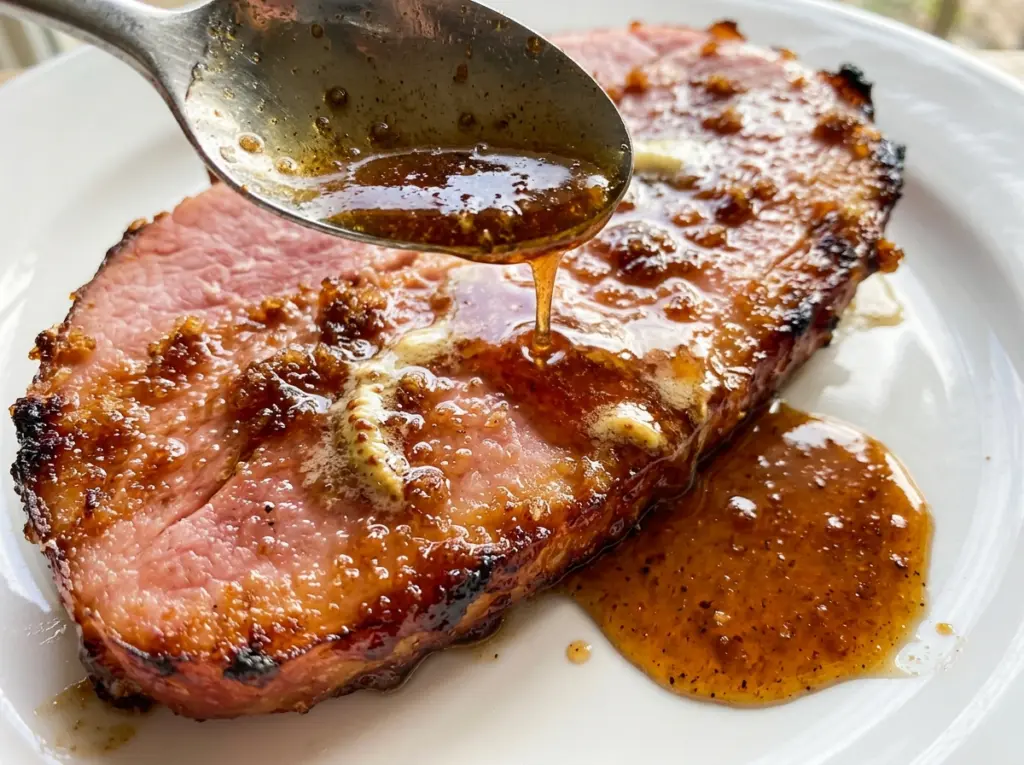
The butter melts first, then the brown sugar and honey turn it into a glossy base with a little tang from Dijon mustard and apple cider vinegar. Ground cloves give the sweetness a warm, unmistakable edge without taking over. I like how this Brown Sugar Ham Glaze clings to the ham instead of tasting like plain sugar on the surface.
What makes it useful is how quickly it comes together in one small saucepan. Stir it until the sugar dissolves and the glaze looks smooth, then brush it onto the ham near the end of baking. That final coating brings sweet, tangy flavor to each slice, with a gentle clove note underneath.
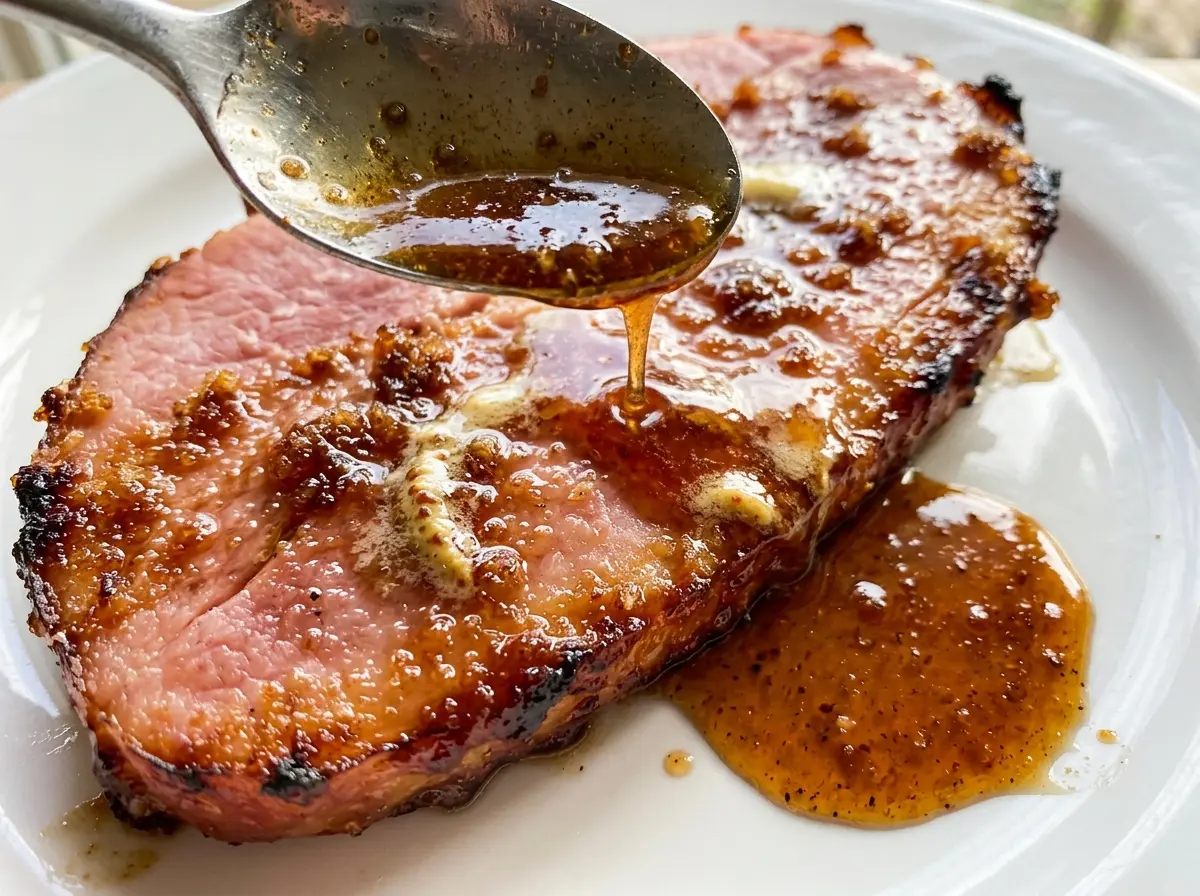
Kitchen Note
Keep stirring over medium-low heat until the sugar has completely dissolved and the glaze turns smooth. If it still looks gritty, give it another moment on the heat rather than brushing it onto the ham that way.
Save this Brown Sugar Ham Glaze for a glossy, sweet-tangy finish with a gentle hint of clove.
Why Brown Sugar Glaze Belongs on the Ham Near the End
A sweet glaze needs time on the ham to turn shiny and cling to the surface, but a long stretch in the oven can take it too far. Brown sugar and honey both contain sugars that brown as they heat. Put the glaze on during the final 20 to 30 minutes of baking, and it has time to coat the ham without spending the entire bake exposed to the oven.
The timing also helps the glaze stay noticeable. A thin coating applied near the finish gives you that sweet-tangy layer on the outside, while the ham remains the main event. Brush it over the ham once, then reapply one more time during that final baking window. The second pass builds a more even, glossy finish without asking the glaze to carry the whole dish.
This is a finishing glaze, not a marinade or a sauce to cook for hours. The mixture is already smooth and brushable before it goes on the ham, so there’s no need to put it back on the stove to reduce it. Let the short oven finish do the work, and keep an eye on the surface as the ham completes its bake.
What Brown Sugar, Honey, and Dijon Each Bring to the Glaze

- Light brown sugar — Its mellow molasses note gives the glaze its familiar caramel-like sweetness. Fresh, soft brown sugar stirs in easily; if yours has hardened into lumps, break them up before measuring so they dissolve evenly. Dark brown sugar works measure-for-measure for a deeper molasses flavor.
- Honey — Honey contributes sweetness and helps the finished coating look glossy. A basic mild honey is a good choice; a strongly flavored variety will be more noticeable in the glaze. Light corn syrup can replace it measure-for-measure for a neutral sweetness, though you’ll lose honey’s floral note.
- Dijon mustard — Dijon brings a rounded mustard tang that keeps the glaze from tasting one-note sweet. A fresh jar gives the cleanest flavor, but there’s no need to seek out a specialty brand. Yellow mustard can stand in measure-for-measure; expect a milder, more familiar mustard taste.
- Apple cider vinegar — Its acidity cuts through the sugar and gives the glaze a gentle fruity sharpness. A standard bottle works well here. White wine vinegar can replace it measure-for-measure, with a cleaner, less apple-like finish.
- Unsalted butter — Butter gives the glaze a richer mouthfeel and helps the ingredients come together smoothly. Use butter that’s fresh, but an everyday store brand is fine. Salted butter can replace unsalted butter measure-for-measure; the finished glaze will have a slightly saltier edge.
- Ground cloves — Cloves supply the warm spice that makes this glaze taste distinct from a plain brown sugar coating. Fresh ground spice has a more vivid aroma, though a regular supermarket jar works. Ground cinnamon can replace the cloves; use half as much cinnamon for a softer, less assertive spice note.
From Melted Butter to a Smooth, Brushable Finish
Melt the Butter Without Browning It
Set a small saucepan over medium-low heat and melt the unsalted butter. Keep the heat gentle; the goal is melted butter, not browned butter. Once it has melted, stir in the brown sugar, honey, Dijon mustard, apple cider vinegar, and ground cloves. Stir until the ingredients are combined before judging the texture.
Stir Until the Sugar Dissolves
Keep the mixture over medium-low heat and stir for 3 to 5 minutes. At first, it may look thick or slightly grainy, but it should become smooth as the sugar dissolves. Watch the bottom and corners of the pan as you stir so sugar doesn’t sit in one spot. When the glaze looks uniform, remove the saucepan from the heat.
Brush the Ham During Its Final Bake
Brush the glaze over the ham during its final 20 to 30 minutes of baking at 325°F. Spread it across the surface instead of leaving a thick mound in one area. Reapply the glaze once during that same finishing window. The coating should look glossy as it warms against the ham.
Small Changes That Shift the Sweetness or Spice
Add a Little Orange Zest
Stir finely grated orange zest into the glaze with the other ingredients. It adds a fresh citrus aroma that brightens the sweet coating without changing its basic texture.
Give It a Gentle Kick
Add a small pinch of cayenne with the ground cloves for a mild heat that contrasts with the brown sugar and honey. Start with just a pinch; too much can crowd out the clove and mustard.
Make the Glaze Dairy-Free
Replace the butter with the same amount of a plant-based butter and replace the honey with the same amount of maple syrup. The result will have a more maple-forward taste and may be a little less buttery, while keeping the sweet, tangy character.
Storage and Reheating
- Refrigerator: Keep unused glaze that hasn’t touched the ham in a covered container for 3 to 4 days. It will thicken when cold.
- Freezer: I don’t recommend freezing it; the sugar mixture may turn grainy after thawing, and it takes only a few minutes to make fresh.
- Reheating: Warm it in a small saucepan over medium-low heat, stirring until smooth and brushable. Avoid high heat, which can make the sugar mixture catch on the bottom.
Questions That Come Up Before the Ham Goes in the Oven
Brown Sugar Ham Glaze
Ingredients
Method
- Melt the butter in a small saucepan over medium-low heat.
- Stir in the brown sugar, honey, Dijon mustard, apple cider vinegar, and ground cloves.
- Cook, stirring, for 3–5 minutes, until the sugar dissolves and the glaze is smooth.
- Remove from the heat.
- Brush the glaze over a ham during its final 20–30 minutes of baking at 325°F.
- Reapply the glaze once.


