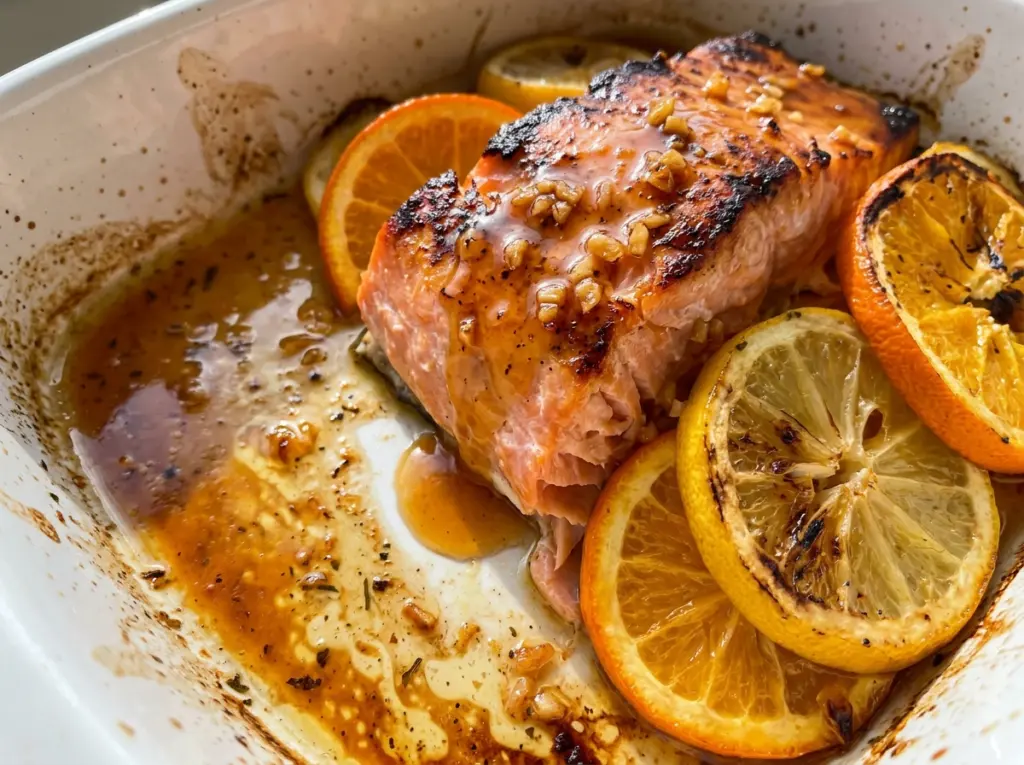
The glaze looks thin when it first goes into the saucepan, then slowly turns glossy as it simmers. That short stretch of cooking matters: a watery glaze slides right off the salmon, while one that’s had a few minutes on the stove brushes on evenly and bakes into a light, citrusy coating. I make this Citrus Glazed Salmon when I want a bright, savory-sweet dinner without a separate pan sauce.
Keeping the salmon skin-side down gives each portion a steady base in the baking dish, and brushing on the glaze before baking lets the fish cook right into its flavor. The orange keeps the citrus mellow, while lemon cuts through the honey’s sweetness. The finished fillets come out tender, flaky, and glossed with a sauce that’s tangy rather than sugary.
Kitchen Note
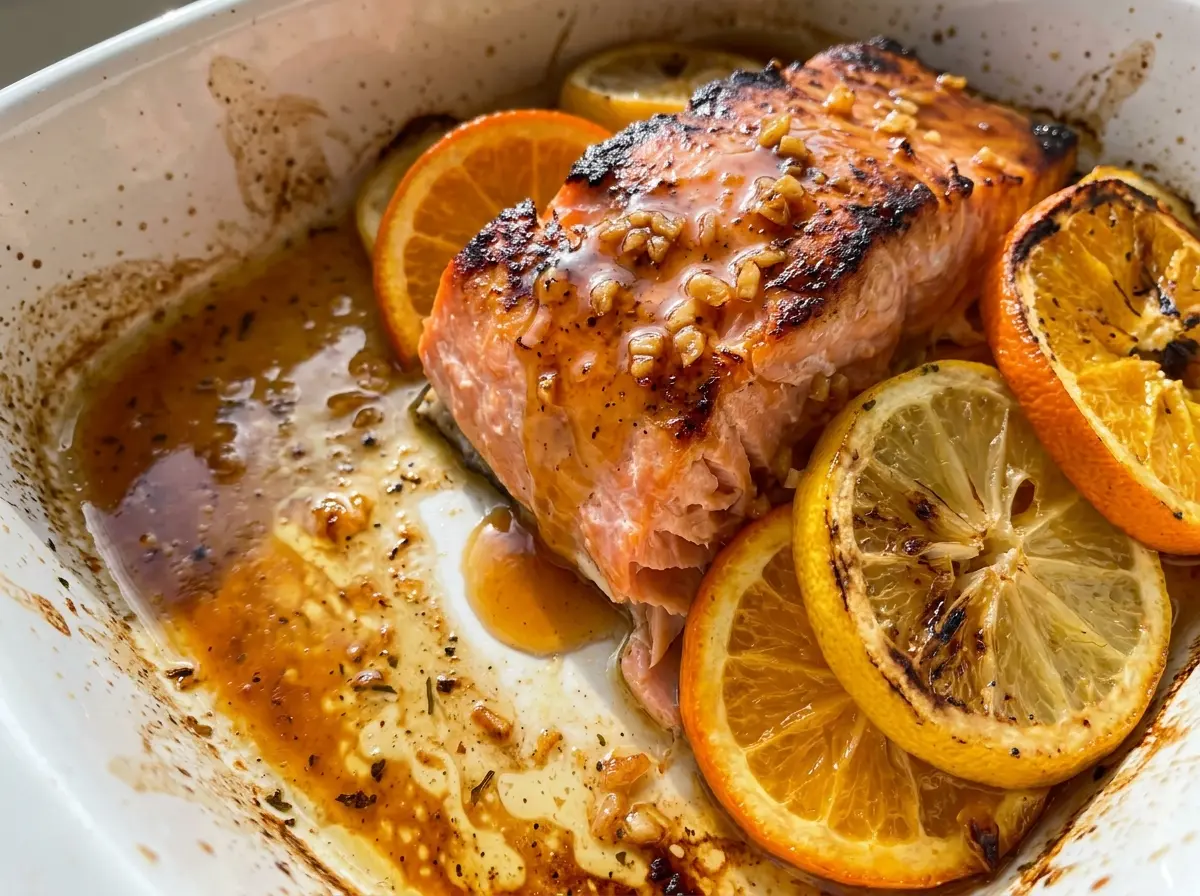
I keep the portions skin-side down from the moment they go into the dish. The skin gives each piece a stable base while you brush on the glaze, so the fillets don’t slide around or lose their shape.
Save this Citrus Glazed Salmon for an easy dinner with flaky fish and a bright, glossy orange glaze.
Why This Citrus Glaze Goes on Before the Salmon Bakes
A glaze brushed on after cooking stays more like a loose sauce; it pools around the fish instead of becoming part of the surface. Here, the salmon bakes with its coating already in place. The oven warms the citrus and honey together, leaving a thin sheen across the top of each fillet rather than a puddle of uncooked glaze at the end.
That light coating suits salmon better than a thick, sticky layer. It brings sweetness and brightness without hiding the fish’s flavor, and the savory note from the soy sauce keeps the glaze from tasting like dessert. Brush it over the whole top of each portion, not just the center, so every bite gets some of that balance. The glaze is there to complement the salmon, not bury it.
What the Salmon and Citrus Bring to This Glaze
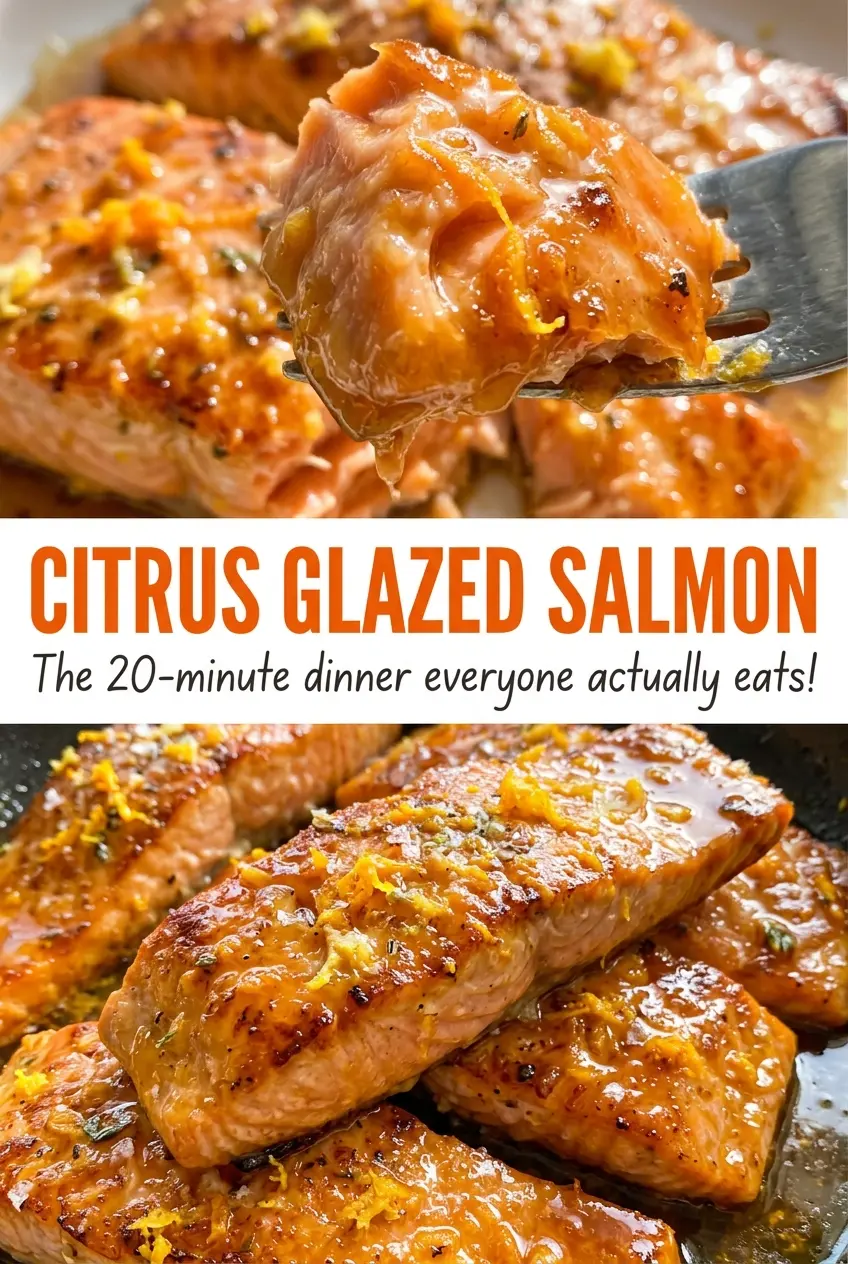
- Salmon fillets — Skin-on portions are the best fit here: the skin helps the pieces hold together in the baking dish, and salmon’s rich texture stands up to the sweet-tart glaze. Choose portions of similar thickness when you can; wild or farmed both work, so the fresher-looking fish matters more than the label.
- Orange juice — It gives the glaze its round, mellow citrus base. Fresh-squeezed juice is lovely, but ordinary bottled orange juice works well; avoid a sweetened orange drink, which would push the glaze toward cloying.
- Lemon juice — Lemon sharpens the orange and honey so the finished coating stays lively. Fresh juice has a brighter aroma, though bottled lemon juice is a practical stand-in when that’s what you have.
- Honey — Honey adds sweetness and helps the glaze cling once it cooks down. A mild, inexpensive honey is fine; a strongly flavored variety will make its own character more noticeable. Maple syrup can replace it in the same amount, with a softer sweetness and a slightly less honeyed finish.
- Soy sauce — This is the salty, savory counterpoint to the fruit and honey. Regular soy sauce gives a fuller, more pronounced flavor; tamari works in the same amount for a gluten-free adaptation and keeps that savory note, though its taste varies by brand.
- Garlic and olive oil — Mince the garlic finely so it disperses through the glaze instead of leaving a large raw-tasting bit on one fillet. A standard olive oil is all you need for brushing the fish; a neutral cooking oil can replace it in the same amount without changing the dish much.
How to Glaze and Bake the Salmon Without Overcooking It
Season the Portions in the Baking Dish
Heat the oven to 400°F and lightly grease a 9×13-inch baking dish. Arrange the salmon skin-side down, then brush the tops with olive oil and season with kosher salt and black pepper. Keep the portions in a single layer so the glaze can reach each one and the heat circulates around the fish. If the pieces are crowded together, separate them before adding the glaze.
Simmer the Citrus Until It Coats a Spoon
Combine the orange juice, lemon juice, honey, soy sauce, and minced garlic in a small saucepan. Bring the mixture to a simmer over medium heat and cook for 5–7 minutes, stirring occasionally. It should look a little glossier and lightly thickened, not reduced to a sticky syrup. If the pan boils hard, lower the heat; a steady simmer gives the glaze time to reduce without scorching the honey or garlic.
Bake Until Each Center Is Just Flaky
Brush the glaze evenly over the salmon, then bake for 12–15 minutes. Check the thickest part of each fillet with an instant-read thermometer; it should reach 145°F, and the fish should flake easily with a fork. Portions aren’t always identical, so use both the temperature and the flaky texture rather than assuming every piece is ready at the same moment. A fork should separate the flesh into moist flakes, not press it into dry crumbs.
Three Easy Ways to Adapt the Citrus Glaze
Make It Gluten-Free With Tamari
Replace the soy sauce with the same amount of tamari. It keeps the glaze’s savory balance while making the dish gluten-free when you choose a gluten-free tamari; the exact saltiness can vary between brands.
Trade the Lemon for Lime
Use 2 tablespoons of lime juice in place of the lemon juice. The glaze takes on a sharper, more tropical edge, while the orange still rounds out the acidity.
Storage and Reheating
- Refrigerator: Refrigerate cooked salmon within 2 hours and eat it within 3–4 days. The fish will be a little less tender after chilling.
- Freezer: Freeze portions in an airtight container for up to 2 months for best quality. Thaw them in the refrigerator before reheating.
- Reheating: Cover a portion and microwave it at 50% power in short bursts until it reaches 165°F. High heat can dry the salmon before the center warms through.
Questions About Citrus Glazed Salmon
Citrus Glazed Salmon
Ingredients
Equipment
Method
- Heat the oven to 400°F.
- Lightly grease a 9x13-inch baking dish.
- Arrange the salmon skin-side down in the dish.
- Brush the salmon with olive oil.
- Season with kosher salt and black pepper.
- Combine the orange juice, lemon juice, honey, soy sauce, and garlic in a small saucepan.
- Bring the mixture to a simmer over medium heat.
- Cook for 5-7 minutes, stirring occasionally, until slightly thickened.
- Brush the glaze evenly over the salmon.
- Bake for 12-15 minutes, until the thickest part of each fillet reaches 145°F and the fish flakes easily with a fork.


