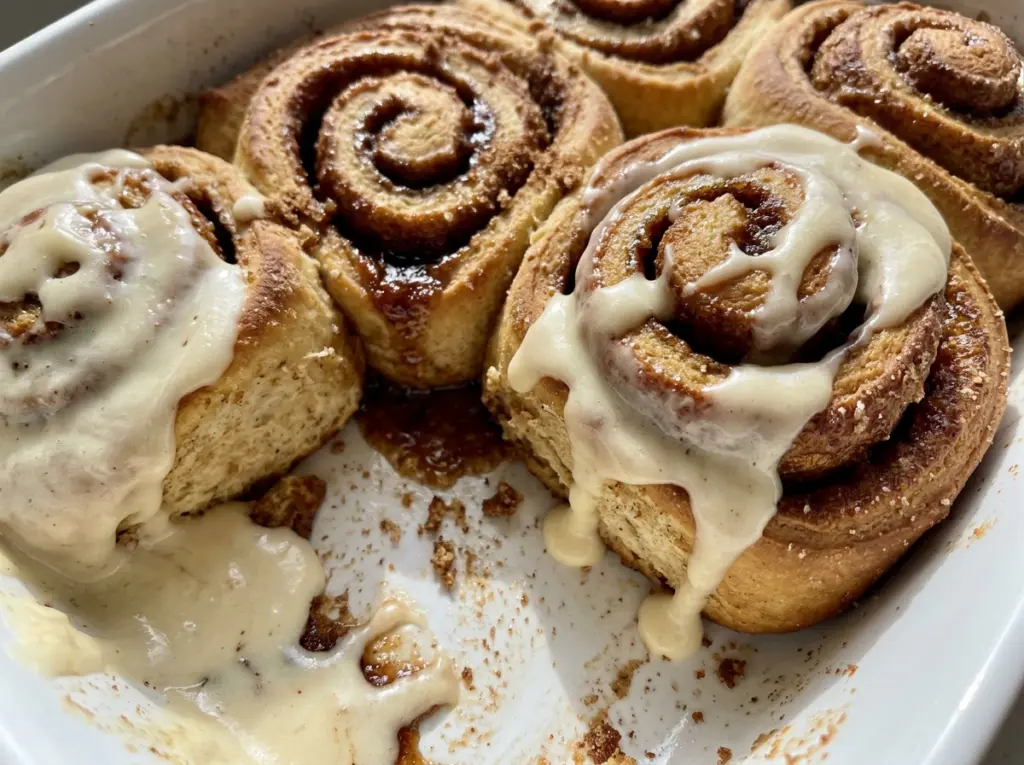
When the yeast turns foamy in the bowl, the dough is already starting to feel like more than an ordinary cinnamon roll. The molasses in these Gingerbread Cinnamon Rolls gives the filling a deeper, warm-spice taste, while the soft dough keeps the centers tender instead of bready. I like that the gingerbread flavor comes through without making the rolls taste heavy.
The dough is enriched with an egg, an extra yolk, and softened butter, so it needs a proper knead before its first rise. I work it until it feels smooth and elastic, with just a little tackiness left on the surface. After the rolls puff in the pan and bake until golden, cream cheese icing adds a cool, tangy finish to the warm spiced swirls.
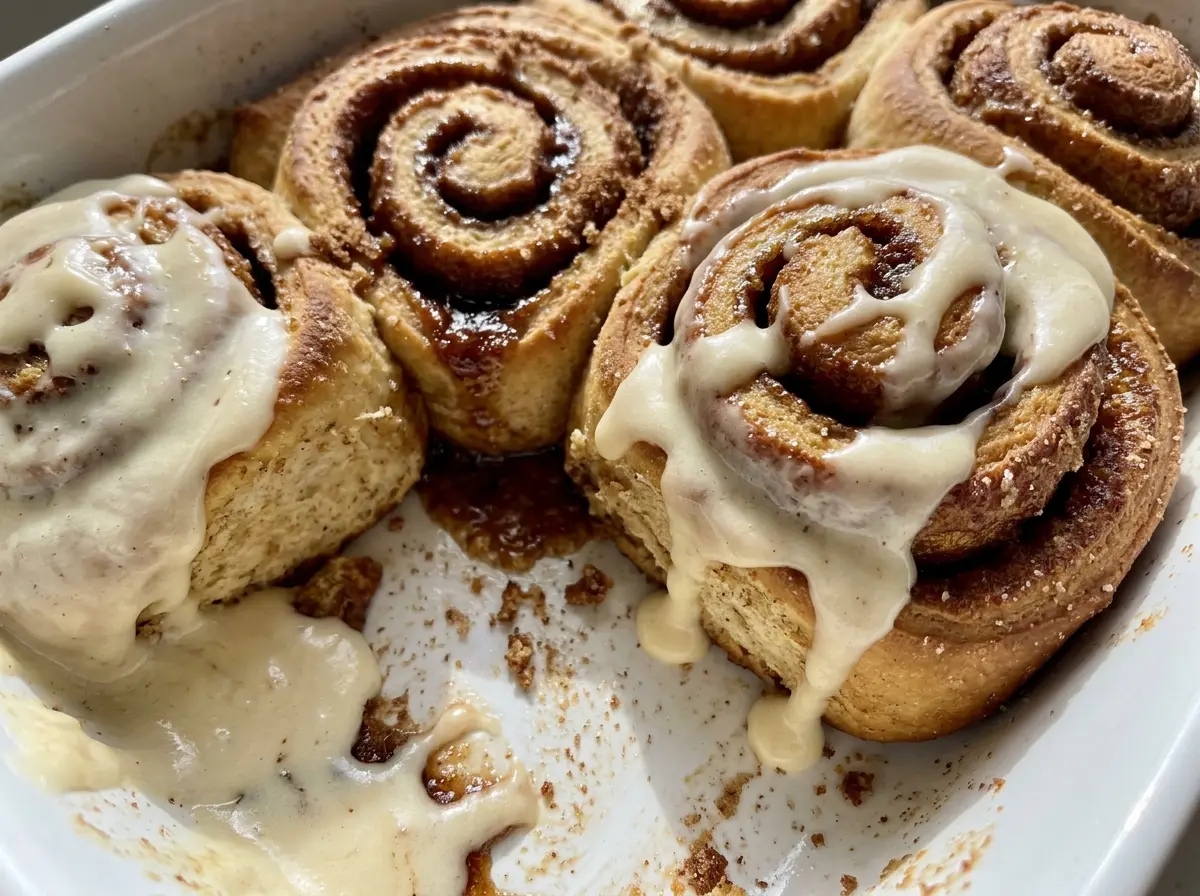
Give the dough time to rise, and you’ll have twelve soft rolls with a dark, fragrant ribbon of filling and a smooth layer of icing.
Kitchen Note
Pinch the seam closed after rolling the dough into a log. That small detail helps the roll hold its shape as you cut it and the spirals puff in the pan.
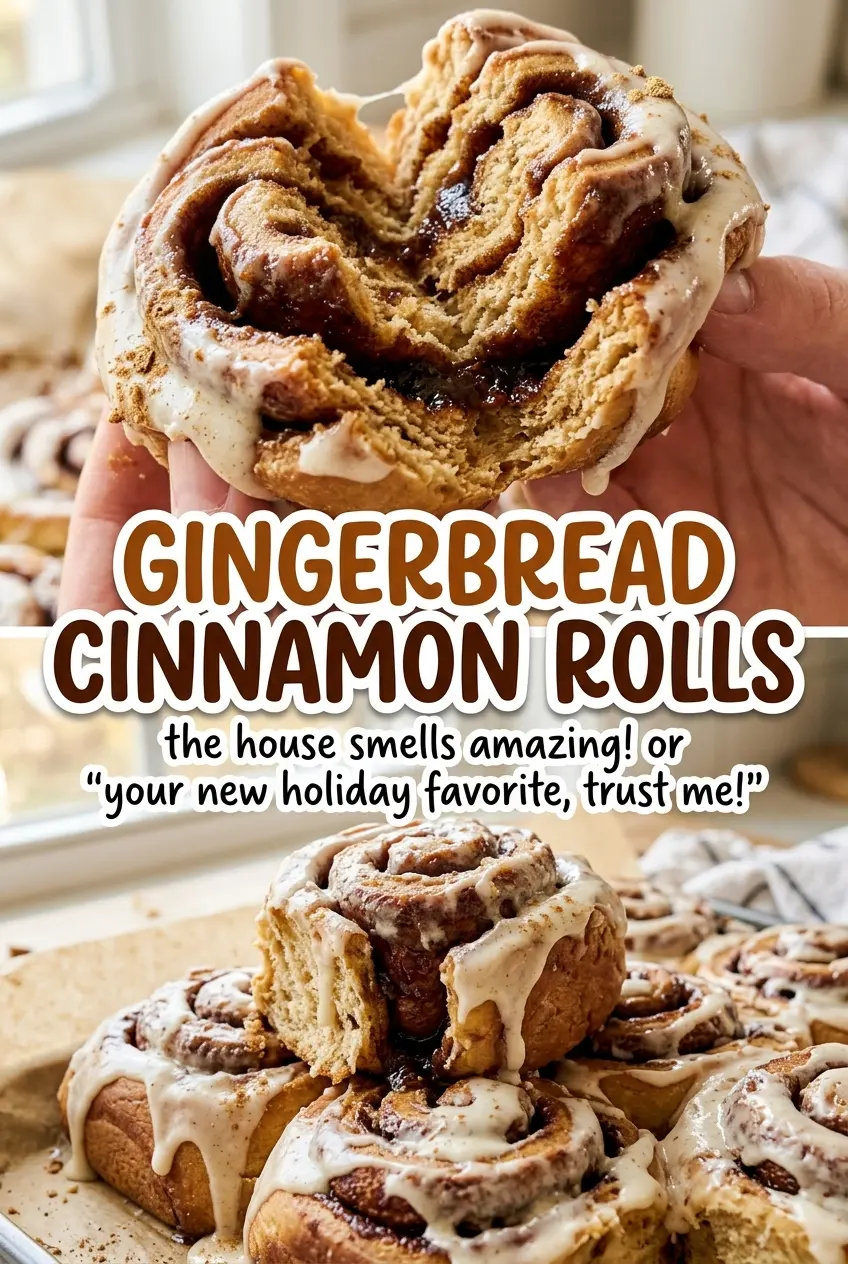
Save these Gingerbread Cinnamon Rolls for a cozy bake: soft centers, molasses-rich filling, and tangy cream cheese icing.
Gingerbread Flavor Comes From More Than Cinnamon
A cinnamon roll can taste familiar even when the filling is generous with spice. Here, molasses gives the brown sugar filling a darker, fuller character, and the ginger and cloves push it toward gingerbread rather than a standard cinnamon-sugar swirl. Cinnamon still belongs in the mix, but it shares the spotlight instead of carrying the whole flavor.
That balance matters because the filling is tucked into many thin turns of dough. A strong, concentrated mixture means you get a clear taste of gingerbread from the first bite through the center, without needing a thick layer of icing to provide all the flavor. The cream cheese topping brings a little tang and sweetness, but the rolls should still taste warmly spiced underneath it. Keep the filling spread across the rectangle in an even layer; bare patches leave some spirals much plainer than others.
What Gives the Dough and Filling Their Gingerbread Character
- Whole milk and active dry yeast — Whole milk supports a soft, tender dough, while active dry yeast creates the lift that makes the rolls airy. Use fresh yeast; an inexpensive packet works as well as a pricier jar. The milk should be warmed before it goes into the bowl, not added cold.
- Egg, egg yolk, and butter — The egg and extra yolk enrich the dough, and softened butter keeps it supple. Room-temperature eggs blend more readily into the warm milk mixture. Unsalted butter lets the measured kosher salt stay in control; a quality standard butter is all you need.
- All-purpose flour — This gives the dough enough structure while keeping the finished rolls soft. Spoon it into the measuring cup and level it rather than packing it down, which can leave the dough dry. Bread flour is a less useful swap here because its higher protein can make the rolls chewier.
- Brown sugar, molasses, and ground spices — Packed light brown sugar brings sweetness and a soft, sandy texture to the filling. Unsulphured molasses has the rounded, mellow taste that suits these rolls; blackstrap is much more assertive. Fresh, fragrant spices matter most, while standard grocery-store jars are fine if they still smell lively.
- Cream cheese and powdered sugar — Cream cheese gives the icing its slight tang, while powdered sugar makes it smooth enough to spread. Soften the cream cheese before beating so you don’t end up chasing lumps. For a dairy-free version, use the replacements in the variation below.
From a Smooth Dough to Soft, Spiced Spirals
Wake the Yeast and Bring the Dough Together
Coat a 9×13-inch baking dish with nonstick cooking spray. Stir the warmed milk with the active dry yeast and granulated sugar in a large bowl, then let it stand for 5–10 minutes, until foamy. Whisk in the egg and egg yolk, followed by the softened butter for the dough. Stir in the flour and kosher salt until you have a shaggy dough, then knead on a clean counter for 8–10 minutes, until smooth, elastic, and slightly tacky.
Let the Dough Double
Return the dough to the bowl, cover it, and leave it in a warm place for 1–1 1/2 hours. The useful cue is volume: the dough should have doubled in size, not merely look a little puffier. A cooler spot can slow the rise, so judge it by that change rather than rushing to shape it at the earliest time. If it still looks compact, give it more time within the rise window.
Spread, Roll, and Proof the Spirals
Mix the brown sugar, molasses, ginger, cinnamon, cloves, and remaining softened butter until the filling is spreadable. Roll the dough into a 12×16-inch rectangle and spread the filling evenly over it. Starting from a 16-inch side, roll the dough into a log and pinch the seam closed, then cut it into 12 equal rolls and arrange them cut side up in the prepared dish. Cover and let them rise for 30–45 minutes, until puffy, while the oven heats to 350°F.
Bake Until the Centers Are Cooked Through
Bake the rolls at 350°F for 25–30 minutes, until golden and cooked through in the center; the center rolls should be about 190°F. If the tops are golden but you’re unsure about the middle, check a center roll rather than relying on the outside color alone. Beat the softened cream cheese with the powdered sugar, vanilla, and milk until smooth. Let the rolls cool in the pan for 10 minutes, then spread on the icing.
Easy Changes for a Different Batch
Make the Rolls Dairy-Free
Replace the whole milk one-for-one with unsweetened oat milk, and use plant-based butter in place of the butter in both the dough and filling. Use a dairy-free cream cheese-style spread for the icing. The rolls will still contain egg, and the plant-based fats may give the dough and topping a slightly different richness.
Let Ginger Lead the Spice
Leave the ground cloves out of the filling and keep the other ingredients the same. The rolls will taste cleaner and more ginger-forward, with less of the deep, lingering warmth that cloves bring.
Serve Them Without Icing
Skip the cream cheese icing for a less-sweet finish that puts the spiced filling first. The rolls will be less tangy and creamy, but the molasses and warm spices still make each swirl taste distinctly like gingerbread.
Storage and Reheating
- Refrigerator: Store iced rolls in an airtight container for up to 4 days. The dough may firm up in the fridge.
- Freezer: Freeze baked rolls without icing, wrapped airtight, for up to 2 months. Thaw in the refrigerator, then add freshly made icing.
- Reheating: Warm an individual roll briefly in the microwave until just soft, then serve. Long heating can dry the dough and make the icing runny, so reheat only what you plan to eat.
Questions That Come Up While Making These Rolls
Gingerbread Cinnamon Rolls
Ingredients
Equipment
Method
- Coat a 9x13-inch baking dish with the nonstick cooking spray.
- Stir the warm milk, yeast, and granulated sugar together in a large bowl.
- Let the mixture stand for 5–10 minutes, until foamy.
- Whisk in the egg and egg yolk, then stir in 1/4 cup of the softened butter.
- Stir in the flour and salt until a shaggy dough forms.
- Knead the dough on a clean counter for 8–10 minutes, until smooth, elastic, and slightly tacky.
- Return the dough to the bowl, cover, and let rise in a warm place for 1–1 1/2 hours, until doubled in size.
- Mix the brown sugar, molasses, ginger, cinnamon, cloves, and remaining 1/4 cup softened butter in a small bowl until spreadable.
- Roll the dough into a 12x16-inch rectangle.
- Spread the filling evenly over the dough, then roll it up from a 16-inch side into a log and pinch the seam closed.
- Cut the log into 12 equal rolls and arrange them cut side up in the prepared baking dish.
- Cover the rolls and let rise for 30–45 minutes, until puffy, while the oven heats to 350°F.
- Bake at 350°F for 25–30 minutes, until golden and the center rolls are cooked through, about 190°F in the center.
- Beat the cream cheese, powdered sugar, vanilla, and milk in a medium bowl until smooth.
- Let the rolls cool in the pan for 10 minutes.
- Spread the icing over the rolls.


