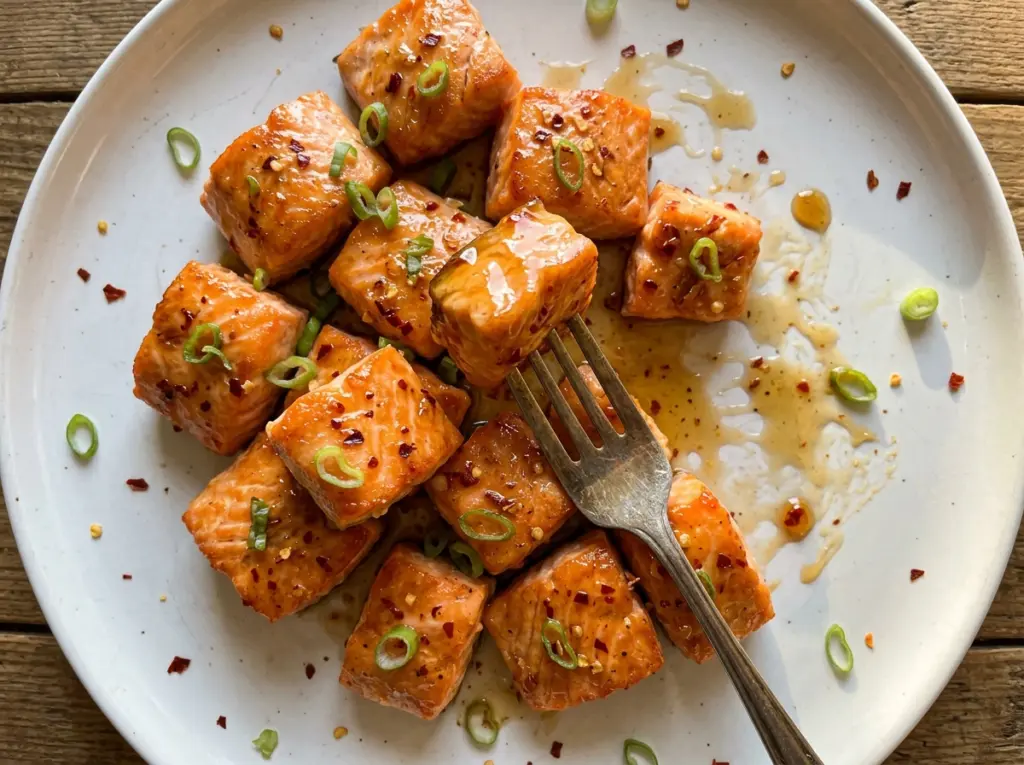
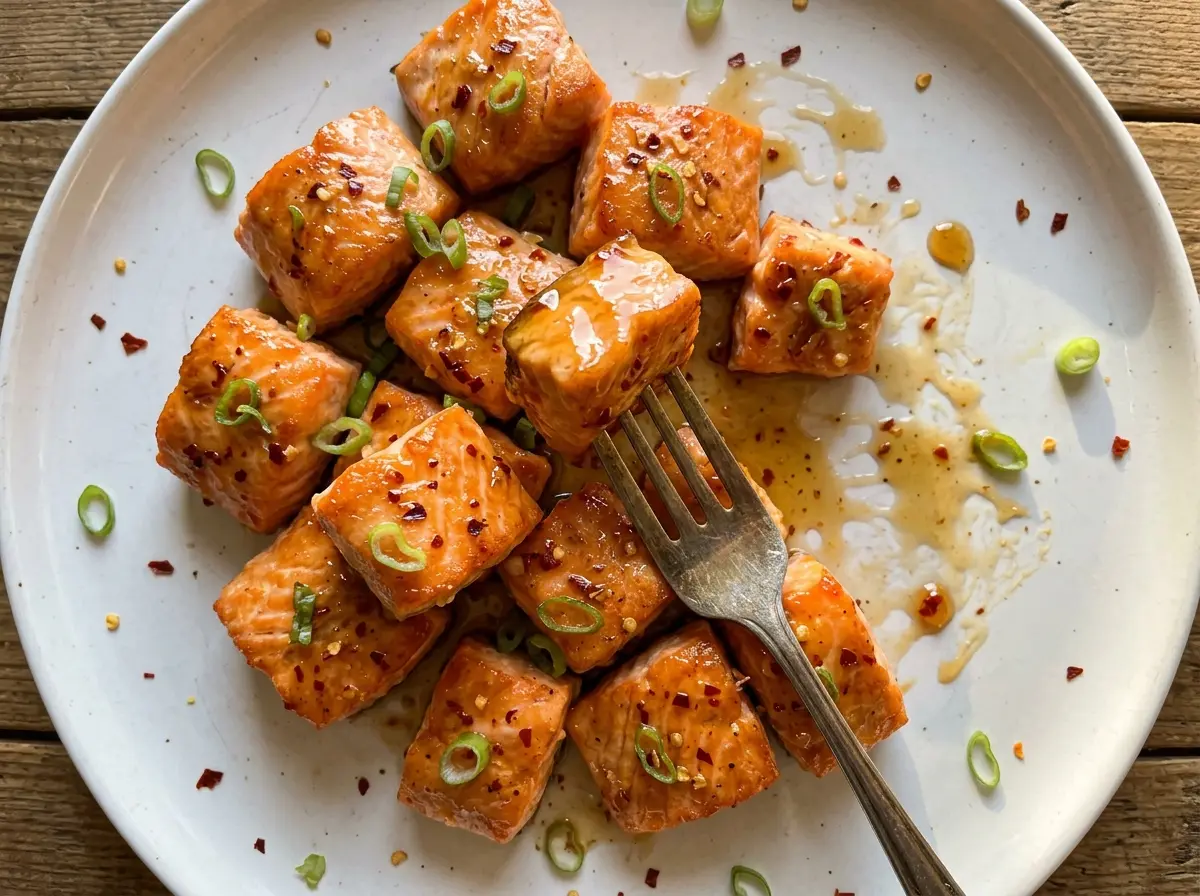
The first thing I watch is how much space those little salmon cubes have on the pan. When they’re crowded, moisture collects around them instead of letting the hot oven work evenly, and the smallest pieces can dry out before the largest ones are ready. These hot honey salmon bites solve that with a quick bake, a warm, buttery glaze, and a size that makes each piece easy to coat.
I cut the salmon into even 1-inch cubes so they finish at about the same time, then season them before they go into the oven. The honey glaze comes together separately on low heat; it takes just a couple of minutes and stays smooth when it’s warmed gently. Once the salmon is baked, I drizzle on all the glaze and give the pieces a careful toss. Each bite gets a sweet, spicy coating with a little brightness from lemon.
Kitchen Note
I drizzle the glaze over the salmon only after it’s on the serving dish. That keeps the honey from baking onto the parchment, and the warm glaze coats the bites instead of getting left behind on the pan.
Save these hot honey salmon bites for a quick dinner with sweet heat and a buttery lemon glaze.
Why These Salmon Cubes Need Room on the Pan
Salmon cooks quickly, and 1-inch pieces have enough surface area that a crowded pan changes the result. When cubes touch or overlap, the moisture they release has nowhere to go. The fish can cook through, but the pieces won’t heat as evenly, and the smallest ones are more likely to turn dry while you wait for a larger piece.
A rimmed 18×13-inch baking sheet gives the salmon room to sit in a single layer. Even sizing matters just as much: aim for cubes close to 1 inch, rather than mixing tiny scraps with much larger chunks. If the fillet has a thin tail end, cut those pieces to match the rest instead of leaving one long piece that will cook at a different rate. A little attention before the pan goes into the oven makes the short bake much easier to manage.
This is also why I don’t pile the salmon into a deep dish. The goal is for the hot oven to reach each piece, not for the cubes to steam against one another. A single layer gives you a better chance of tender, evenly cooked bites that are ready for the glaze at the same time.
Why Honey and Butter Make a Glaze, Not a Thin Drizzle

- Salmon — Skinless fillet is easy to cut into even cubes, and removing the skin means each bite can be seasoned and coated on all sides. Choose a fillet that smells clean and mild; if you’re starting with frozen salmon, thaw it fully before cutting so the pieces don’t shed extra water onto the pan.
- Olive oil and seasonings — The oil helps the paprika, garlic powder, salt, and pepper cling to the fish. Paprika gives the bites their warm color, while garlic powder spreads its flavor evenly without the risk of fresh garlic scorching during the short bake. If you prefer a smokier edge, smoked paprika is a direct style swap, though it will shift the flavor away from the original.
- Honey and butter — Honey gives the glaze body and sweetness; butter softens that sweetness and helps the mixture coat the salmon instead of running off like a thin sauce. Unsalted butter keeps the seasoning balance predictable. There isn’t a close one-for-one replacement that keeps the same buttery texture, so I’d keep both for this version.
- Hot sauce and lemon juice — Hot sauce brings the heat, and lemon juice cuts through the honey and butter with a little acidity. Hot sauces vary in heat and tang, so a different style will change the finish even when you use the same quantity. Choose one whose flavor you like on its own; lemon juice is best added fresh for a clean, bright note.
From Dry, Seasoned Cubes to a Smooth Hot Honey Finish
Pat the Salmon Dry and Season It Evenly
Blot the salmon with paper towels before tossing it in a medium bowl with the olive oil, paprika, garlic powder, kosher salt, and black pepper. Dry surfaces help the oil and seasonings cling instead of sliding around with moisture. Cut the fillet into 1-inch cubes, keeping them as uniform as you can. Arrange the pieces in a single layer on a parchment-lined rimmed baking sheet.
Bake Until the Largest Piece Is Ready
Set the oven to 425°F and bake the salmon for 8–10 minutes. Start checking the largest cube with an instant-read thermometer, since smaller pieces will cook through sooner. The salmon is ready when that largest piece reaches 145°F. Don’t rely on color alone; a thermometer gives you a clear endpoint without asking the smaller pieces to stay in the oven longer than they need.
Warm the Glaze Gently
While the salmon bakes, melt the unsalted butter in a small saucepan over low heat. Stir in the honey, hot sauce, and lemon juice until the mixture looks smooth and just warm, about 1–2 minutes. Keep the heat low and don’t let the glaze boil. It should be fluid enough to drizzle when you take it off the heat.
Coat the Bites Off the Pan
Transfer the cooked salmon to a serving dish, then drizzle over all of the glaze. Toss gently so the cubes stay intact while the sauce reaches the sides of each piece. The glaze will settle around the salmon as it coats the warm surfaces. Serve once everything is evenly dressed.
Three Small Changes for a Different Hot Honey Balance
Turn Down the Heat
Use less hot sauce in the glaze and keep the honey, butter, and lemon juice the same. The salmon will taste sweeter and milder, with the same smooth coating; add the hot sauce gradually so you can stop when the heat suits you.
Make the Glaze More Fiery
Increase the hot sauce while keeping the other glaze ingredients in place. The finish will have more chile bite and less of the honey’s gentle sweetness; add a little at a time because hot sauces differ in strength.
Give the Salmon a Smokier Edge
Swap the regular paprika for smoked paprika in the salmon seasoning. The glaze stays sweet and spicy, while the fish picks up a deeper, woodsy note. This changes the character of the seasoning without changing the baking method.
Storage and Reheating
- Refrigerator: Store leftovers in an airtight container for 3–4 days. The salmon will firm up as it chills, and the glaze will thicken.
- Freezer: Freeze the cooked bites in an airtight freezer-safe container for up to 2–3 months. Thaw them in the refrigerator; the salmon may be softer after freezing.
- Reheating: Warm the bites covered in a 300°F oven until the center reaches 165°F. Avoid high heat, which can dry out the fish before the middle is hot.
Questions That Come Up When Making Hot Honey Salmon Bites
Hot Honey Salmon Bites
Ingredients
Equipment
Method
- Preheat the oven to 425°F.
- Line a rimmed 18x13-inch baking sheet with parchment paper.
- Pat the salmon dry, then toss it in a medium bowl with the olive oil, paprika, garlic powder, salt, and pepper.
- Arrange the salmon pieces in a single layer on the baking sheet.
- Bake for 8-10 minutes, until the largest piece reaches 145°F when checked with an instant-read thermometer.
- In a small saucepan over low heat, melt the butter.
- Stir in the honey, hot sauce, and lemon juice until smooth and just warm, about 1-2 minutes; do not boil.
- Transfer the salmon bites to a serving dish.
- Drizzle with all of the glaze, and gently toss to coat.


